

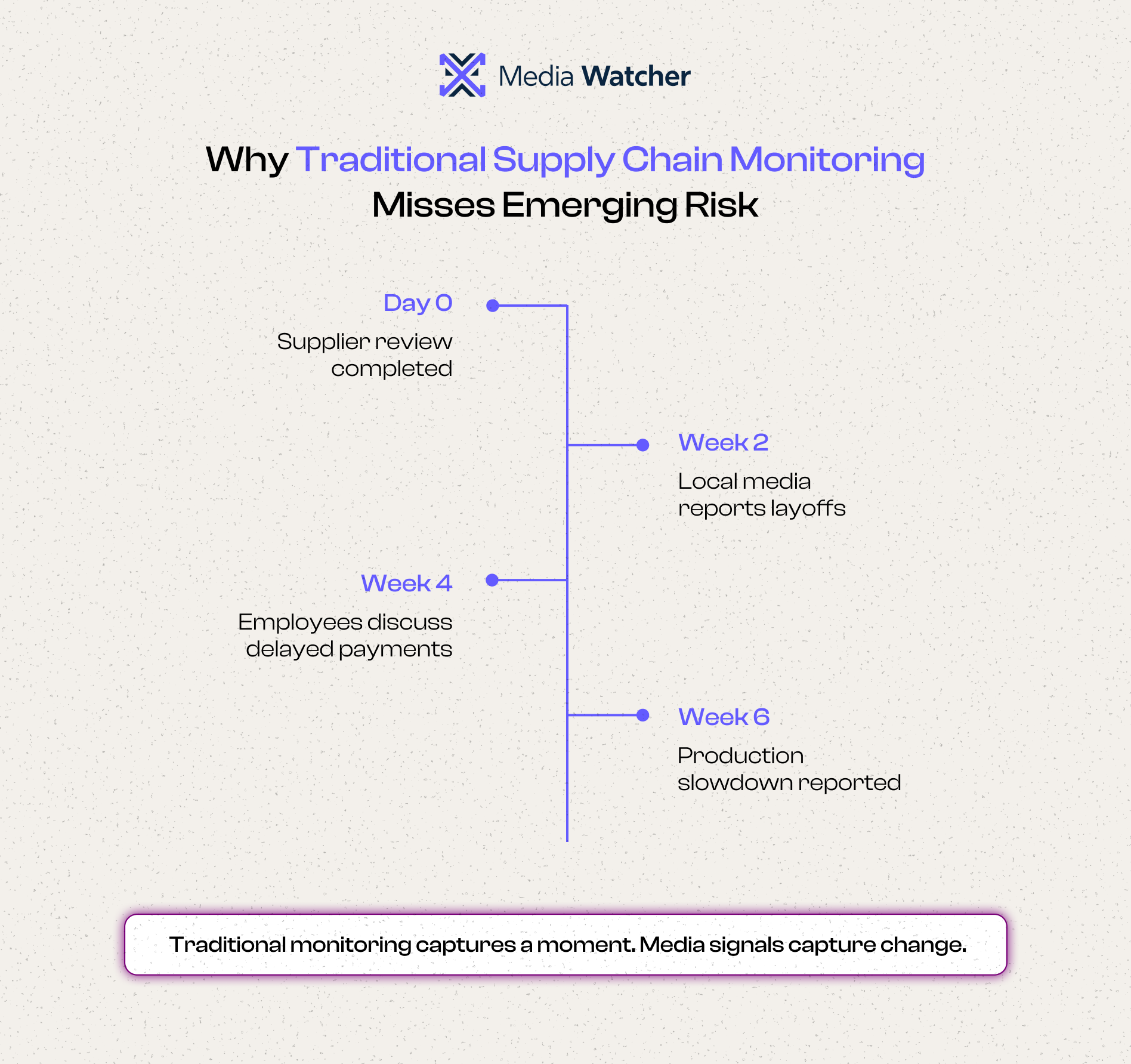
Supply chain disruptions rarely begin with a dashboard notification. A supplier may still appear stable in internal records while local media reports layoffs at its factory. Employees may begin discussing wage disputes online. Regulators could announce an investigation.
A cyberattack may interrupt operations. Political unrest could suddenly threaten a major sourcing region.
By the time these developments reach traditional supplier reports, the risk may already be affecting operations.
This is why organizations are increasingly looking beyond internal systems and structured supplier data when conducting supply chain risk monitoring.
Information from the news, industry publications, announcements, and online discussions can be extremely useful in identifying what’s going on around suppliers, facilities, and markets.
If tracked continuously, these signals can enhance supply chain risk intelligence and provide organizations with increased time to investigate potential disruptions.
What Is Supply Chain Risk Intelligence?
Supply chain risk intelligence is the process of collecting and analyzing information that can help organizations understand threats affecting suppliers, locations, industries and operations.
The information may come from financial databases, internal performance records, government sources, supplier disclosures and external media.
Media signals add an important layer because they can reveal developing events before they become part of structured supplier records.
Relevant sources may include:
- Local and international news
- Industry and trade publications
- Regulatory announcements
- Company statements
- Social media conversations
- Regional reporting
- Online discussions about products, facilities or businesses
The goal is not simply to collect more mentions. Effective supply chain risk intelligence helps teams determine whether an external development could affect business continuity, supplier reliability or organizational reputation.
Media Signals That Can Reveal Supply Chain Risk
Different types of media activity can point toward different supply chain risks. Understanding these signals allows organizations to build more focused supplier risk monitoring strategies.
1. Financial Distress
Financial problems can quickly become operational problems. Media coverage mentioning layoffs, restructuring, facility closures, unpaid workers or bankruptcy proceedings can signal that a supplier may be experiencing financial pressure.
An isolated report may not indicate immediate disruption. Several credible reports combined with increasing negative coverage, however, may justify further investigation.
2. Operational Disruption
Some of the most visible media signals relate directly to physical operations. These may include reports of:
- Factory fires
- Production shutdowns
- Transportation problems
- Port closures
- Industrial accidents
- Equipment failures
- Severe weather damage
These developments are especially important for supply chain disruption monitoring because they can affect production capacity, shipping schedules and inventory availability.
3. Labor Issues
Employee issues can escalate into major supply chain disruptions. News or social chatter can highlight strikes, organised industrial action, wage negotiations, worker protests and unsafe working practices.
Local media can be especially useful, as it can help you know whether these developments have been covered by local media outlets before larger international media outlets.
4. Geopolitical Happenings
Political developments can rapidly alter supply chain factors. Suppliers within certain countries or regions may be impacted by conflict, sanctions, civil unrest, border restrictions and new trade controls.
If organisations know both their supplier names and their geographic locations, they can better understand how events outside their control affect their sourcing locations.
5. Regulatory and Legal Developments
Suppliers work in a dynamic regulatory landscape. These can include government investigations, product recalls, product lawsuits, enforcement actions, sanctions, compliance issues, etc.
A supplier facing regulatory action can experience operational restrictions, financial pressure, or even reputational damage. However, ongoing monitoring enables businesses to see these developments as they arise.
6. Reputation and ESG Issues
Commercial and operational implications are possible as a result of reputational changes. Media reports on environmental law infringements, labour abuse, product quality, and business practices can affect supplier relations.
Note that you can use conversations to add context for businesses to consider when assessing supply chain risk.
How Media Signals Strengthen Supplier Risk Monitoring
The biggest advantage of media monitoring is continuity.
A traditional supplier review may happen during onboarding or at scheduled intervals. Media conversations develop every day. This means supplier risk monitoring can continue between formal assessments. Media signals can support three important areas.
Earlier Awareness
News reports or online discussions may reveal an emerging issue before it appears in formal documentation. Earlier awareness does not automatically mean the issue is serious. It gives teams more time to investigate.
Greater Context
One headline rarely tells the full story. Monitoring changes in coverage volume, sentiment and recurring topics can help organizations understand whether an event is isolated or developing into a broader issue.
Continuous Visibility
Supplier conditions change. Continuous media monitoring provides an external view of those changes and complements information captured through periodic risk reviews.
How Supply Chain Disruption Monitoring Works With Media Signals
Effective supply chain disruption monitoring requires more than collecting articles. Organizations need to turn external information into usable intelligence. A typical process might look like this:
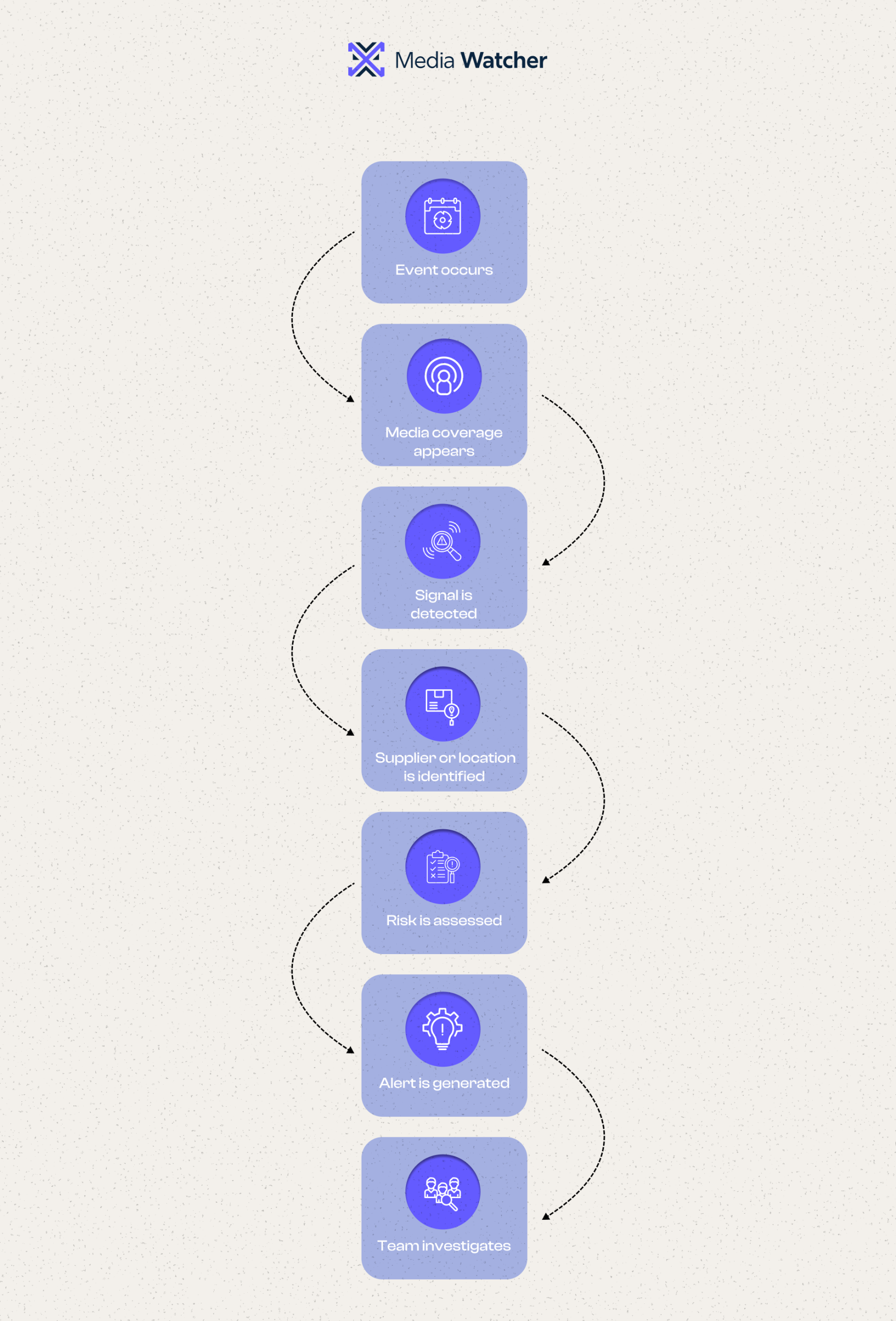
The challenge is relevance.
A global organization may have thousands of suppliers. Each supplier may generate hundreds of media mentions. Not every article should become an alert. Signals should be evaluated using factors such as:
- Supplier relevance
- Geographic location
- Type of risk
- Source credibility
- Volume of coverage
- Sentiment
- Severity
- Potential operational impact
This filtering process helps organizations move from media noise to actionable supply chain intelligence.
From Media Noise to Actionable Supply Chain Alerts
The internet generates an enormous amount of information every minute. The real challenge is determining what deserves attention. Useful supply chain alerts should help answer several questions:
- Who is affected?
- What happened?
- Where is the issue occurring?
- How serious could it be?
- Is coverage increasing?
- Could operations be affected?
An alert about a supplier mentioned once in an unrelated article may have little value. A sudden increase in negative reports about the same supplier, combined with coverage of layoffs and production reductions, may require immediate investigation.
Effective alerts allow procurement, risk, compliance and business continuity teams to focus attention where it matters most.
Media Monitoring as Part of Supply Chain Risk Assessment
Media monitoring should not replace existing supply chain risk assessment processes.
It should strengthen them. Traditional assessments provide structured information about supplier financial health, ownership, compliance and performance.
Media intelligence adds visibility into developing events. Together, they create a more complete view. Traditional assessments answer:
What is already known about this supplier?
Media monitoring helps answer:
What might be changing?
Combining both approaches allows organizations to evaluate supplier risk using historical data alongside emerging external signals.
How Media Watcher Supports Supply Chain Risk Monitoring
The challenge facing supply chain teams is no longer finding information.
It is identifying which information matters. Media Watcher helps organizations continuously monitor conversations surrounding suppliers, companies, industries and developing events.
Teams can track supplier names, sourcing regions, executives, facilities and risk related topics across relevant media sources. Rather than manually searching for every potential disruption, organizations can monitor shifts in coverage, emerging conversations and changes in sentiment.
This can support a simple intelligence workflow:
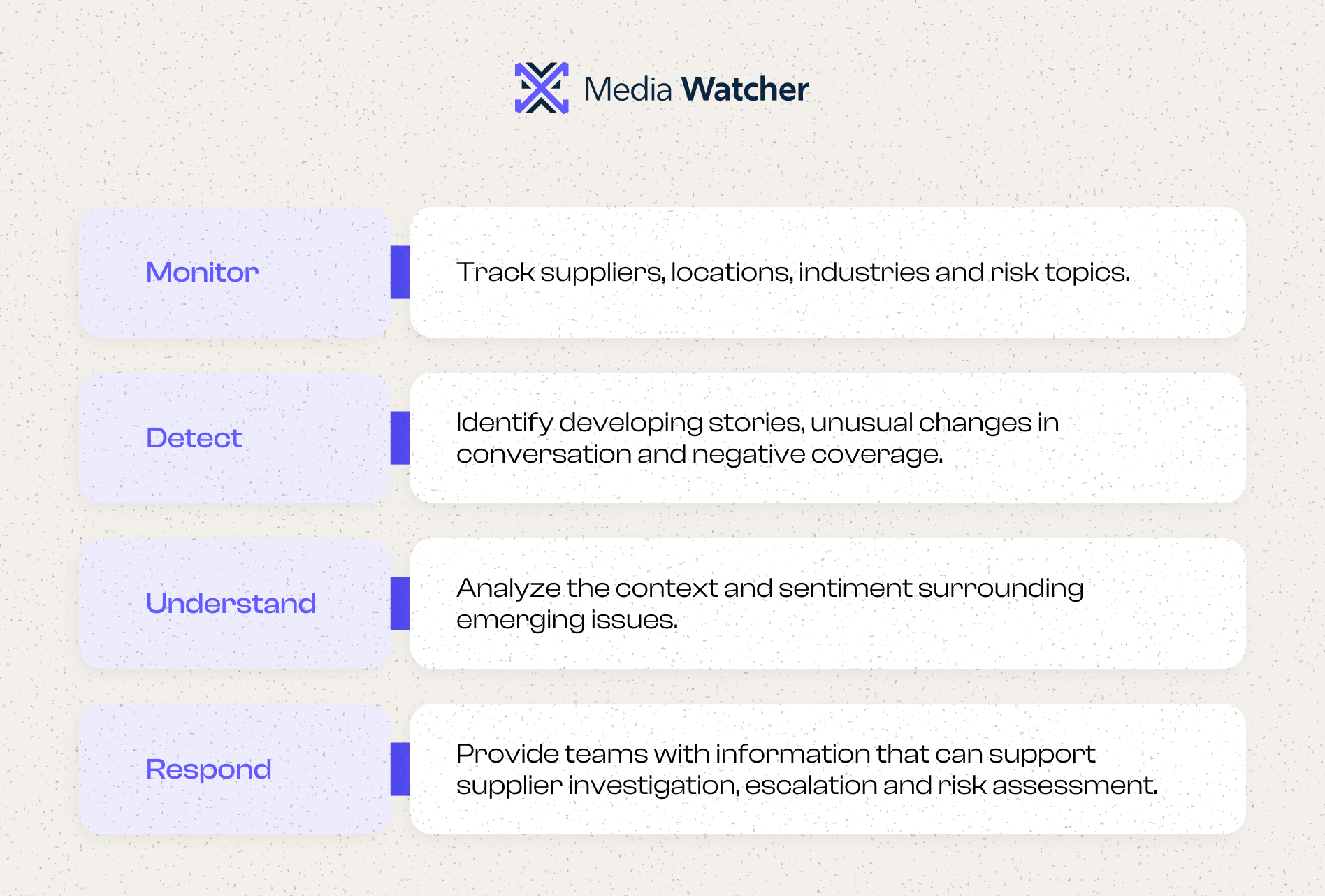
By incorporating media intelligence into supply chain risk monitoring, businesses gain another layer of visibility between scheduled supplier assessments.
Build Supply Chain Monitoring Around Early Signals
The value of media monitoring is not simply access to more information.
It is the opportunity to detect meaningful change earlier.
Supplier databases can show who an organization works with. Financial assessments can indicate historical stability. Operational systems can show what is already happening within the supply chain. Media intelligence adds another question:
What is happening around your suppliers right now?
When organizations continuously monitor external signals, supply chain monitoring becomes more responsive to changing conditions.
The earlier a potential disruption is identified, the more time teams have to verify the information, assess exposure and prepare an appropriate response.
That is where media signals turn from headlines into useful supply chain risk intelligence.
Turn media signals into supply chain intelligence with Media Watcher. Monitor emerging supplier risks, disruptions and reputation shifts before they become bigger business problems.