

Going viral is usually treated as a marketing win. It may look like a success on the surface: millions of views, thousands of comments, and media coverage.
The question is: but what if people keep the controversy in mind more than the brand message?
The Sydney Sweeney sports ad backlash surrounding Novig offers a timely example of why brands need to look beyond reach and engagement. A campaign designed to attract attention to a sports prediction platform quickly developed into a much wider conversation about the representation of women in sport, advertising choices and the way brands use celebrities to generate attention.
For marketers, the real lesson is not whether the campaign was right or wrong. It is how quickly audiences can take control of a brand narrative.
What Happened With the Sydney Sweeney Novig Ad?
On September 9, 2026, sports prediction company Novig launched its first national brand campaign featuring actor Sydney Sweeney.
Called “Just Sports,” the campaign was designed around Novig’s positioning as a prediction platform focused specifically on sports. Sweeney appears alongside sporting equipment in deliberately provocative scenes while reinforcing the campaign’s focus on sports.
This was more than a traditional celebrity endorsement. Novig announced that Sweeney had joined the company as a strategic partner and equity holder. According to the company, the concept was intended to bring its sports focused positioning to life through humor, confidence and a playful creative approach.
It certainly generated attention. According to The Guardian, the campaign has already had over 22 million views in its first two days. However, it wasn’t the only source of visibility.
Why Did the Novig Ad Controversy Grow So Quickly?
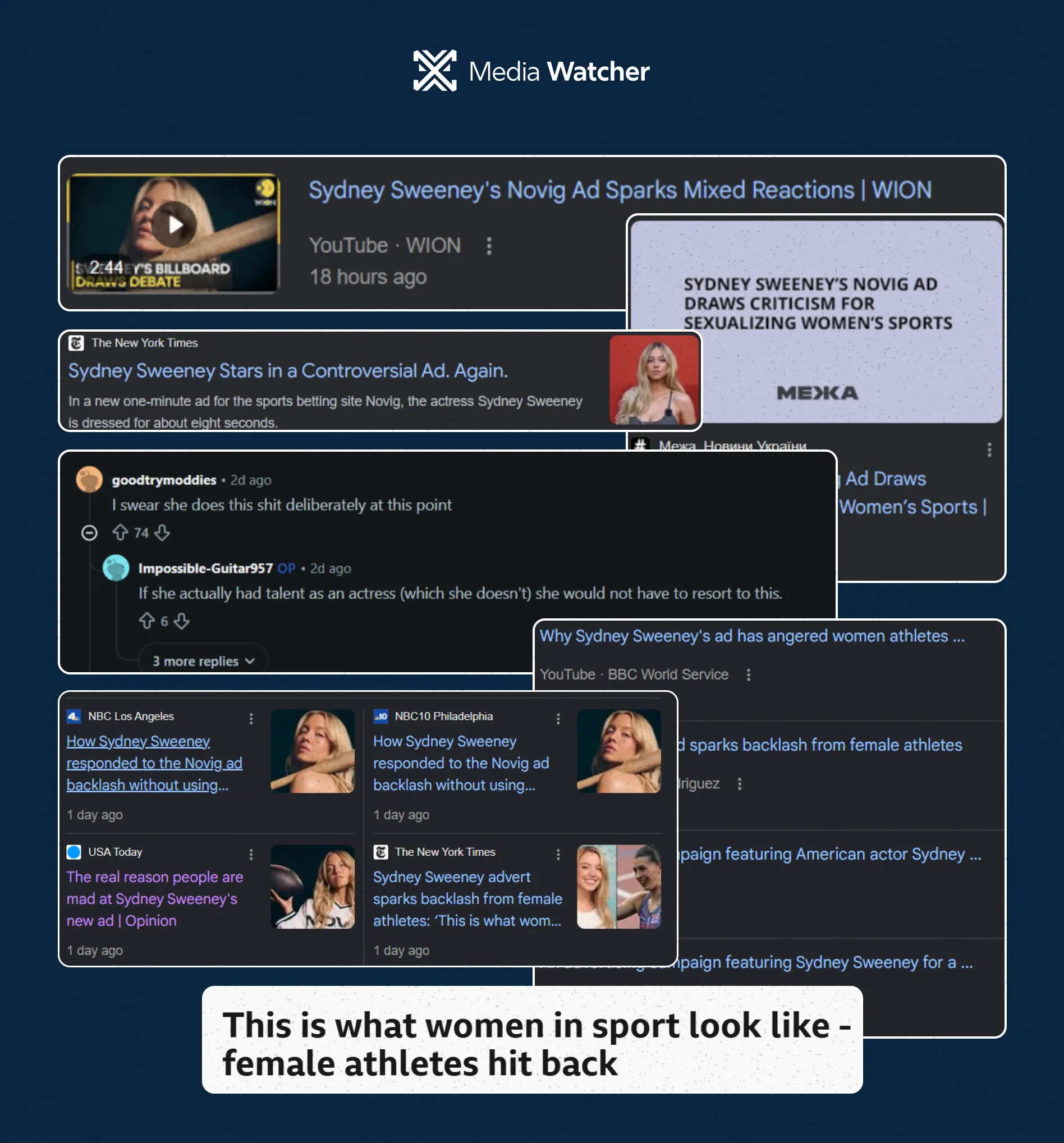
The Sydney Sweeney ad backlash grew when female athletes took the stage to voice their criticism of the campaign.
Olympic gold medalists and other professional athletes such as Ariarne Titmus, Amy Hunt, Sophie Capewell and more questioned the use of a very sexualised portrayal of a woman in a campaign that was based on sport. Other athletes responded by posting videos of them training and/or competing to show what it is like to be a woman in sport.
The conversation was no longer simply about Novig’s product.
It had become a discussion about women’s sport, representation, advertising and the commercial use of sexuality. That shift is important for brands.
A company can control the creative it publishes. It cannot fully control how audiences interpret it.
Once reactions spread across social platforms and news coverage, the meaning associated with a campaign can change quickly. This is where social media backlash becomes a reputation issue rather than simply an engagement issue.
Viral Reach Does Not Equal Positive Brand Sentiment
One of the easiest mistakes marketers can make is treating attention as success. A post generating millions of impressions tells you that people saw it.
It does not tell you whether they trusted it, liked it or associated the brand with something positive afterwards.
The Sydney Sweeney Novig ad demonstrates that distinction clearly. The campaign generated enormous attention, while criticism from athletes and wider media coverage created another narrative around the same campaign.
This is why brand sentiment monitoring needs to sit alongside traditional campaign analytics.
Views tell marketers how far content travelled.
Sentiment helps explain what audiences felt about it.
Narrative monitoring goes another step further by showing why those reactions are developing.
For reputation teams, that difference matters.
Ten thousand negative comments about pricing represent a very different problem from ten thousand negative comments about ethics, representation or trust.
The volume might look similar on a dashboard. The reputation risks are completely different.
Why Advertising Backlash Monitoring Matters
Backlash rarely begins as a neatly defined crisis. It may start with a handful of critical posts. Then an influential account responds. An athlete, journalist or industry figure joins the discussion. News publications cover the reaction.
Search interest rises. Suddenly, a conversation that looked small has become part of the public narrative surrounding the brand.
Effective advertising backlash monitoring helps teams see that development while it is happening.
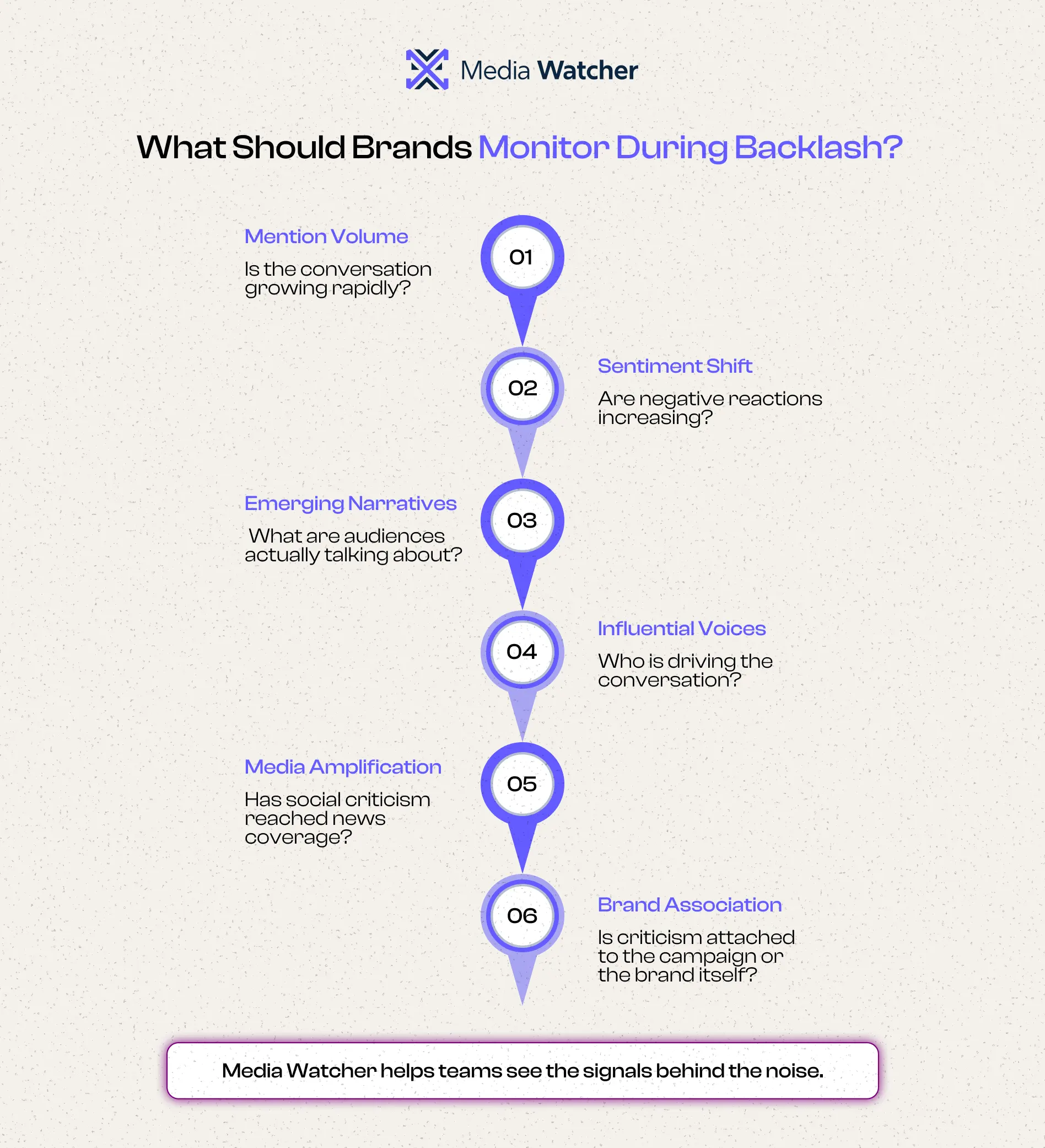
Instead of asking only, “How many people are mentioning us?” marketers need to know:
- What are people actually criticizing?
- Is sentiment changing?
- Which narratives are spreading fastest?
- Who is influencing the conversation?
- Is criticism staying within social media or moving into mainstream news?
Is the controversy focused on the campaign, the celebrity involved or the company itself?
These questions give communications teams the context required to decide whether to respond, clarify, adjust messaging or simply continue monitoring.
Without that context, brands risk reacting to the loudest comment instead of the most important reputation signal.
Brand Reputation Monitoring Is Really About Narrative Control
The Novig ad controversy also highlights how fragmented modern reputation can become.
Different audiences can look at exactly the same campaign and see completely different stories.
- Some may see bold celebrity marketing.
- Others may focus on the representation of women in sport.
- Others may discuss sports prediction or gambling.
Some may simply engage because Sydney Sweeney is involved. That means modern brand reputation monitoring cannot be reduced to counting positive and negative mentions.
Brands need to understand which narratives are emerging and how influential each one is becoming.
This is particularly important during high visibility campaigns where a celebrity, sensitive social topic or provocative creative idea can introduce several reputation variables at once.
By the time a controversy becomes a headline, the conversation may already have been developing for hours or days. Brands that understand those early signals have more information to work with.
How Media Watcher Helps Brands See the Story Behind the Mentions
This is where Media Watcher comes in.
The platform enables marketing, communications and PR teams to keep track of the conversations about their brand in media, on social networks, and online.
Beyond likes and shares, as well as impressions, teams can monitor reputation signals around a campaign.
Thus, by monitoring brand sentiment, organizations can gauge whether there is a push or pull towards their brand.
By having media monitoring, they are able to see when a conversation moves off of social media and into the newspaper and media. Brands can also monitor emerging themes and conversations, as this can help them identify which narratives are starting to be the main focus of discussion.
Imagine monitoring a campaign like Novig’s in real time. The important signal would not simply be an increase in Sydney Sweeney mentions.
The more useful insight would be seeing the conversation evolve from campaign reactions to athlete criticism, then watching that criticism receive broader media amplification.
That context can help communications teams understand both the scale and the nature of the reputation risk.
Media Watcher gives brands greater visibility into that transition. It turns scattered mentions into intelligence teams can use.
Monitor the Meaning Behind the Attention
The biggest lesson from the Sydney Sweeney sports ad backlash is not that brands should stop taking creative risks.
Bold advertising will always create different reactions. The lesson is that brands need to understand those reactions as they develop. Campaign analytics can tell you how many people clicked, watched or shared.
Brand reputation monitoring tells you what that attention is doing to your brand.
With Media Watcher, organizations can monitor sentiment, identify emerging narratives and understand how conversations move across social and news media before making their next communication decision. Because millions of views can tell you that people noticed your campaign.
Media Watcher helps you understand what they now think about your brand.