

Markets rarely change without warning. Before a competitor gains significant attention, launches a successful campaign, or shifts customer perception, signals often appear across media coverage, industry discussions, and online conversations.
A new partnership gets reported. A product announcement starts gaining traction. Industry experts begin discussing a competitor’s strategy. Customer conversations begin changing.
These signals create an opportunity for businesses that are paying attention.
However, manually tracking competitor activity across thousands of sources is challenging. Teams can easily miss important developments or react only after competitors have already gained momentum.
This is where competitor monitoring tools become valuable.
Modern competitor monitoring helps organisations track competitor visibility, understand market narratives, and identify strategic shifts as they happen. Instead of only asking “where is my competitor mentioned?”, businesses can understand:
- Why are competitors gaining attention?
- Which messages are influencing audiences?
- How does competitor visibility compare to ours?
- What opportunities or risks are emerging?
Read through to explore seven media monitoring tools that help businesses monitor competitors, analyse market movements, and make better-informed decisions.
What Makes Competitor Monitoring Different From Traditional Market Research?
Traditional competitor research often provides a snapshot of the market at a specific point in time. Competitor monitoring is continuous. It captures changes as they happen across:
- News coverage
- Industry publications
- Digital media
- Social conversations
- Public discussions
A strong competitor monitoring platform does not simply collect mentions. It connects different signals to reveal broader patterns.
For example: A competitor receives increased media attention. Basic monitoring tells you: “Competitor X appeared in 500 articles.”
Advanced competitor intelligence helps answer: “Why did coverage increase? Which topics drove attention? Was the conversation positive? Are they gaining influence in the market?” This difference is what separates simple tracking from meaningful competitive intelligence.
The AI Search Race: How Microsoft and Google Show the Value of Competitor Monitoring
Consider the competition between Microsoft and Google in the search and AI space as a good example of how quickly industries can change.
Microsoft’s integration of AI into Bing, in partnership with OpenAI, sparked a debate about the future of search. The launch of Microsoft’s AI-driven Bing, in collaboration with OpenAI, raised questions about the future of the search industry. In response, Google also accelerated its AI initiatives, including Bard and, subsequently, Gemini-powered experiences.
The competition was not just limited to technology releases. It was also about:
- Media attention
- Industry narratives
- Customer expectations
- Market positioning
In rapidly changing industries, real-time competitor monitoring can help companies identify these changes early. This means that businesses can learn about these by measuring competitor coverage:
- Which announcements are gaining momentum
- Which messages are resonating
- How public perception is changing
- Where competitors are building influence
This allows teams to respond strategically rather than react once market shifts become obvious.
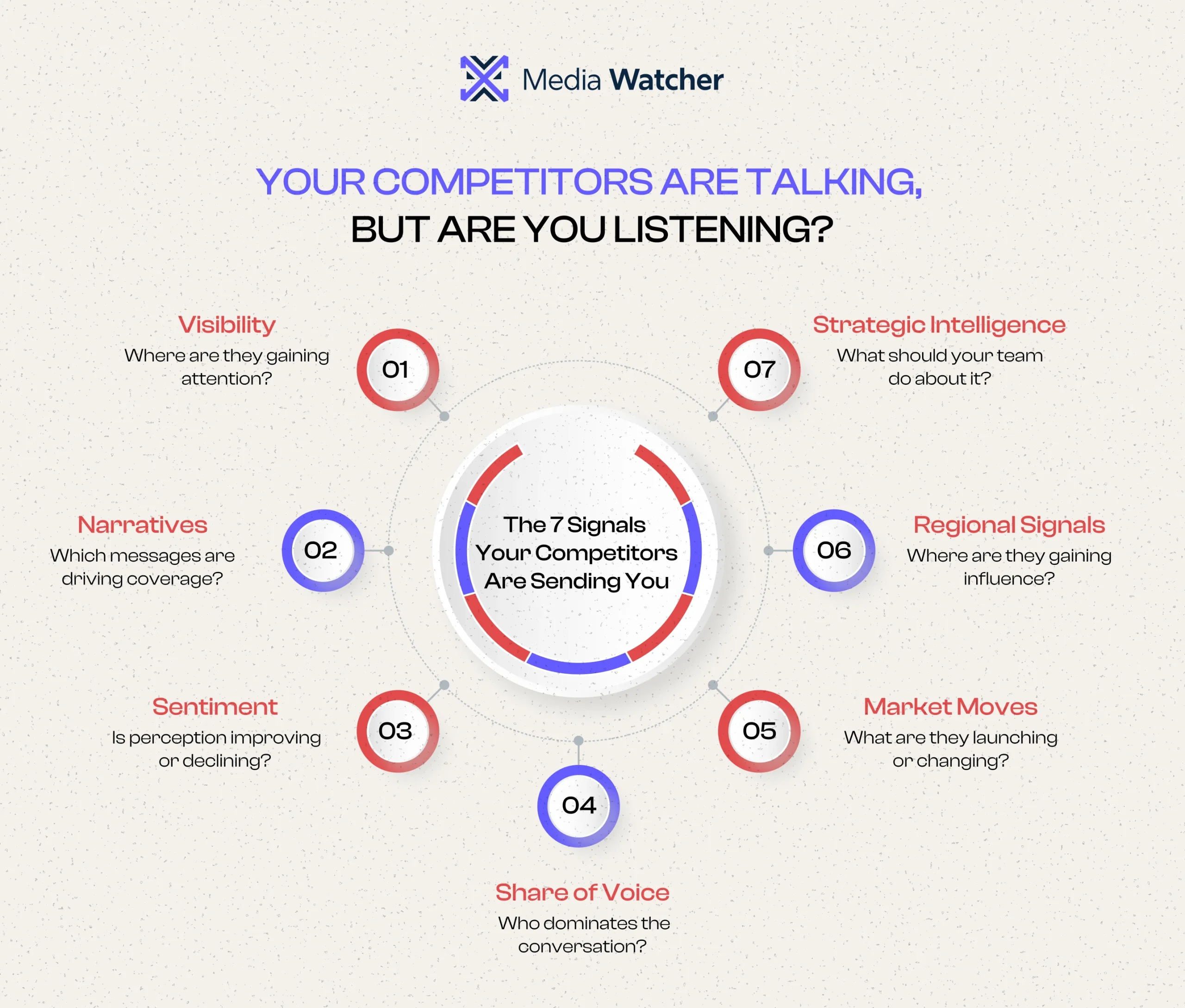
1. Tracking Competitor Media Visibility Across Channels
Competitors rarely build influence through one channel. A single announcement can appear across:
- Industry publications
- Business news
- Blogs
- Social platforms
- Regional media outlets
The first role of competitor monitoring tools is identifying where competitors are gaining visibility.
Businesses can use monitoring platforms to track:
- Coverage volume
- Most influential sources
- Geographic visibility
- Key topics associated with competitors
This basically helps teams understand not only how often competitors appear but where they are building authority. For instance, a competitor receiving significant coverage from industry publications may be strengthening its position among decision-makers.
2. Identifying the Narratives Driving Competitor Success
Media attention alone does not explain competitive advantage. The message behind the coverage matters. Successful brands often become associated with specific narratives:
- Innovation
- Market leadership
- Customer experience
- Sustainability
- Industry expertise
Advanced competitor analysis tools help businesses identify the themes influencing competitor perception. Instead of seeing hundreds of disconnected articles, teams can understand:
- What topics are increasing competitor visibility
- Which messages are receiving positive attention
- How competitors are positioning themselves
This gives businesses a clearer view of the strategies shaping market conversations.
3. Measuring Competitor Sentiment and Reputation Shifts
Not every mention represents success. A competitor may receive high media attention because of:
- A successful product launch
- Industry recognition
- A public controversy
- Customer concerns
Sentiment analysis helps businesses understand the context behind competitor coverage. A competitor monitoring solution can help identify:
- Positive reputation trends
- Negative narratives
- Changing audience perception
- Emerging reputation risks
This allows teams to distinguish between visibility and influence.
4. Comparing Share of Voice Against Competitors
Understanding your own media presence is only part of the picture. Businesses also need to understand how they compare against competitors. Share of voice analysis is a tool that can be used to measure:
- Who receives more coverage
- Which brands dominate conversations
- Which topics competitors own
- Where visibility gaps exist
For marketing and communication professionals, it helps them understand if the campaign is improving brand visibility or if competitors are taking up more space.
5. Detecting Competitor Moves Before They Become Market Trends
Competitive advantage often comes from timing. A competitor announcement can influence market expectations before competitors have time to respond. Real-time competitor monitoring helps businesses identify early signals such as:
- New partnerships
- Product launches
- Executive announcements
- Industry positioning changes
Teams can better assess competitor moves and make timely adjustments to their own game plan when they can see them early.
6. Understanding Competitor Strategies Across Different Markets
There are varying competitive environments across regions of the world for global companies. One competitor might get a lot of attention in one market, and not so much in another. Thus, competitor monitoring can assist organisations in analysing:
- Regional media coverage
- Local sentiment
- Market-specific narratives
- Industry differences
This is especially valuable for companies expanding into new markets or operating across multiple regions.
7. Turning Competitor Insights Into Strategic Decisions
The value of competitor monitoring comes from what businesses do with the information. Raw data alone does not create competitive advantage. Organisations need insights that help answer:
- What should we prioritise?
- Which opportunities should we pursue?
- Which competitor strategies require attention?
- How should our messaging evolve?
This is where advanced competitor monitoring services and platforms provide value by transforming media activity into business intelligence.
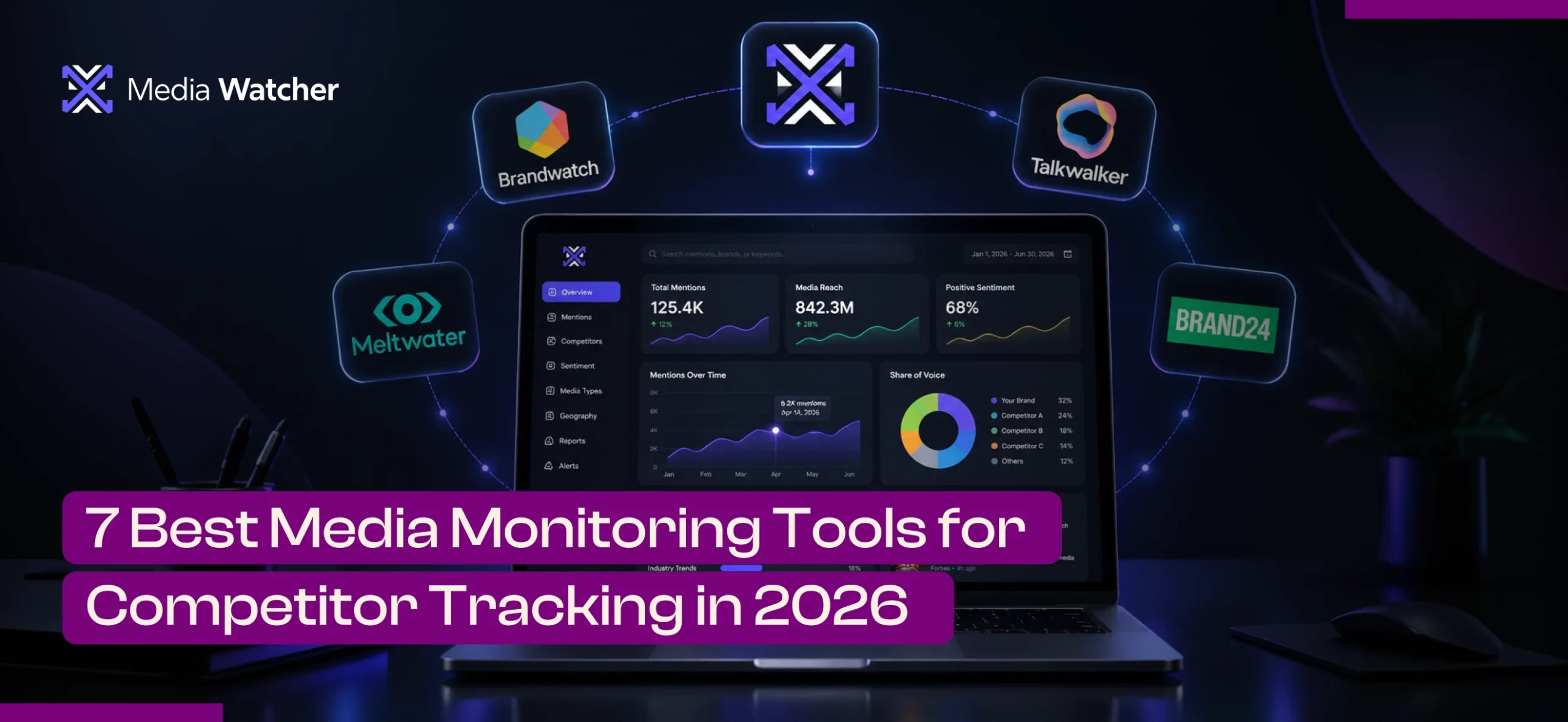
7 Media Monitoring Tools for Competitor Tracking in 2026
Media Watcher
Media Watcher assists organisations in understanding competitor visibility through media monitoring, sentiment analysis, and narrative intelligence. It enables teams to track:
- Competitor coverage
- Media trends
- Industry conversations
- Reputation changes
For businesses looking for a competitor monitoring platform that goes beyond alerts and mentions, Media Watcher provides deeper visibility into the conversations shaping their market.
Meltwater
Meltwater provides broad media monitoring capabilities for organisations tracking news coverage, social conversations, and brand mentions.
Brandwatch
Brandwatch focuses on social intelligence and understanding audience discussions around brands and competitors.
Talkwalker
Talkwalker helps organisations monitor conversations across multiple channels and markets.
Cision
Cision combines media monitoring with journalist and PR management capabilities.
Muck Rack
Muck Rack supports PR teams monitoring journalist activity and media coverage.
Brand24
Brand24 provides accessible online monitoring capabilities for businesses beginning competitor tracking.
Choose a Competitor Monitoring Solution That Reveals More Than Mentions
Competitor tracking is no longer about collecting headlines. The real advantage comes from understanding the stories behind those headlines. Businesses need visibility into:
- Which competitors are gaining attention
- What narratives are shaping industries
- How reputation is changing
- Where new opportunities are emerging
Hence, Media Watcher turns the entire competitor monitoring process into media intelligence by consolidating coverage tracking, sentiment analysis, and competitor intelligence on a single platform.
Understand Your Competitive Landscape With Media Watcher
Track competitor movements, uncover market signals, and make smarter decisions with media intelligence. Request a demo today!