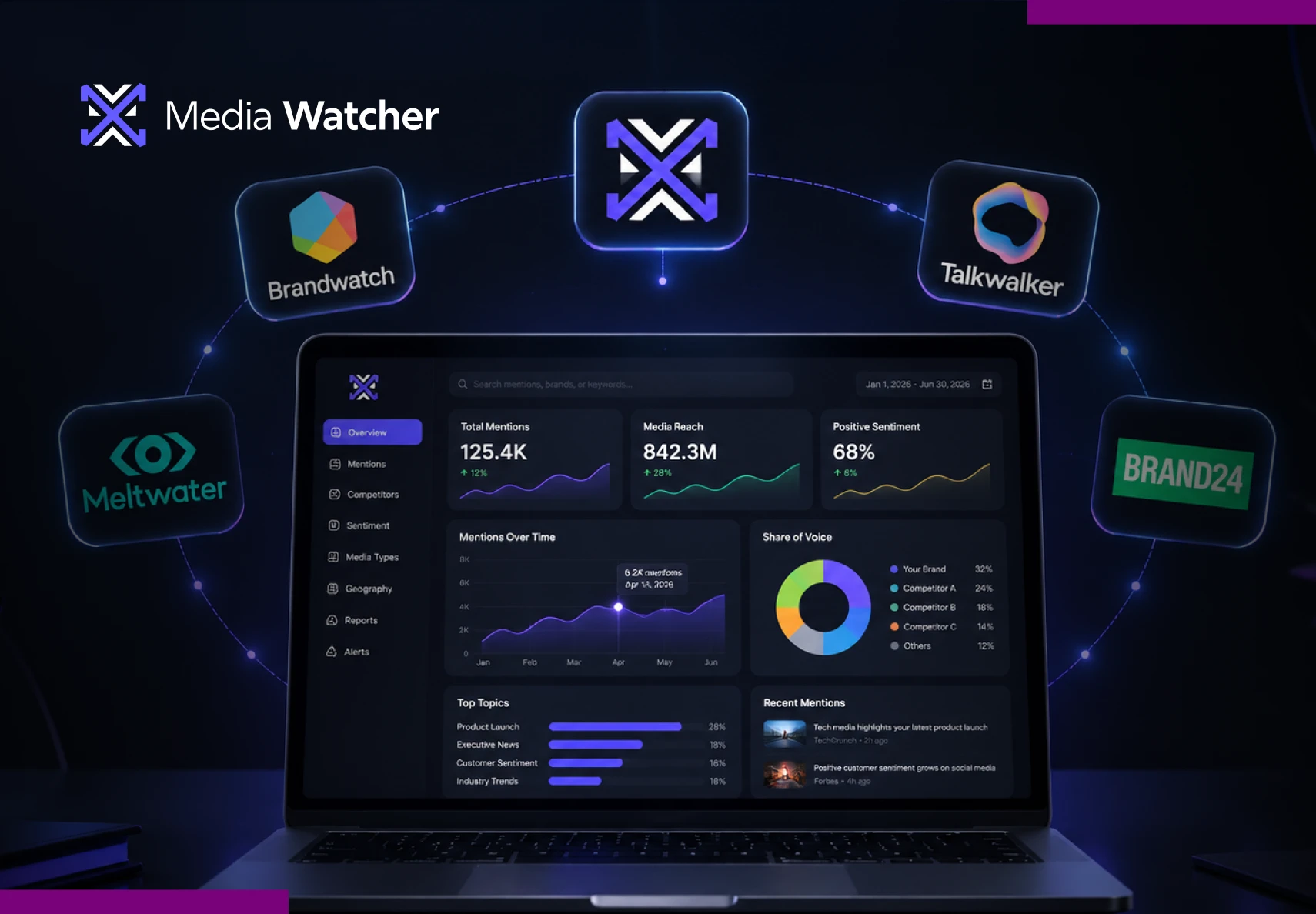


The global media monitoring tools market reached $5.46 billion in 2024 and is projected to hit $12 billion by 2030, growing at 14.1% annually. That growth is not driven by fashion. It is driven by the fact that brand reputation can shift in hours, and the organizations caught off guard are almost always the ones that were not watching.
Here is just one example of how real users discuss brands on social media platforms every single day:
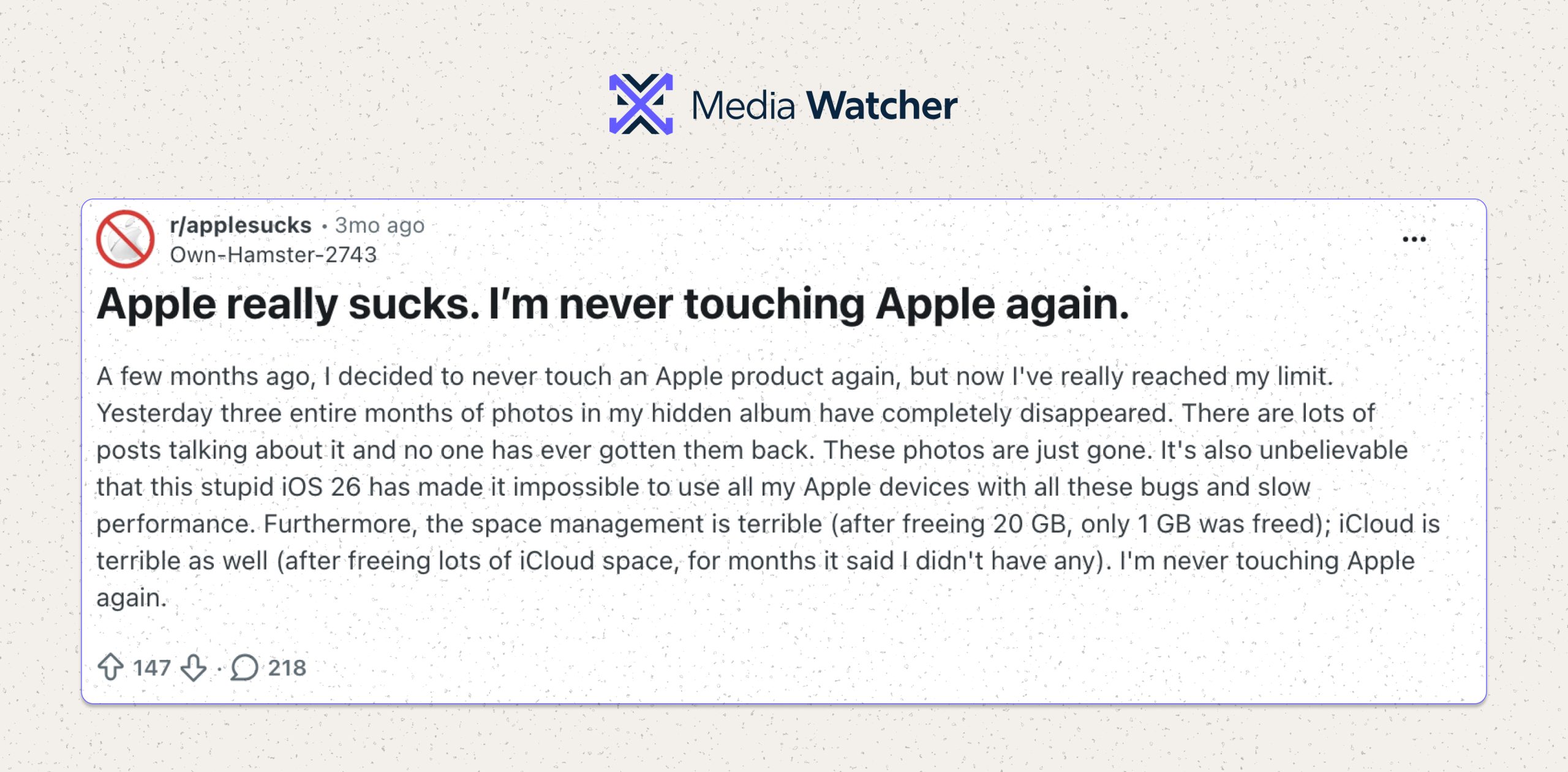 Posts like this that are untagged, posted on a niche subreddit, never directed at Apple’s official account, are invisible to any team not actively monitoring.
Multiply this across Reddit, X, forums, and review platforms, and the picture becomes clear: the conversation about your brand is already happening.
This guide covers everything from the basics to 2026’s most important developments, AI-powered monitoring, LLM brand visibility, and the tools and workflows that modern PR, marketing, and communications teams are actually using right now.
What is Media Monitoring?
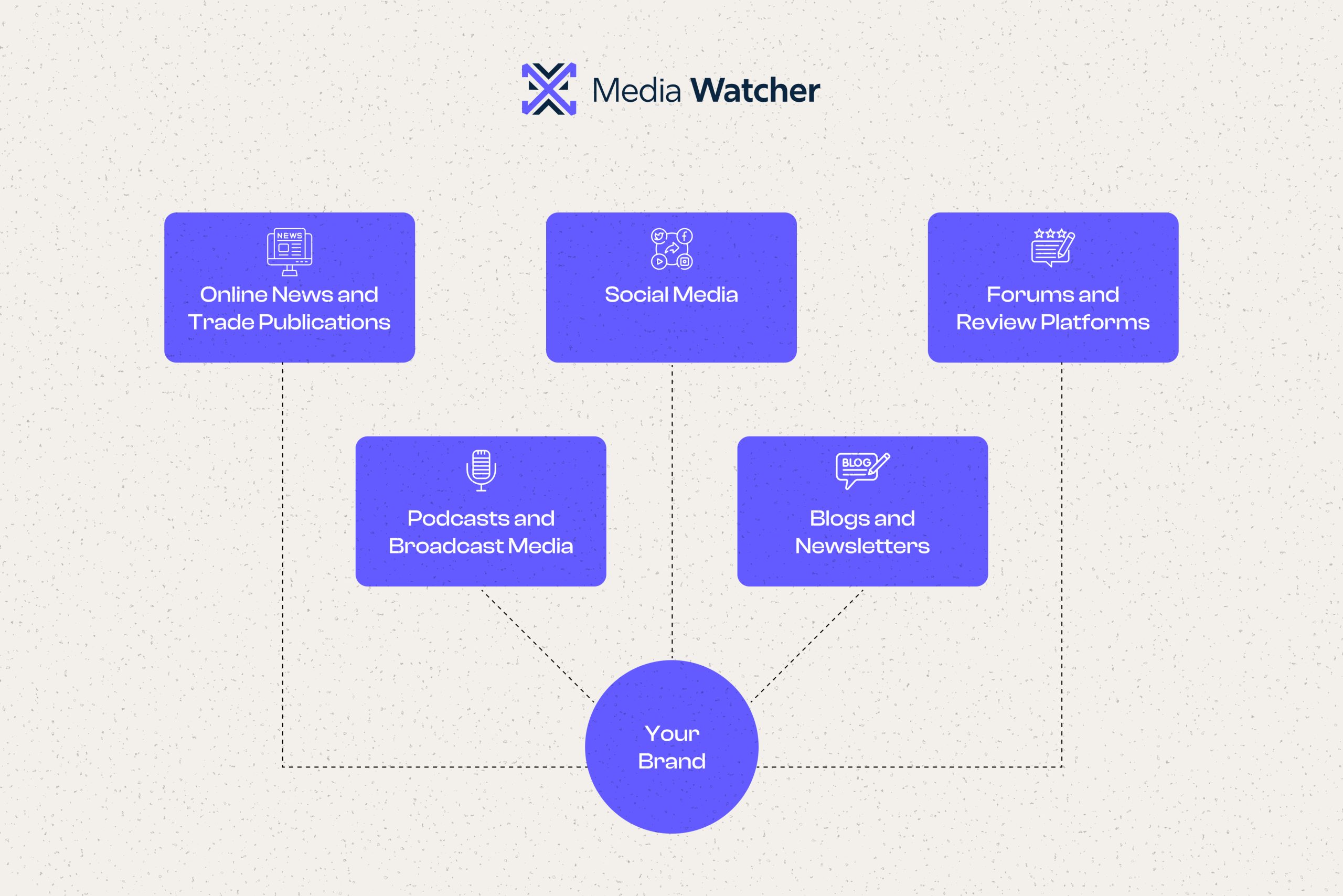
Media monitoring is the ongoing process of tracking and analyzing mentions of a brand, person, organization, or topic across multiple media channels, including news sites, social media, forums, blogs, podcasts, broadcast media, and review platforms. The goal is to understand who is talking about you, where those conversations are happening, and whether the tone is positive, negative, or neutral.
Do you know that 82% of PR professionals use media monitoring to track their brand’s reputation?
How Media Monitoring Software Works?
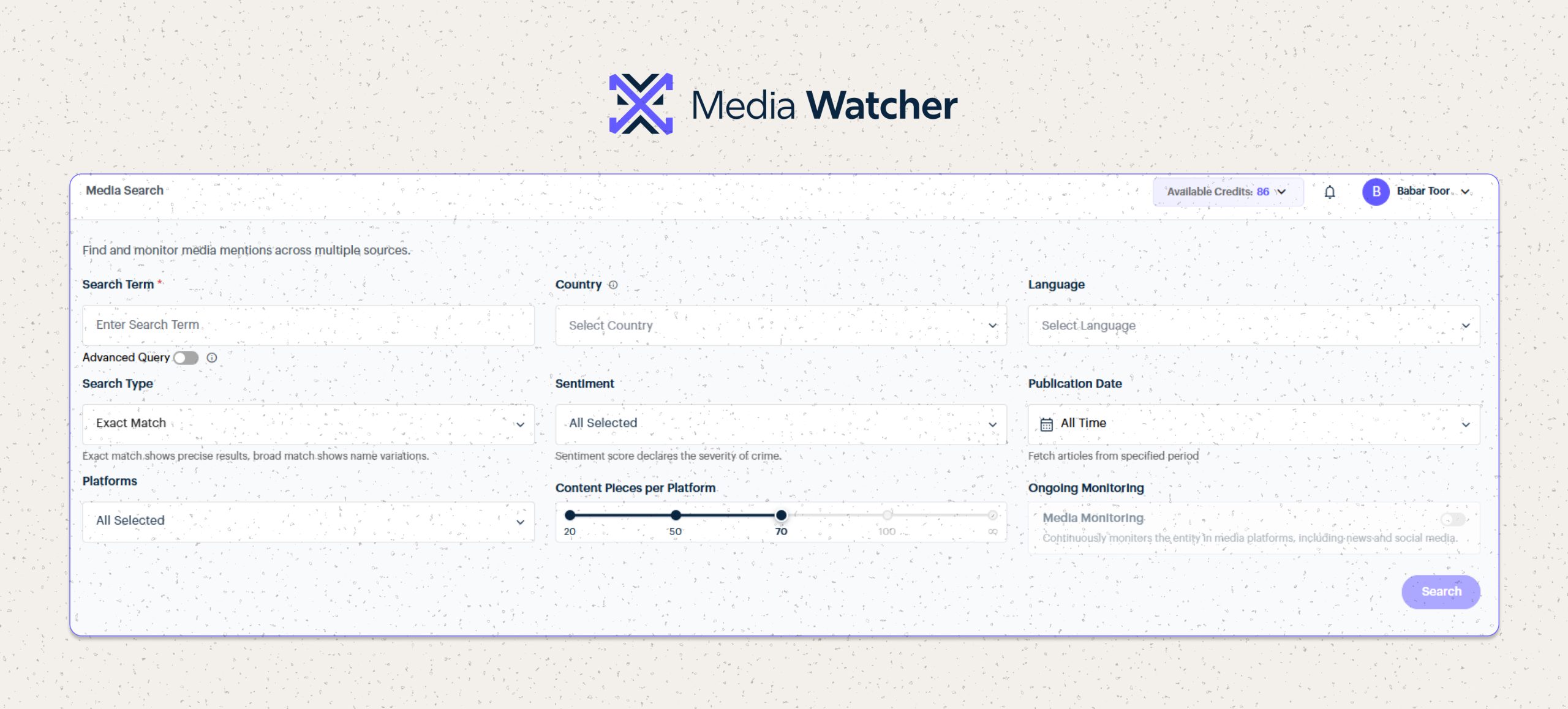
Media monitoring software starts by entering a search term like a brand, person, or keyword and refining it with filters like Country, Language, and Publication Date to narrow the scope.
You control how precisely the system matches your term using Exact or Broad Match, while the Sentiment filter helps assess the tone and severity of each mention.
A content volume slider manages how many articles are pulled per platform. Most powerfully, the ongoing monitoring toggle transforms the process from a one-time search into a continuous, automated watch, delivering real-time media intelligence without any manual effort.
 What Should You Monitor?
The most common setup mistake is starting too narrow. A complete monitoring setup covers five categories.
Most teams begin by monitoring their brand name and stop there. That approach misses the majority of relevant conversations because most people discussing your brand do not tag you, spell your name correctly, or post on the one platform you are watching.
Your Brand
- Company name, including common misspellings and abbreviations
- Product and service names
- Branded campaign hashtags and key executive names
Your Competitors
- Competitor brand and product names
- Their campaign hashtags, executive names, and pricing mentions
Your Industry
- Regulatory changes and compliance announcements
- Category-level keywords and industry event mentions
Your Partners and Suppliers
- Suppliers, agencies, and technology partners; their reputation affects yours
Untagged Mentions
This is where most brands lose the most signal. The majority of online conversations about a brand do not include a direct tag or mention. News articles, forum threads, and Reddit discussions will refer to your brand by name without linking to you.
A monitoring setup that only captures tagged mentions misses most of what is actually being said.
Where Do Brand Conversations Happen?
 Who Actually Needs Media Monitoring?
Any organization that interacts with the public and cares about its reputation needs media monitoring. The question is how much coverage and how fast.
| Teams | What Media Monitoring Does for Them |
|---|---|
| PR & communications | Tracks earned media coverage, measures campaign impact, identifies crisis signals early, and provides evidence of PR ROI to leadership |
| Marketing teams | Monitors campaign resonance, finds influencers, measures share of voice against competitors, and surfaces content opportunities from real audience language |
| Product teams | Collects unfiltered feedback on features, identifies recurring complaints, tracks sentiment around launches, and spots unmet customer needs |
| C-suite executives | Provides competitive intelligence, flags reputational risks, benchmarks brand health, and supports investor relations with media coverage data |
| Compliance & legal | Monitors adverse media for regulated industries, tracks regulatory announcements, and surfaces mentions carrying legal or reputational risk |
| Journalists & media | Tracks breaking stories in defined verticals, finds sources, monitors how stories develop across publications and platforms |
| Government & NGOs | Monitors public opinion on policy issues, tracks narrative shifts, identifies misinformation campaigns, and measures public trust over time |
What are the Top Benefits of Media Monitoring in 2026?
- Brand Reputation Management: Know what people are saying about your brand before it becomes a problem.
- Crisis Detection: Catch the first signal of a crisis hours before it becomes a headline.
- Competitive Intelligence: Track what customers say about your competitors and use it to your advantage.
- Campaign Performance: Measure how your PR and marketing messages actually land in the real world.
- Audience Insights: Turn unfiltered public conversations into your most honest market research.
How to Set Up Effective Media Monitoring in 5 Steps
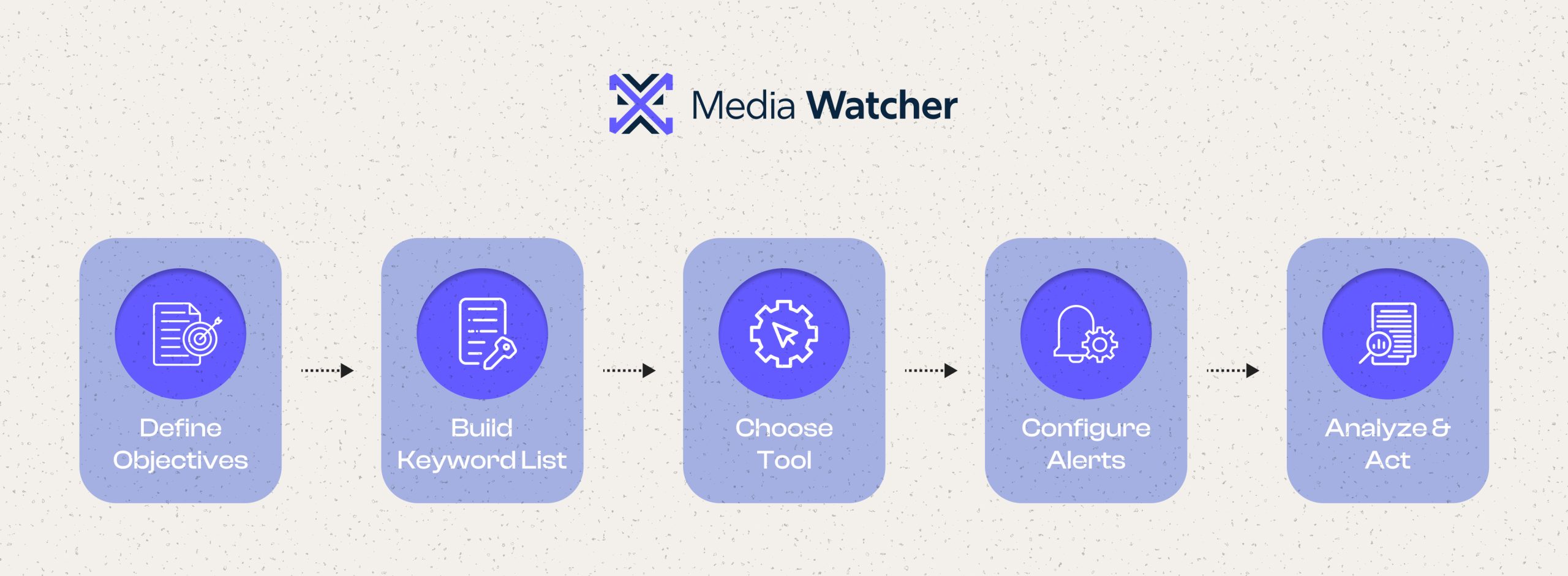 A practical workflow from zero to a functioning monitoring setup, in the right order. The sequence matters. Starting with keyword selection before defining your goals creates a data problem you will spend months correcting.
Step 1: Define Your Primary Objective
Before choosing a tool or writing a single keyword, write one sentence: what question do you most need this data to answer?
- PR and communications: How much coverage did we earn this month, and what is the tone?
- Marketing: Which messages are resonating, and with which audiences?
- Compliance: Are there regulatory developments or adverse media mentions we need to flag?
Step 2: Build Your Keyword List
A solid starting list includes your brand name (plus misspellings), product names, the CEO’s name, the top two to three competitor names, three to five category-level terms, and active campaign hashtags. Use Boolean operators to sharpen results, and adding negative keywords early prevents your feed from filling with irrelevant mentions.
Step 3: Choose Your Tool and Configure Sources
Select a monitoring tool based on the channels that matter most for your industry, the languages and regions you operate in, and the volume of data you need to process. Prioritize real-time alerts, sentiment analysis beyond positive/negative/neutral, Boolean search support, and reporting functionality your team will actually use.
Step 4: Configure Alerts
It includes the following:
- Volume spike alerts: Trigger when mentions exceed a normal threshold within a defined window, the first signal of a crisis or viral moment.
- Sentiment drop alerts: Trigger when negative mentions cross a defined percentage of total volume, catching slow-burning reputation problems before they become crises.
Step 5: Establish an Analysis and Respond
- Daily: Review alerts and respond to urgent mentions within your SLA
- Weekly: Review sentiment trends, share of voice, and competitive activity
- Monthly: Produce a report connecting media activity to business outcomes
Media Monitoring Trends in 2026
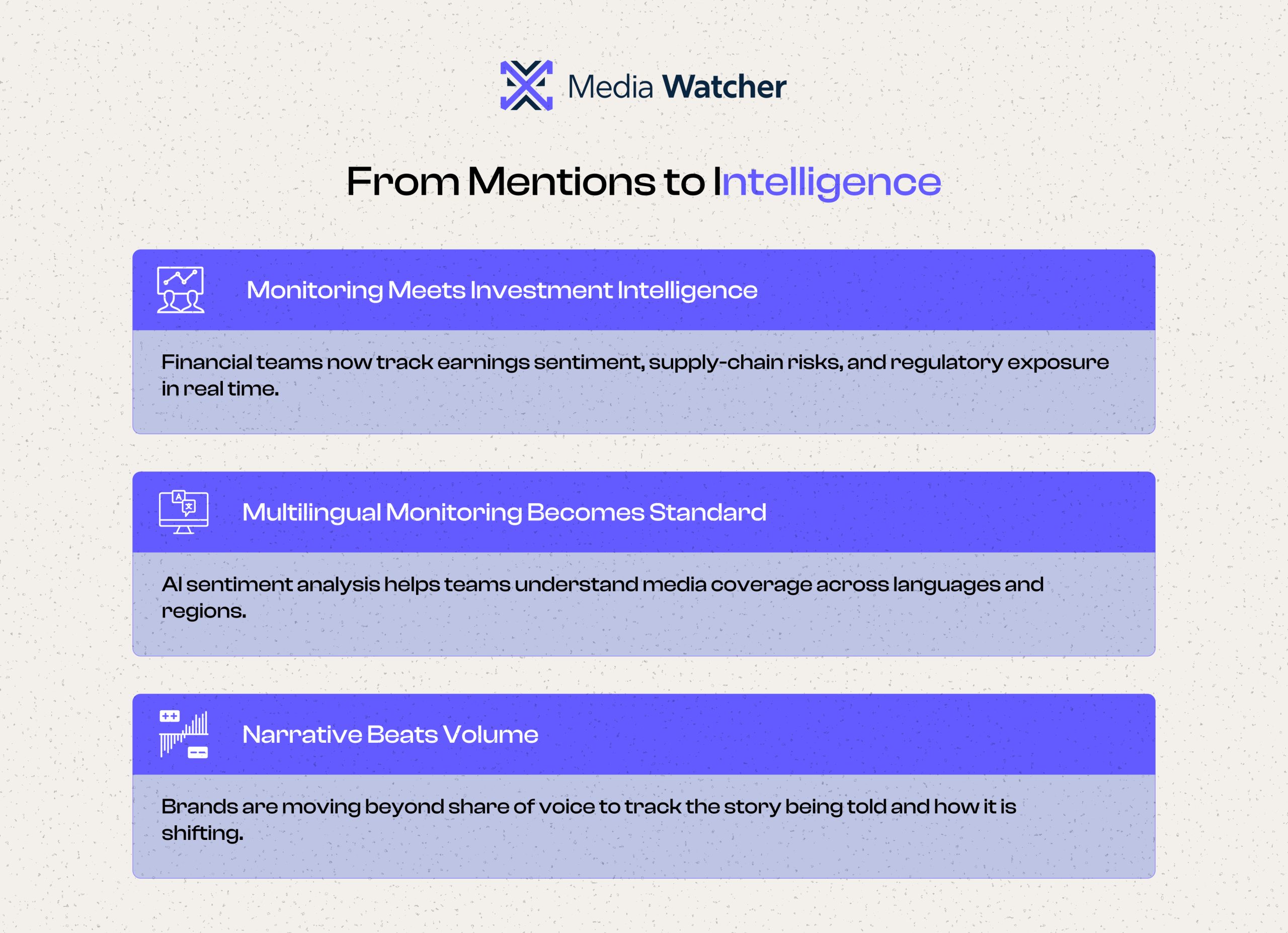
Media monitoring is changing quickly. In 2026, the strongest platforms are moving forward from simple mention tracking to intelligence-led monitoring.
 Best Media Monitoring Tools in 2026
The meaningful differences between platforms are in depth of AI capabilities, source coverage in specific regions and languages, broadcast monitoring access, and the quality of the reporting layer.
| Tool | Best for | Standout feature | Coverage |
|---|---|---|---|
| Media Watcher | PR, compliance, multi-market monitoring | Sub-200ms alerts + AI sentiment | 100K+ sources, 80+ languages, 235+ regions |
| Brandwatch | Enterprise consumer intelligence | Deep social + data visualization | 100M+ online sources |
| Meltwater | Broadcast + print + digital combined | Broadcast monitoring + GenAI Lens (LLMs) | Global news and social |
| Talkwalker | Campaign analytics and benchmarking | Visual recognition + Blue Silk AI | Social + news + forums |
| Brand24 | SMEs and growing brands | AI anomaly detection + accessible pricing | 25M+ online sources |
The Role of AI in Media Monitoring 2026
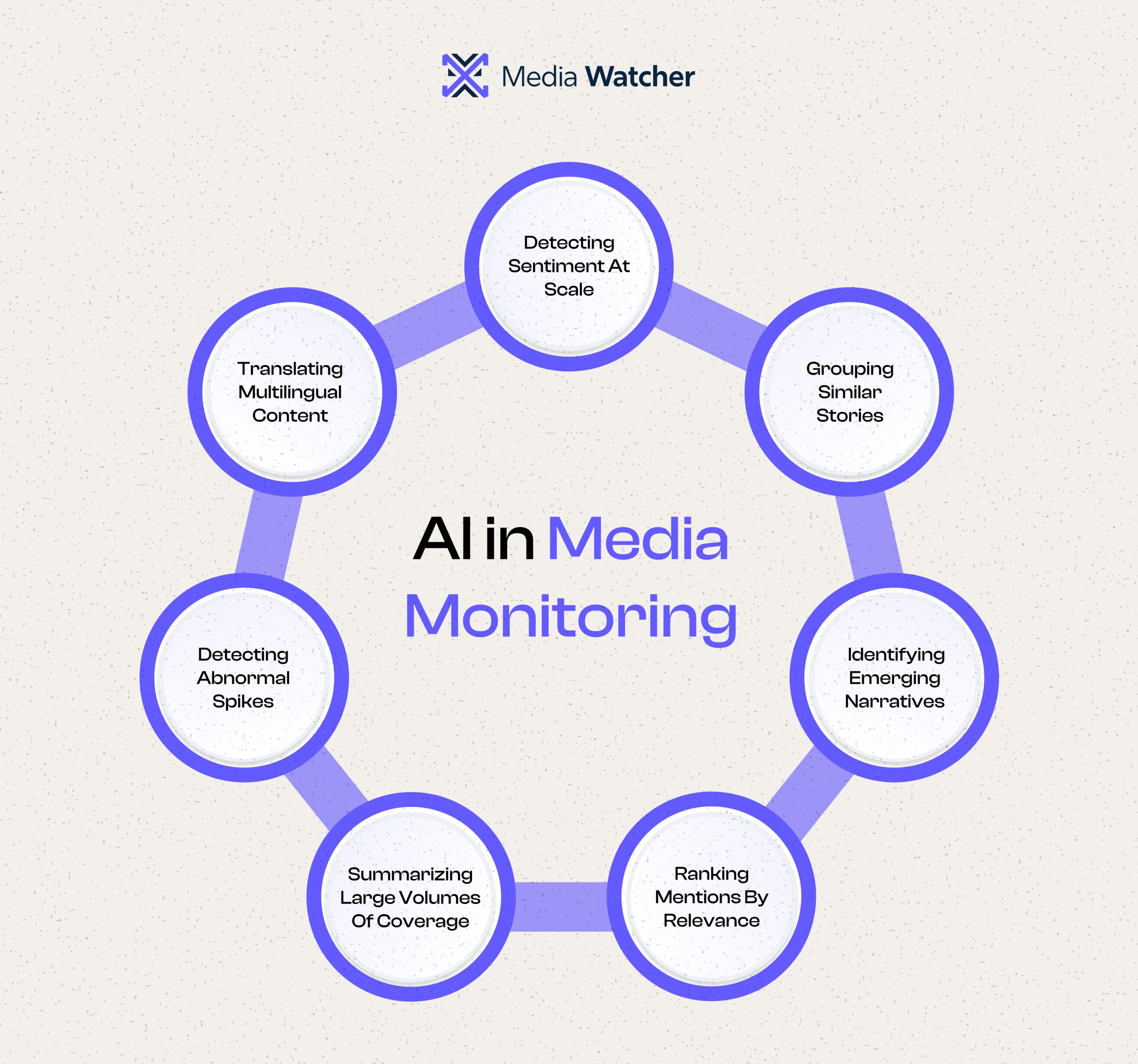
AI is now central to modern media monitoring. It helps teams process large volumes of content, classify mentions, detect sentiment, identify entities, summarize stories, and highlight unusual spikes.
Without AI, teams may collect mentions but still struggle to understand what matters. AI can support media monitoring by:
 However, AI should not replace human judgment. It should reduce manual work and help teams focus on the mentions that deserve attention. The strongest media monitoring workflows combine automated detection with human review
How Media Watcher Helps You Monitor Smarter
Purpose-built media monitoring services for PR teams, communications leads, and analysts who need real intelligence, not just more data.
Media Watcher processes 56x faster than manual monitoring and is preferred by 88% of users who have run both approaches side by side.
Media Watcher is an AI-powered media monitoring and sentiment analysis platform trusted by PR professionals, compliance teams, journalists, and communications leads across 20+ countries. It was built for the reality of modern media environments: too many channels, too much volume, and too little time to manually process what matters.
- Real-time coverage across 100K+ sources
Media Watcher’s media monitoring tracks mentions across 100,000+ global sources in under 200 milliseconds, across news, social media, forums, blogs, podcasts, and broadcast media. Coverage spans 80+ languages and 235+ regions.
- Sentiment analysis that goes beyond positive and negative
Media Watcher’s sentiment analysis engine classifies the emotional context behind mentions, distinguishing between concern, admiration, frustration, and urgency.
- Social listening built into the same platform
Media Watcher’s social listening capabilities cover Facebook, X/Twitter, Reddit, YouTube, TikTok, Instagram, and a dedicated hashtag tracker, all feeding into the same dashboard and alert system as news and broadcast monitoring.
- Alerts that reach you in under 200ms
Media Watcher’s media alerts are configured around keyword, sentiment, and volume triggers. When a threshold is crossed, the alert fires in under 200 milliseconds.
- Teams using Media Watcher save an average of 26 hours per week
No more scanning multiple platforms, no more copy-pasting mentions into spreadsheets, no more waiting for weekly reports. The monitoring runs continuously, the alerts surface what matters, and the reporting writes itself.
Frequently Asked Questions
What Are The Types of Media Monitoring?
The main types include news monitoring, social media monitoring, broadcast monitoring, print monitoring, competitor monitoring, crisis monitoring, and industry monitoring.
How Does News Monitoring Help Businesses?
News monitoring helps businesses track media coverage, detect emerging stories, monitor competitor activity, identify risks, and make faster, data-driven decisions.
What is the Difference Between Media Monitoring and Social Media Monitoring?
Media monitoring covers news, broadcast, print, blogs, forums, and social platforms. Social media monitoring focuses mainly on conversations happening across social media channels.
What Is Required For Media Monitoring?
A strong media monitoring setup requires clear objectives, relevant keywords, broad source coverage, real-time alerts, sentiment analysis, filtering, and reporting.
What Are The Best Media Monitoring Tools In 2026?
The best tools in 2026 offer real-time alerts, broad source coverage, sentiment analysis, multilingual monitoring, competitor tracking, reporting, and integrations. The right tool depends on whether the business needs PR tracking, social listening, crisis monitoring, or full media intelligence.
How Do You Create A Media Monitoring Report?
Create a report with an executive summary, mention volume, sentiment breakdown, top sources, key narratives, competitor comparison, geographic insights, risks, opportunities, and recommended actions.