

According to a 2023 survey by Deloitte, 43% of the brands experience a reputation crisis at least once every two years, with the internet content being posted before the team even realizes the threat. By the time the story reaches leadership, people may have changed their minds. In an environment where news and reactions are published on hundreds of digital sites within minutes, manual monitoring is no longer an option.
Reputation management media monitoring tools are currently being applied by organizations to ensure that they are aware of the debates regarding their brands in international media outlets. Media monitoring services allow the communication teams to track coverage, understand the patterns of sentiment evolving in real time, and proactively intervene before negative narratives start to take shape and begin to affect public trust.
Importance of Media Monitoring in Reputation Management
The present media landscape is interrelated, complex, and ongoing in reputation management. Conversations surrounding a brand do not necessarily stay in a single vehicle; all the media, including news, social media, blogs, industry publications, and broadcast networks, operate in offering a certain level of context and can influence the entire discourse. These touchpoints create a broader perception as time passes, and it is often difficult to understand without structured visibility.
Periodic tracking is not enough to maintain such visibility. Communication departments must have a consistent way of understanding how these stories are influencing, the change in mood, and the contribution of different media outlets to brand awareness.
It is here that media tracking tools find their role in reputation management. These tools provide a clearer view of what a brand is doing to position itself in the media space by combining coverage of multiple sources and letting them be analyzed in real-time. Such an understanding helps organizations to stay abreast of the discourse at hand, and it handles reputation more accurately.
How to Strengthen Reputation Management Strategies with Media Monitoring Tools
A systematic monitoring strategy enables organizations to stop observing and start taking informed decisions. When media intelligence is incorporated into communication processes, reputation management becomes more conscious, based on trends and indicators instead of individual notices.
Early Risk Detection
Modern media monitoring software highlights emerging issues as they emerge. Minor shifts in tone, repetitive motifs, or focused references in particular sources may reflect the initial stages of reputational pressure. By improving timely visibility, teams are capable of evaluating context and reacting to it through considered communication.
Sentiment Analysis of Public Opinion
An effective media monitoring system offers insights by understanding the tone of coverage. Knowledge of whether conversations are supportive, critical, or neutral will enable organizations to analyze the reception of messaging and the development of perception among diverse audiences.
Competitive Narrative Tracking
It also monitors the market narrative at large. By monitoring the coverage and positioning of competitors, organizations can see the direction of the industry, communication gaps, and how to leverage their own communication strategy.
Key Features to Look for in Media Monitoring Tools for Reputation Management
The platform choice is key to converting media intelligence into actionable insight. Not every tool can provide the strategic depth needed to offer proactive reputation management. Knowing what features are most important will guarantee that organizations are in a position to predict risks, discover opportunities, and have a clear vision of brand perception.
Real-Time Alerts and Monitoring
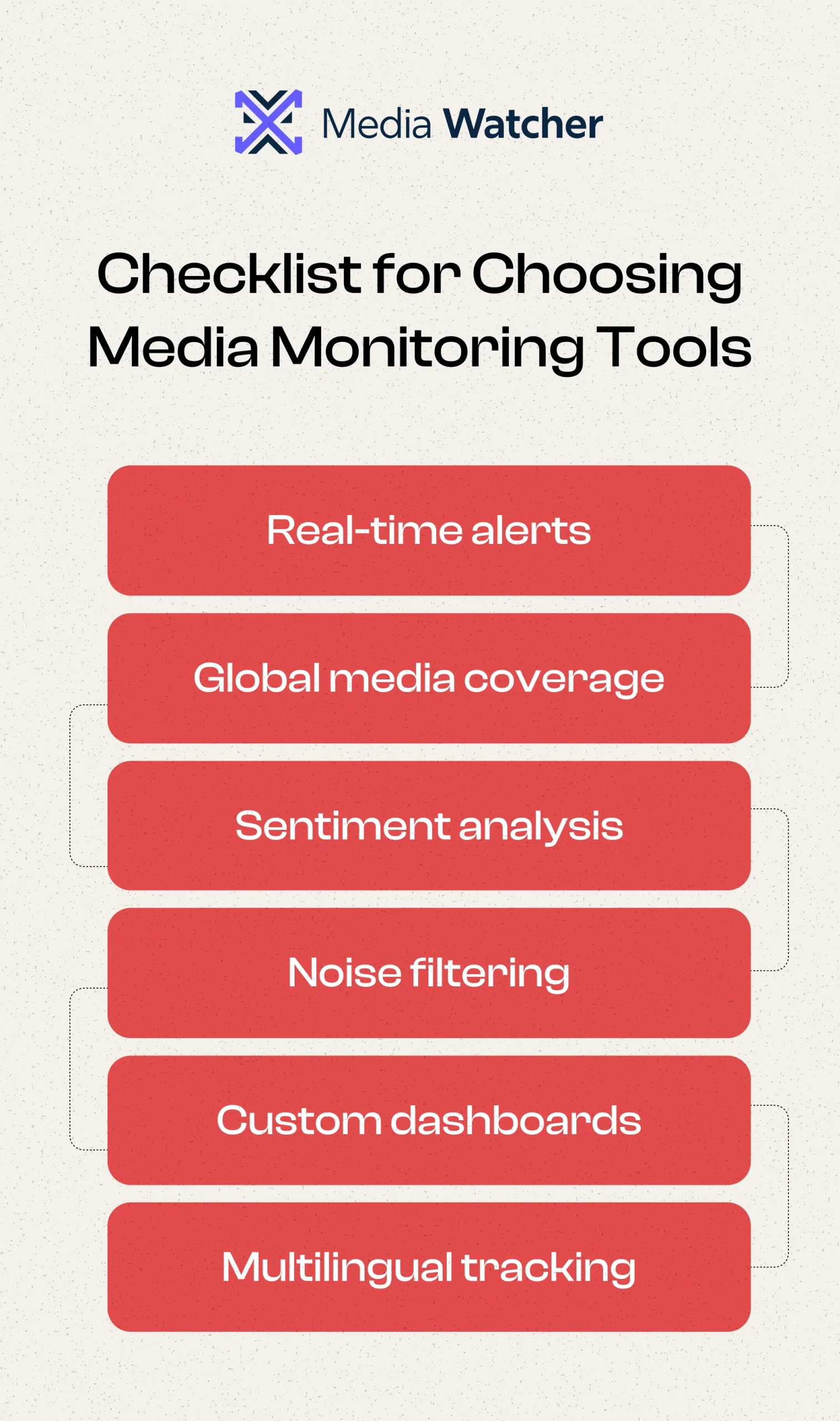
Strong media monitoring software offers real-time alerts when a mention is found in media outlets. Quick awareness means teams can evaluate emerging issues and react before stories take shape.
Global Media Coverage
There are effective platforms that monitor a wide variety of sources, such as news, blogs, podcasts, and social media, in different locations. Extensive coverage will make sure that no dialogue affecting reputation is unseen.
Complex Sentiment and Context Analysis
Sentiment analysis in media monitoring software is more advanced than positive, negative, or neutral classification powered by AI. It reads nuance, emphasizes context, and demonstrates the way coverage influences perception among the key audiences.
Personalized Dashboards and Reports
Teams should be able to visualize trends, find patterns, and derive insights effectively. Flexible reporting enables decision-makers to be proactive instead of reactive.
Noise Filtration and Intelligent Tracking
A good monitoring solution separates signal and noise. The platform minimizes random mentions and focuses on meaningful coverage, which enables organizations to allocate resources to areas where they can have the most impact.
These features collectively position a media monitoring solution as a central tool for managing reputation with precision, foresight, and actionable insight.
How to Choose the Right Media Monitoring Platform for Reputation Management?
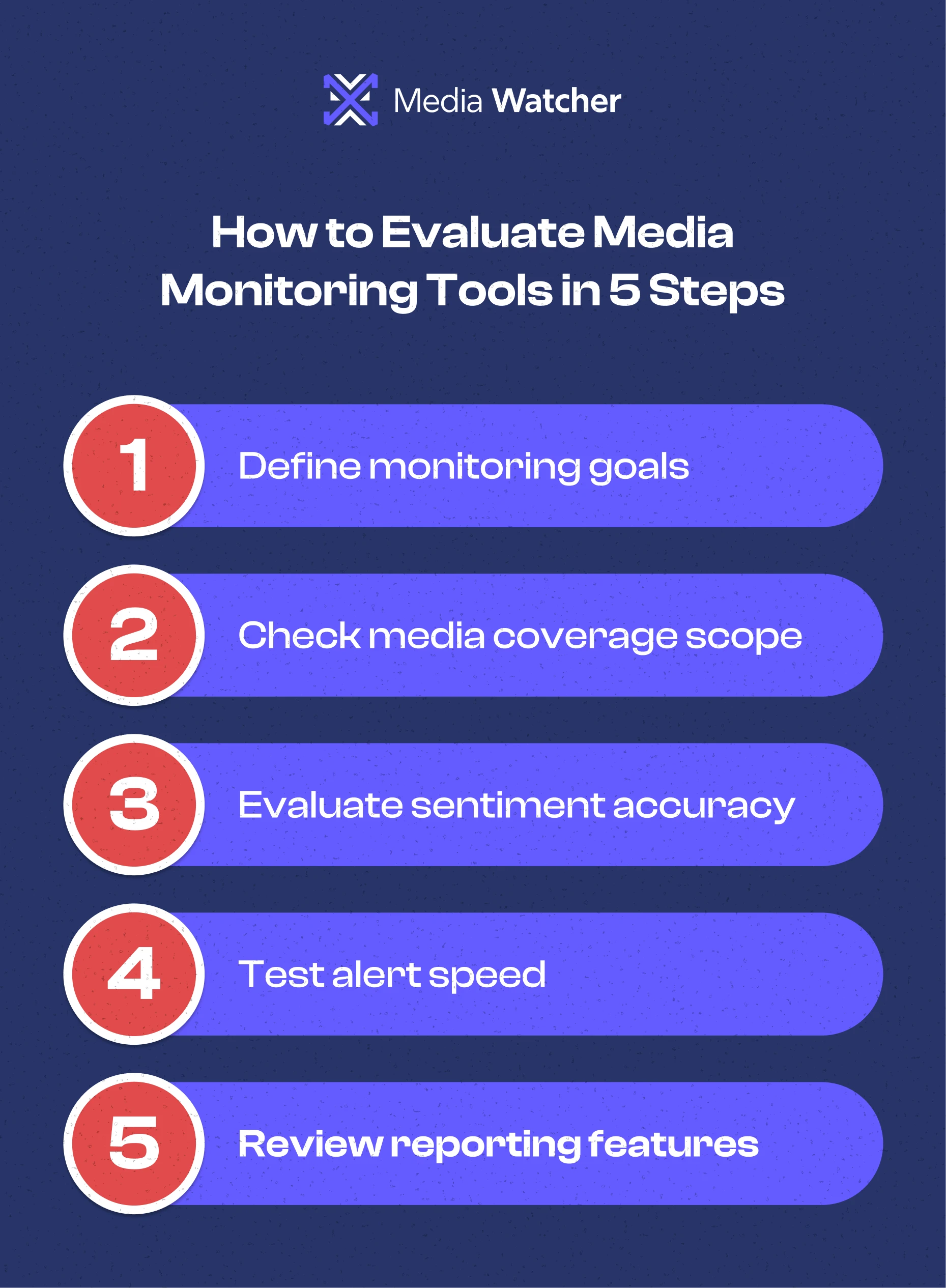
When choosing a good media monitoring platform, one should make a strategic assessment concerning features that are not limited to tracking. Organizations should always consider the level at which the solution would capture both global and regional media, so that no important conversation is omitted.
Another important consideration is AI accuracy in sentiment analysis, which allows teams to interpret coverage accurately and comprehend changes in perception among various audiences. Real-time alerts are also needed to address new problems before they spiral out of control. Bespoke dashboards and reporting enable communication teams to see trends and make evidence-based decisions quickly.
Another crucial aspect is that the platform will be able to monitor the trends in the narratives and reputation indicators as time goes on. Tracking the development of conversations gives an understanding of the long-term positioning of the brand and the dynamics of the industry.
Organizations can go beyond reactive and become proactive by selecting the appropriate media monitoring platform. Proactive reputation management tools enable reputation management teams to foresee risks, take proactive action, and safeguard brand credibility with certainty.
How Media Watcher Supports Reputation Management with Media Monitoring Tools
It is essential to understand how your brand is being discussed across news outlets, social networks, blogs, and broadcast channels to make informed decisions and safeguard credibility. Media Watcher offers a full media tracking service that unites content across more than 100,000 media globally and delivers real-time notifications on the mentions that matter. Its AI-based sentiment analysis monitors trends in narratives and identifies changes in perception, enabling teams to identify risks before they emerge.
Personalizable dashboards and smart filters enable communication practitioners to think in terms of actionable insights rather than noise. With Media monitoring tools for reputation management built into its platform, Media Watcher enables organizations to take control of their brand narrative confidently and proactively.
Book a demo today to see how Media Watcher can transform media insights into strategic reputation management.