

Did you know that nearly 9 out of 10 startups struggle to survive past their first few years, often because early signals from customers or the market go unnoticed? Launching a new business means juggling tight budgets, small teams, and constant pressure to stand out. In these early stages, even a single negative mention online can quietly shape public perception, influence customer trust, or affect investor confidence.
Startups rarely have the time or resources to track every conversation manually, leaving them reactive instead of proactive. Media monitoring helps bridge that gap. It allows startups to keep an eye on what’s being said about them across news, social media, and online communities, giving them the insight needed to respond quickly and build trust.
What is Media Monitoring and Why Does it Matter for Startups?
Media monitoring for startups, in practical terms, means paying close attention to how a startup appears in public conversations. References in news articles, posts in the social network, comments in forums, and reviews on third-party websites all influence the perception of a startup. These discussions usually start way before a startup becomes widely known.
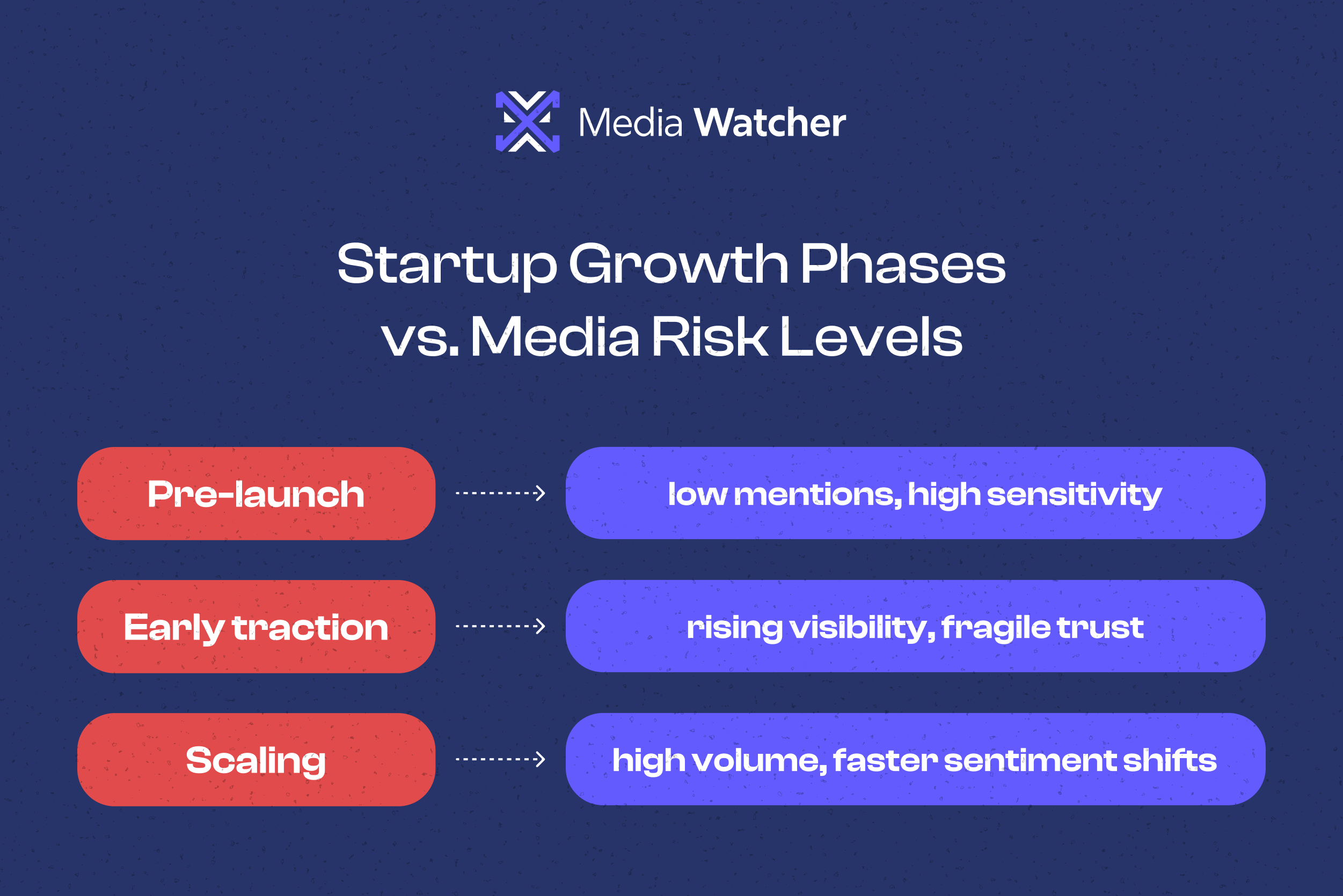
The visibility risk is higher in startups because reputations form quickly and take time to rectify. The lack of brand awareness, small teams, and limited resources does not leave much space to be filled with delayed reactions or untold stories. One unattended mention can silently affect customer trust or investor mood.
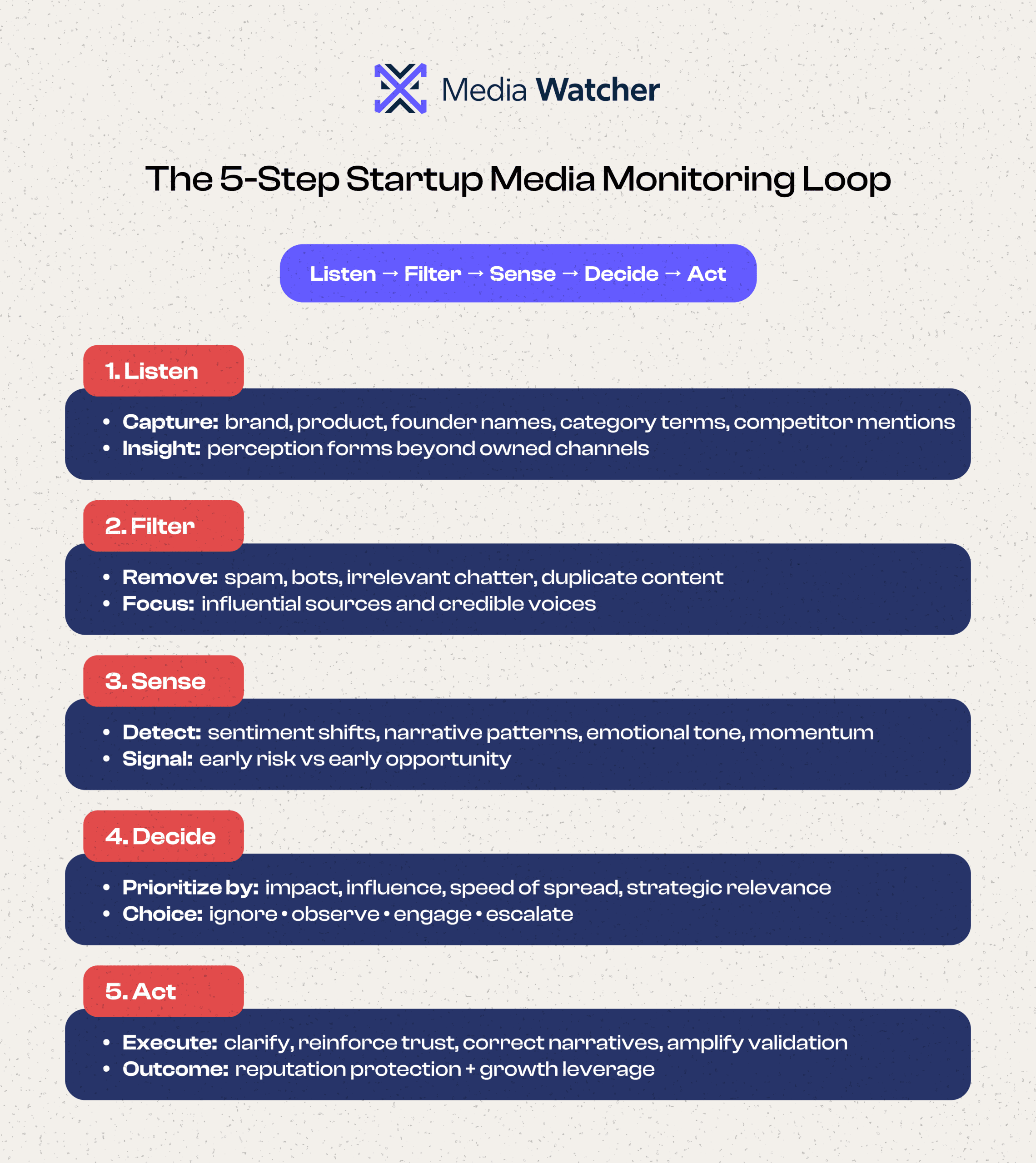
Manual monitoring, like periodic searches or social verifications, is fragmented and reactive. Formalized media monitoring brings about continuity, context, and consistency, enabling startups to know the nature of sentiment change, identify early indicators, and develop trust intentionally as the business gains momentum.
How Media Tracking for Startups Helps Navigate Growth Challenges
Startups grow in unpredictable ways, and the real value of media tracking can be seen through the insights derived to help in strategic decision-making. Through monitoring trends in conversations on social media, startups can identify trends in customer sentiment early, observe when a topic begins to gain momentum, and discover stories that can indicate opportunities or risks. In practice, when a competitor launch causes unforeseen interest, a startup can change messages or emphasize differentiators before the conversation begins to expand.
Media monitoring also assists teams in determining which messages appeal most to audiences, enabling marketing and PR initiatives to be based on actual responses in the real world, as opposed to assumptions. Founders and leaders can focus on outreach and high-impact channels, and make informed decisions about product positioning or investor communications.
It has been found that 91% of PR professionals use sentiment analysis to handle brand risk and manage response. In the case of startups, this involves real-time market awareness and taking decisive action. Media tracking transforms random online discussions into a strategic instrument capable of assisting startups on the path of growth and making the decision to enhance credibility, engagement, and market presence.
 How a Startup Could Use Media Monitoring to Accelerate Growth
A small fintech startup faced a public setback when a data breach incident began circulating in niche tech blogs and social channels shortly after a product update. Initial coverage was positive, but opinion was soon turning negative, and unfounded speculation about security started spreading the sort of story that can undercut trust before a company even finds a level footing.
Instead of relying on isolated alerts, the leadership installed media monitoring software to know the magnitude and the tone of the discussion on the news sites, threads on Twitter, LinkedIn, and developer forums in real-time. The team had been able to extract noise and signal within weeks, discover the main voices that framed the narrative, and act with clarifying technical contributions and open communication. The instrument not only identified which outlets were driving the traffic about the incident, but also where sentiment was moving most distinctly.
With this understanding, the startup updated its public statements, talked directly to the users concerned, and increased the number of positive mentions by credible industry commentators. The effect was quantifiable: in three months, the feeling changed by an approximate of 20%, not only a decline in negative talk, but a gradual shift to neutrality and trust. The company demonstrated agility, and it was observed by investors and partners, which strengthened credibility at a time when it was most needed.
This example demonstrates that the use of structured media monitoring software can extend beyond the counting of mentions. It can reveal any red flags early, put the patterns of conversation into perspective, and offer strategic responses that safeguard reputation, enhance trust, and ensure consistent growth.
 How to Choose the Right Media Monitoring System for Startup Needs
In the case of startups, the selection of a suitable media monitoring system is not merely a matter of selecting a tool; it allows keeping track of essential conversations, securing the brand, and reaching the audience. To assess media monitoring solutions, consider features that really count:
Real-time Alerts: Be notified right after your brand is mentioned online, on social media, or in news materials, and react fast to eliminate small problems before they grow into big ones.
Sentiment Analysis: Learn whether conversations are negative, positive, or neutral. This assists in developing marketing, customer support, and communication strategies.
Global and Multilingual Coverage: Track conversations in other countries and languages to identify trends, the activity of competitors, and the feedback of international audiences.
Noise Control and Intelligent Screening: Sort out unnecessary mentions or spam, and only pay attention to content that counts.
Configurable Dashboards: You can view the data that matters most to your startup at a single glance.
Actionable Insights: Go beyond data to show trends, spikes, or risks that need attention.
Integration to External Tools: Be able to integrate your system with CRM, social media, or reporting tools to save time and simplify work processes.
A common reason why startups fail is that generic tools provide too much raw data, are inflexible, and slow in reporting. Implementing a transparent, quick, and intelligent system will enable startups to make intelligent choices and take decisive action.
How Media Watcher Supports Startups as a Media Monitoring Tool?
In the case of startups, being at the forefront of discussion on the Internet is critical to their development. Media Watcher acts as a media monitoring tool for startups in such a way that assists teams in collecting media data, but converting it into insights that actually drive decisions.
- Track brand sentiment worldwide: Understand how audiences perceive your brand across social media, news, and blogs, with a clear picture of positive, neutral, and negative mentions.
- Instant notifications: Be alerted to sudden reputation risks, trending topics, or spikes in brand mentions so your team can act quickly.
- Localized and multilingual coverage: Monitor conversations across regions and languages to ensure no important feedback is missed.
- Focused monitoring: Filter out irrelevant chatter to concentrate on mentions that truly matter to your business.
- Actionable insights: Transform monitoring data into practical guidance for marketing, PR, and leadership strategy.
Contact the Media Watcher team to book a demo today.