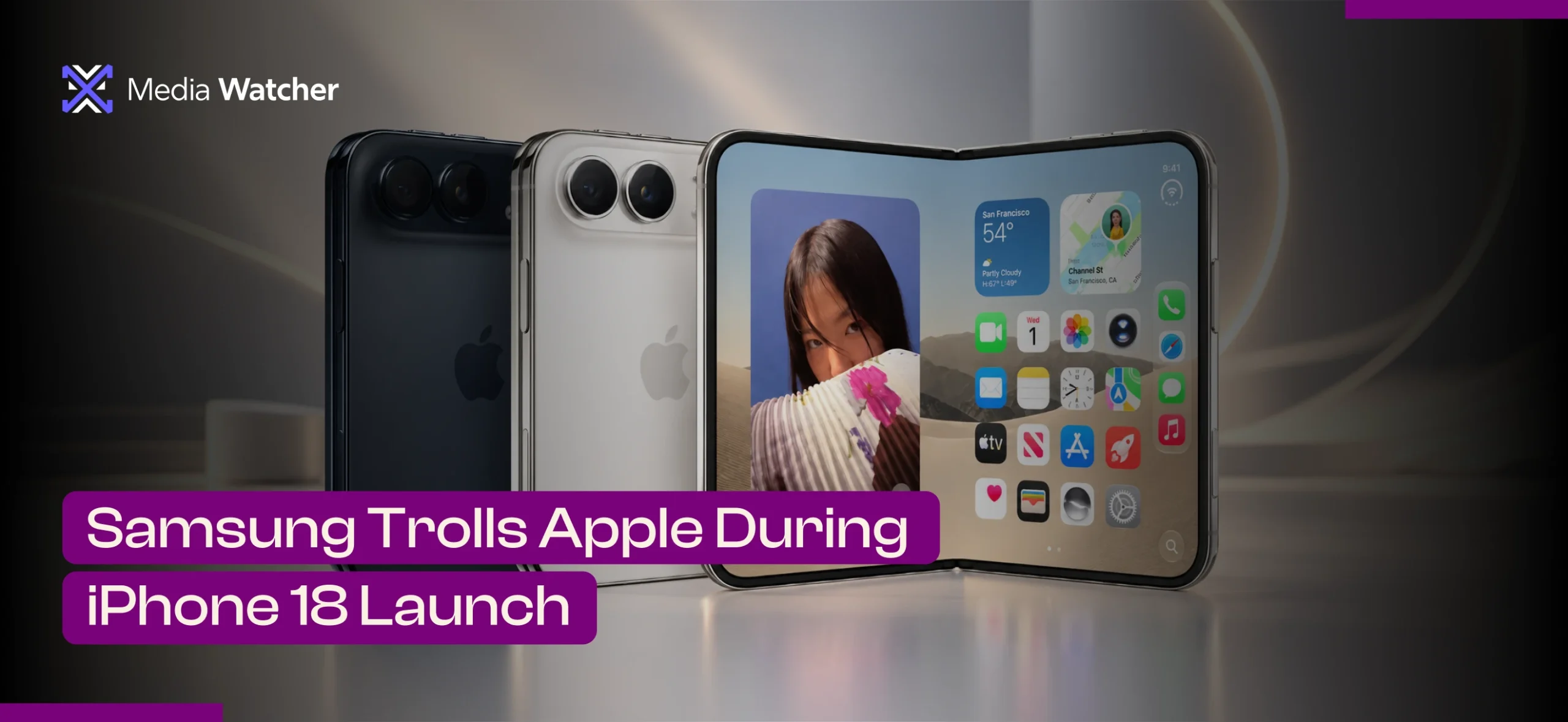
Samsung turned Apple’s September 9 iPhone 18 launch into a live social media rivalry, using its Samsung Mobile US account on X to mock Apple’s announcements as they happened.
The commentary began during the iPhone 18 Pro reveal, when Samsung posted “So far, so same” alongside #ItsTimeToSwitch. As Apple delayed the reveal of its first foldable phone, Samsung added that it would be “folding 3 ways,” positioning its own foldable experience against Apple’s entry into the category.
The tone sharpened after Apple unveiled the iPhone Duo. Samsung described the device as “reheating our leftovers,” referring to its Galaxy Z Fold line, which has been in the foldable market since 2019. It also joked that the Duo looked familiar and targeted Apple’s accessories during the keynote.
The exchange expanded beyond the two smartphone rivals when Samsung tagged Duolingo over Apple’s use of the “Duo” name. Duolingo replied, creating a separate viral conversation around the launch. Times of India reported that the posts drew millions of views on X.
What Does Samsung’s Live Trolling Say About Real-Time Brand Competition?
Samsung’s posts show how a major product launch can quickly become a competing brand’s media opportunity. Rather than waiting for post-event advertising, Samsung reacted in real time and repeatedly reinforced one message: Apple may be new to foldables, but the category is not.
For brands, these fast-moving exchanges make real-time brand monitoring and social listening increasingly important. A single competitor post can shift attention, trigger new narratives and influence how audiences interpret a launch.
Media Watcher helps teams monitor social conversations, competitor mentions and sentiment shifts as they develop, giving brands visibility into narratives gaining momentum across digital channels before they spread across wider media.
Similar Brand Rivalries Seen Before
Samsung has repeatedly used Apple launches as marketing moments. Earlier campaigns mocked Apple over the iPhone notch, cameras and features Samsung said Galaxy devices already offered first. The rivalry has extended beyond product comparisons, with advertising and posts designed to influence how consumers frame each brand’s innovation story around launches.