

Refinitiv estimates that over 80% of financial information today is unstructured, with much of it being news, social media, and analyst commentary. Meanwhile, McKinsey points out that companies that embrace sophisticated analytics, such as sentiment analysis in finance, make more efficient and accurate decisions.
Markets now react to information instantly, with one headline or breaking news being able to change valuations within minutes. Sudden changes of leadership or regulatory announcements are events that can cause instant responses. These swift transitions cannot be reflected in traditional models, and news sentiment trading signals play a critical role in contemporary investment analysis.
Understanding News Sentiment Trading Signals in Modern Markets
News sentiment trading signals are indicators based on the tone, context, and volume of financial news to make investment choices. Rather than depending solely on conventional signals like price fluctuations or financial metrics, these signals center on the perception of information in markets. This method creates a layer of analysis that includes market emotion in addition to measurable data.
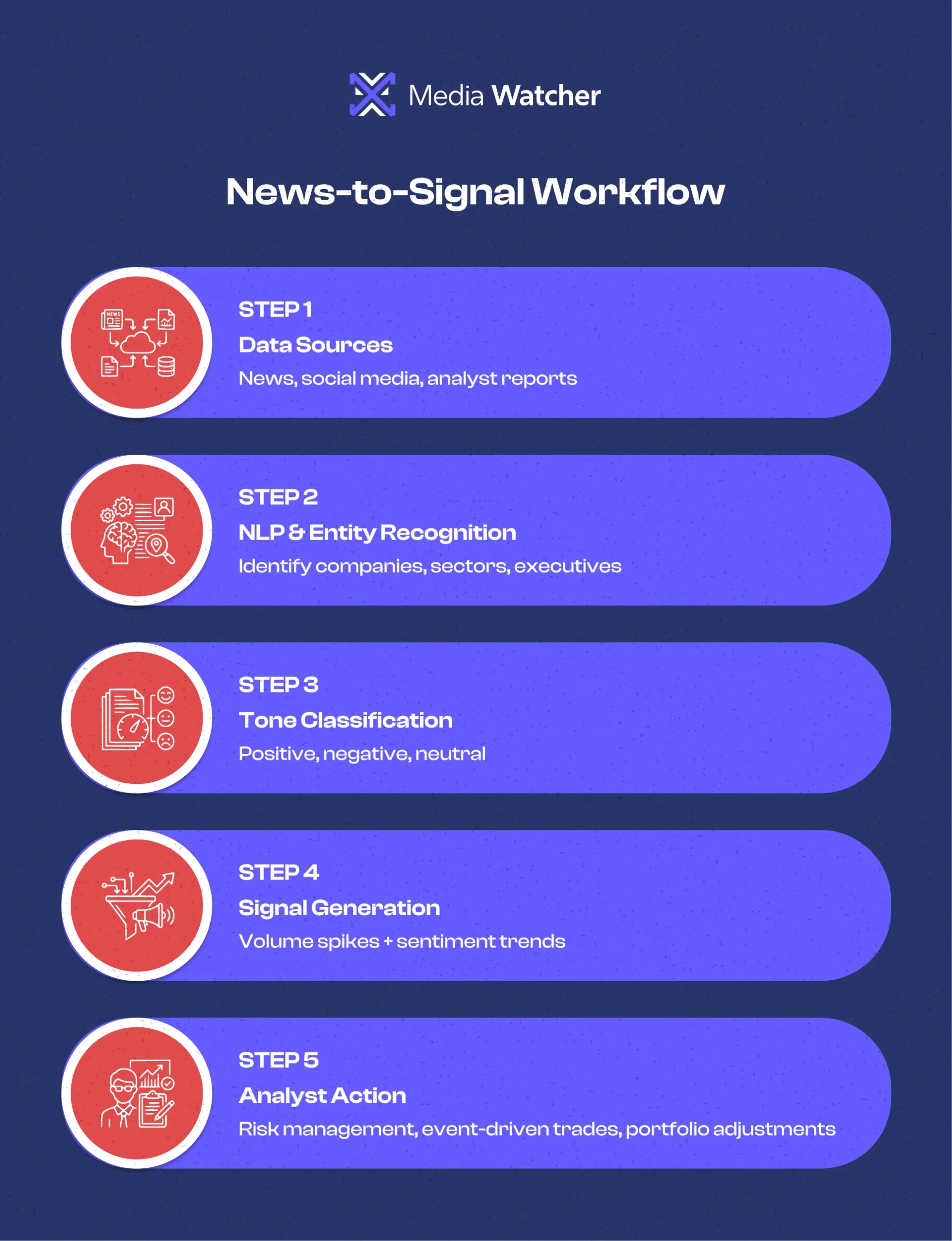
The fundamental logic of using sentiment analysis in finance is the capacity to process vast amounts of non-structured data. Advanced technologies like Natural Language Processing (NLP) are used to analyze news articles, reports, and media coverage through the use of financial news sentiment analysis. Entity recognition assists in recognizing particular firms, industries, or individuals, and tone classification determines whether the sentiment will be positive, negative, or neutral.
In contrast to conventional indicators, which describe what has already occurred, sentiment-based indicators disclose the way markets will respond. This difference gives a major speed edge, and automated systems are able to read and react to news much faster than manual analysis.
As an example, a better-than-expected earnings report can create a positive feeling at first. But when the same report contains prudent future projections, there might be a change towards neutral or ambivalent, causing a reversal in the trading reaction. Traditional models tend to overlook such nuances.
These signals are more effective when there are sentiment trends that correspond to the spikes in news volume and credible sources. When this happens, sentiment signals will be more potent predictors of how the market is likely to move, making analysts make more timely and informed decisions.
How Analysts and Portfolio Managers Use Sentiment Signals
Sentiment signals are important in a practical environment since they determine timely and sound investment decisions. Market sentiment analysis tools are used by analysts and portfolio managers to identify shifts in perception early, usually before these shifts are reflected in price movements. This prompt visibility facilitates short-term trading strategies, as you can more quickly react to emerging opportunities or threats.
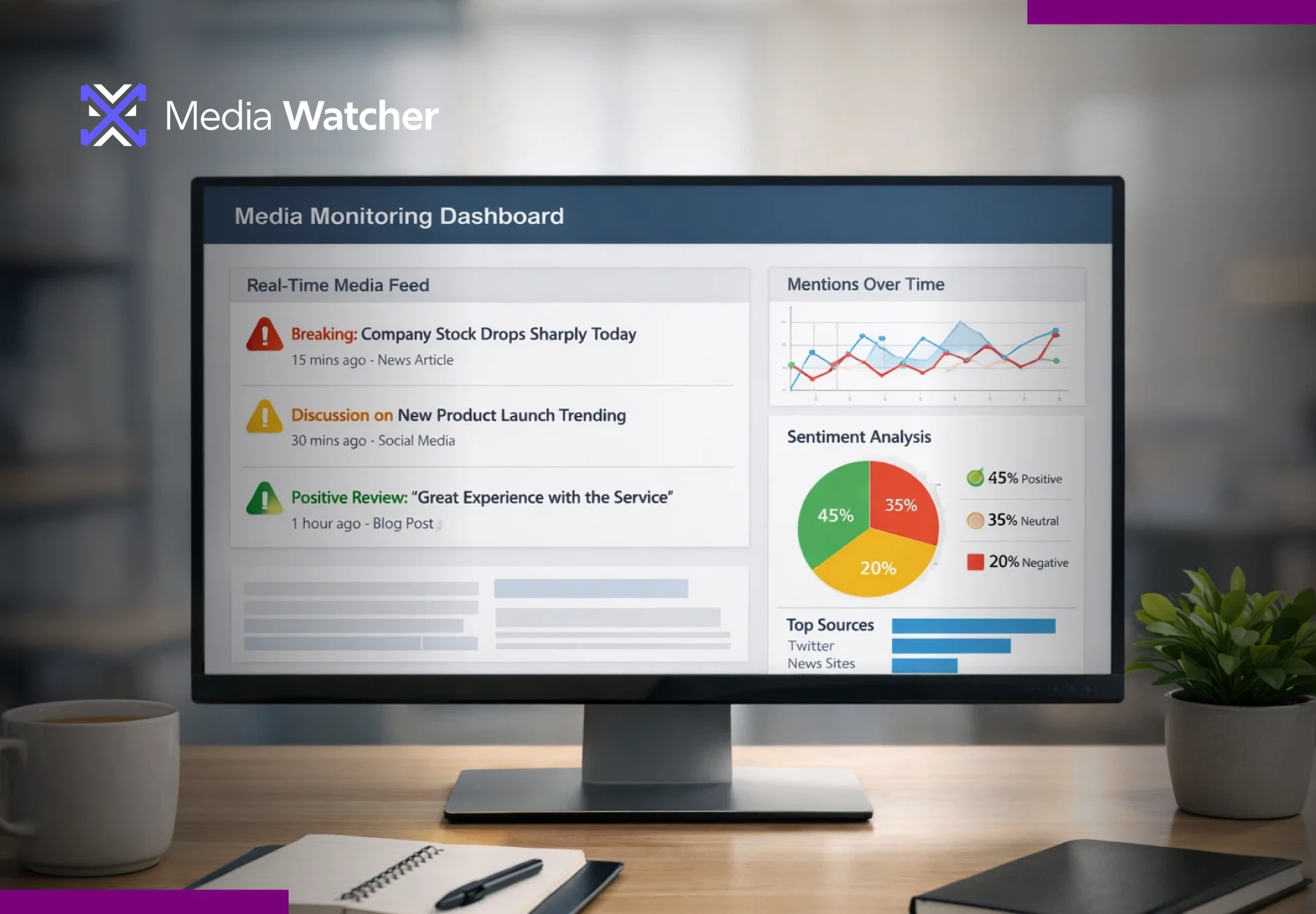
Sentiment signals are used to capture negative trends before they can be converted to substantial losses as a risk management strategy. A falling trend in sentiment of a business or industry may serve as an early alert, allowing them to modify their exposure. A market sentiment analysis platform is widely used by many professionals to track such patterns in real time so that risk is addressed in a proactive manner, as opposed to a reactive manner.
Sentiment analytics also reinforces event-based strategies. Changes like mergers and acquisitions, regulatory changes, or changes of leadership tend to cause instant responses in financial markets. Monitoring the manner in which these events are being debated and perceived allows analysts to have a better idea of where the markets may be going and sharpen their positions accordingly.
As an example, in case a pharmaceutical company falls under regulatory scrutiny, a sudden increase in the negative sentiment can signal risk on the downside, and an early exit could take place. Another scenario is that long-term positive media reporting on the use of AI can enhance the sentiment in the technology industry, stimulating higher investment in the associated stocks.
But the real significance is the ability to differentiate between meaningful signals and background noise. Not all mentions are equally important, and this is why filtering is necessary. Real-time alerts offer a real-time view of critical developments, whereas periodic reports offer a long-term view of overall sentiment trends.
A strategic approach ensures that sentiment signals are not applied independently. These insights are combined by professionals with basic analysis, technical indicators, and macroeconomic data, enabling a more balanced and robust investment framework.
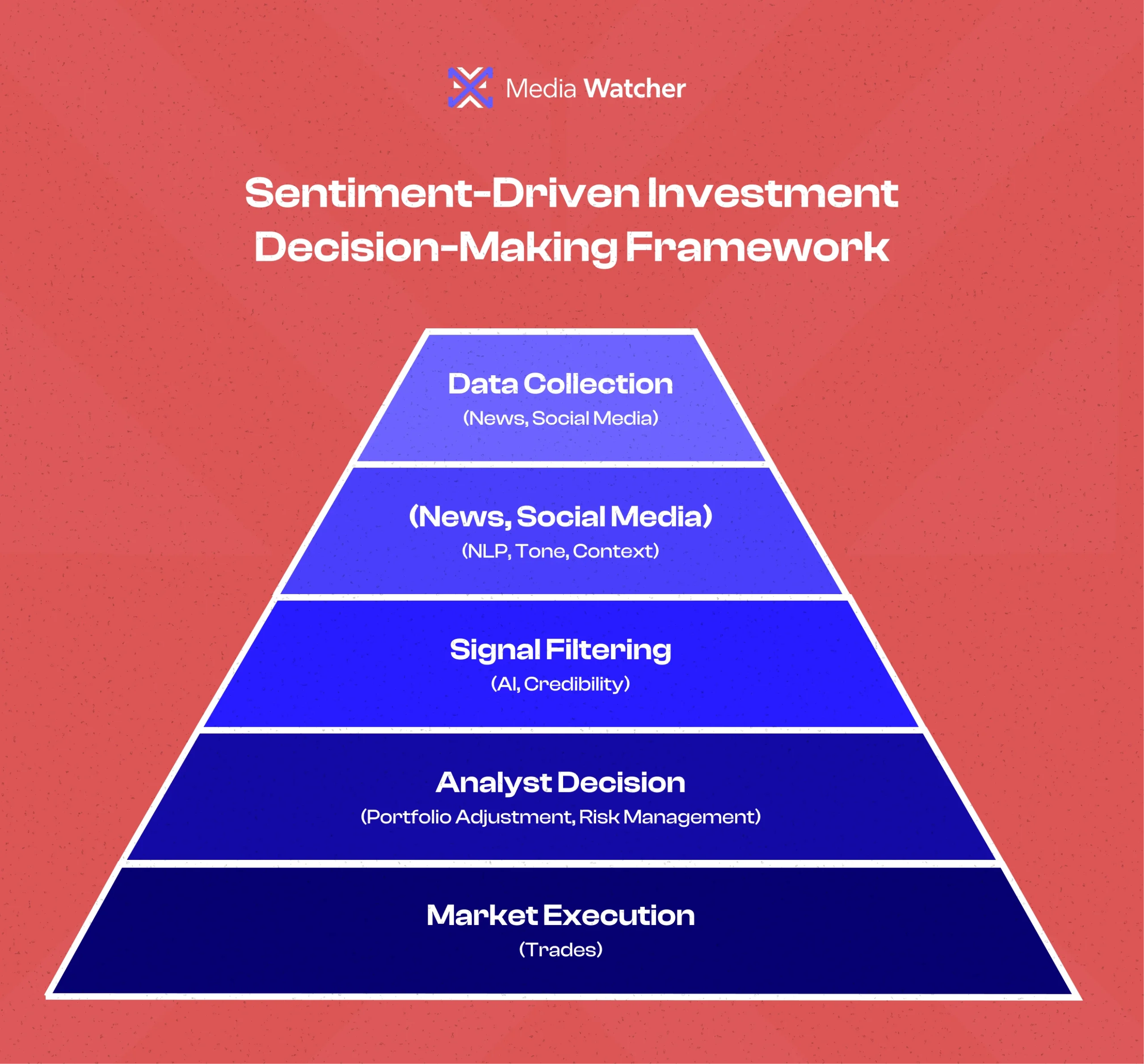
Challenges in Financial News Sentiment Analysis And How to Overcome Them
Financial news sentiment analysis has evident benefits, but its usefulness lies in the manner in which key challenges are addressed. Firstly, it is still important to distinguish between meaningful signals and noise because not all headlines matter in a market.
Meanwhile, the credibility of the source is also a significant factor, as information shared by reputable financial magazines is more significant than unprofessional content. Speed is also necessary since latency in information processing may decrease the usefulness of sentiment signals in high-frequency markets.
Moreover, language peculiarities and local matters tend to influence the way news is perceived, complicating proper categorization. In order to overcome these issues, sophisticated solutions employ AI-based filtering, multi-source aggregation, and context-based scoring to make sure that only valuable insights facilitate informed and timely investment decisions.
How Media Watcher Helps in News Sentiment Trading Signals
Media Watcher functions as a market sentiment analysis platform built for fast-moving financial environments. It integrates real-time financial news tracking features with advanced AI and NLP models to understand tone, purpose, and context in global sources. High-impact developments are given priority, and irrelevant noise is sifted out to ensure insights remain concise and actionable. Custom alerts inform analysts of abrupt shifts in sentiments so that they can respond to market-moving events more quickly. It favors diversified portfolios due to its multilingual coverage and region-sensitive analysis. Media Watcher, as a financial media monitoring software, can support clarity and confidence in decision-making in an environment where the flow of information is accelerating.