

Why do certain brands come out of the backlash in days and others never entirely regain trust?
It is the difference that is not so much in visibility but in time. The time when headlines are at their highest point, and mentions are soaring, public opinion is often formed. Sentiment is a leading indicator, showing emotions changing before results are evident. It is common practice in teams to focus on mentions, but studies have revealed that almost 70% of consumers claim that brand perception has a direct impact on their buying behavior, and this is where emotional context matters. Sentiment analysis bridges this gap, transforming the discontinuous responses into the strategic understanding that informs decisions in communications, marketing, product, and leadership teams.
Why Managing Sentiment at Scale Requires a System
Most organizations already collect feedback, but the problem is fragmentation because opinions lie on platforms, regions, and formats, and the patterns are hard to view until the consequences become inevitable. Sentiment analysis systems are designed to address this gap, not necessarily by introducing additional data, but instead by establishing uniformity in the measurement and comparison of emotional response.
These systems provide a common emotional ground rather than viewing feedback as specific events. Alterations in tone, confidence, or frustration can be observed in time, markets, and channels. It is this continuity that enables sentiment insights to inform strategy, product decision-making, communication planning, and risk assessment in an organized manner. Without a system-level approach, sentiment remains anecdotal. With an effective sentiment analysis system, emotional responses become actionable for teams.
The Real Business Benefits of Sentiment Analysis
When sentiment is measured consistently, its value extends far beyond reporting dashboards. The following benefits show how sentiment analysis directly supports strategy, product decisions, and long-term brand health:
1. Data-Driven Strategy
The internal assumptions or delayed feedback are frequently a part of strategic decisions. Sentiment analysis substitutes guesswork with evidence. Measuring emotional reaction across channels, teams achieve consistency between strategy and how audiences actually respond, rather than how messages were actually received. It results in more precise positioning and pertinent communication.
2. Product Development Informed by Market Response
Product feedback is not often provided in convenient surveys. It exists in remarks, reproaches, compliments, and comparisons. Sentiment analysis identifies these signals across scale, and aids teams in recognizing unmet needs, common frustrations, and new expectations, which leads to product development becoming more responsive and less reactive.
3. Early Detection of Reputational Risk
Reputation does not often fall in a single day. Negative perception tends to accumulate before hitting the tipping point. Monitoring sentiment enables organizations to identify early warning signals, resolve issues before the stories have taken shape, and minimize the chances of a full-scale crisis.
4. Brand Positioning in Competitive Markets
The perception of sentiment in its own right is merely half the tale. Comparing sentiment trends among competitors, trends are identified. Brands can know where their trust is building, credibility is crumbling, and where there is differentiation. The insight contributes to more confident brand positioning and competitive strategy.
5. Improved Customer Experience
Customer experience is not limited to transactions or support tickets. Sentiment analysis shows the customer’s emotion in the journey, even at the points where they might not be able to report. Such emotion understandings assist organizations to become more precise about experience, messages, and service designs.
6. Campaign Evaluation
The metrics of engagement indicate activity, not impact. A campaign might create awareness and subtly destroy a reputation. With a sentiment score, teams have the ability to determine whether attention resulted in positive, neutral, or negative sentiment. This gives a better view of campaign performance.
7. Confident Decision-Making
Internal debate slows down when there is a decision is made based solely on opinion. Sentiment analysis provides a point of reference that is based on data. When there is a clear understanding of emotional response, leadership teams can move more quickly, align more readily, and act more confidently.
8. Long-Term Reputation Management
A good reputation is not developed by one or two instances. Sentiment analysis can be used long-term to monitor perception patterns to assist organizations in deriving a clear picture of whether trust is gaining or losing. This renders reputation management proactive as opposed to being reactive.
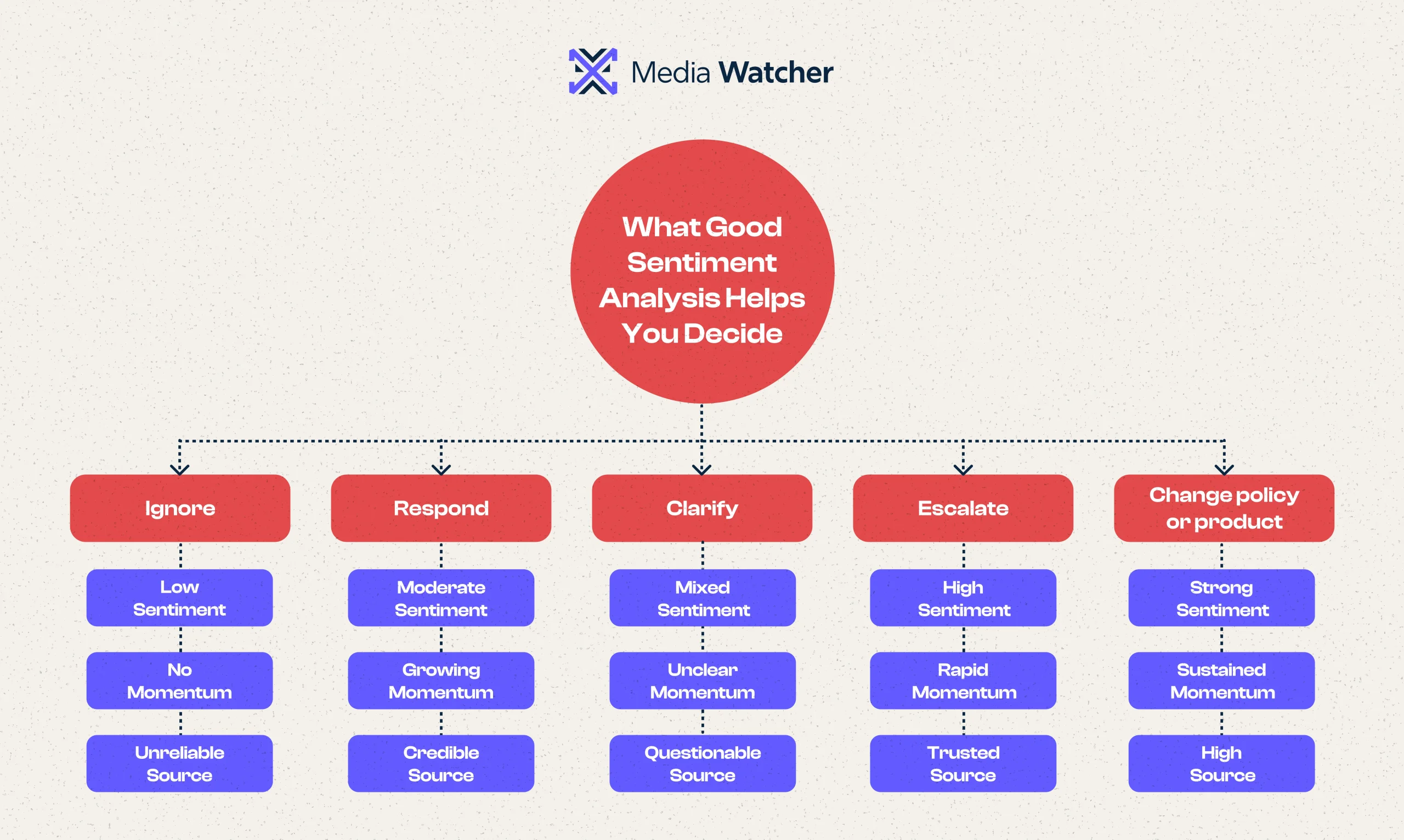
How Sentiment Analysis Tools and Solutions Make These Benefits Possible
The impact of sentiment analysis depends heavily on the technology behind it. Sentiment analysis tools focus on specific functions such as classification, scoring, or visualization. On their own, they provide limited insight. Sentiment analysis solutions, on the other hand, bring these capabilities together into a unified system.
Effective solutions combine large-scale data collection, contextual understanding, multilingual analysis, and real-time alerts. They account for sarcasm, cultural nuance, and regional language patterns that simpler systems often misinterpret. Most importantly, they connect sentiment data to actionable outputs, allowing teams to move from observation to response without delay.
How Media Watcher Helps in Achieving All the Benefits of Sentiment Analysis
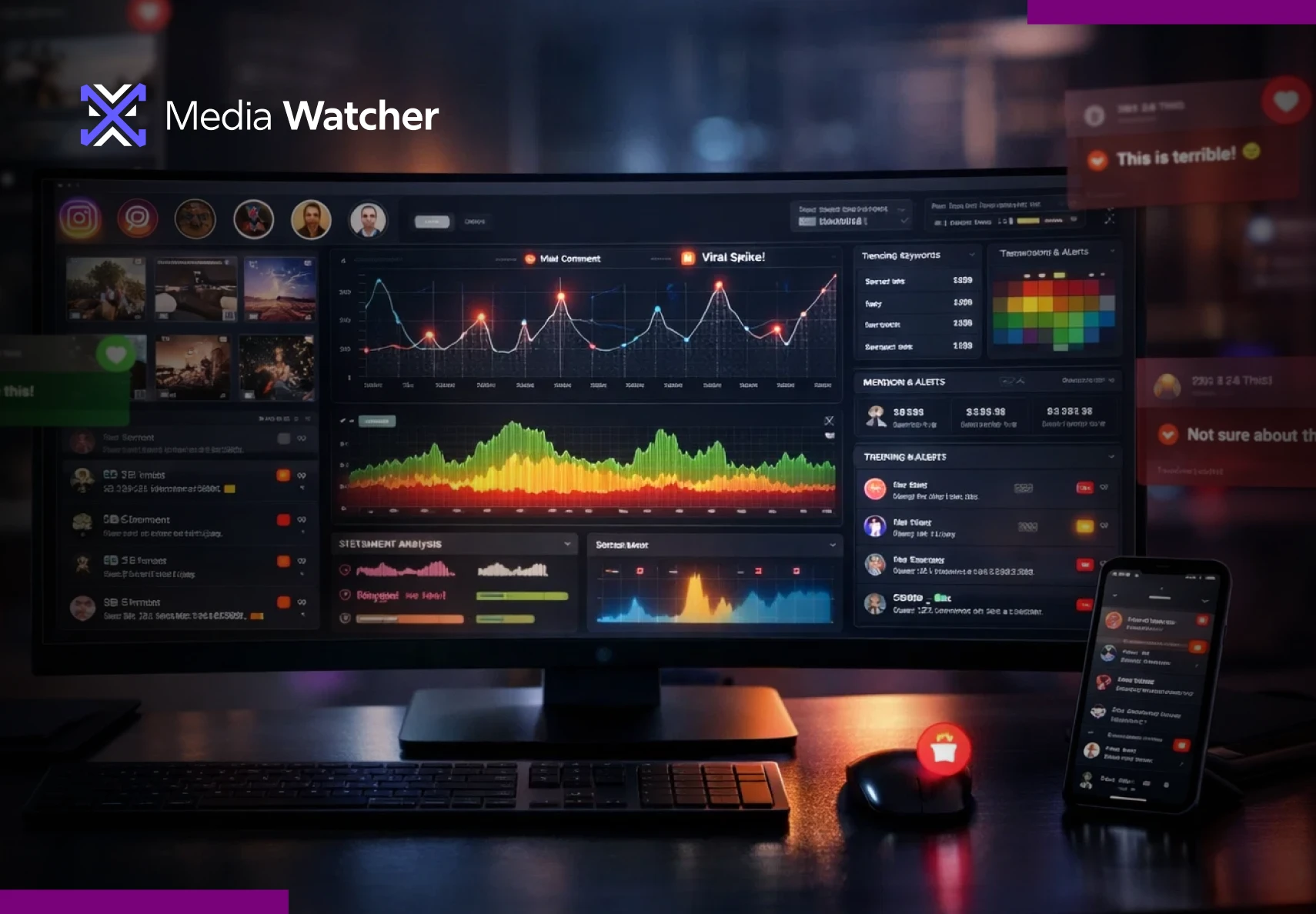
Media Watcher is built to support sentiment analysis as an ongoing strategic function rather than a one-time report. By tracking global conversations in real time, it enables teams to monitor sentiment shifts as they happen, not after narratives have already formed.
The platform’s sentiment scoring provides clarity around emotional direction and intensity, while smart filtering helps teams focus on what truly matters. With multilingual coverage and cultural sensitivity, Media Watcher ensures sentiment insights remain accurate across regions and markets. This allows organizations to respond faster, communicate more effectively, and make decisions rooted in real audience perception rather than assumptions.
Contact the Media Watcher team to book a demo today.