

Gone are the days when financial services and stock movements were solely driven by balance sheets and profit margins. Today, the public perception and sentiment play a significant role in market volatility, and financial institutions need to be prepared.
Financial services have long understood the importance of tracking market movements, financial news, and regulatory related updates. However, times have changed, and traditional monitoring techniques cannot be used anymore.
The evolving social media, online communities, and real-time news reporting have changed how:
- Information is distributed
- Risks are introduced
- Reputations can be ruined
Therefore, media monitoring for financial industry has turned out to be a necessity if firms need to remain competitive, manage risk, and maintain their brand’s image.
Digital Sentiment and Its Impact on the New Age of Market Movements
In 2021, the GameStop short squeeze proved that markets can move faster than logic. It all happened when just one Reddit community turned a struggling stock into a global spectacle, catching hedge funds completely off guard.
It was a wake-up call that market risk now lives online, and sentiment can shift faster than any traditional model can track.
What began as a niche discussion on Reddit’s r/WallStreetBets quickly escalated into a coordinated wave of retail buying that pushed GameStop’s stock price up by more than 1,500% in just a matter of days.
As a result, hedge funds that were holding large short positions were caught completely off guard.
The remarkable thing about the GameStop event was that the early signals didn’t come from traditional financial indicators. Instead, they originated from online sentiment, meme-driven commentary, and collective action narratives inside forums, Discord servers, and Twitter threads.
Retail investors weren’t looking at fundamentals, instead, they were responding to emotional momentum, crowd psychology, and a shared desire to “squeeze the shorts.”
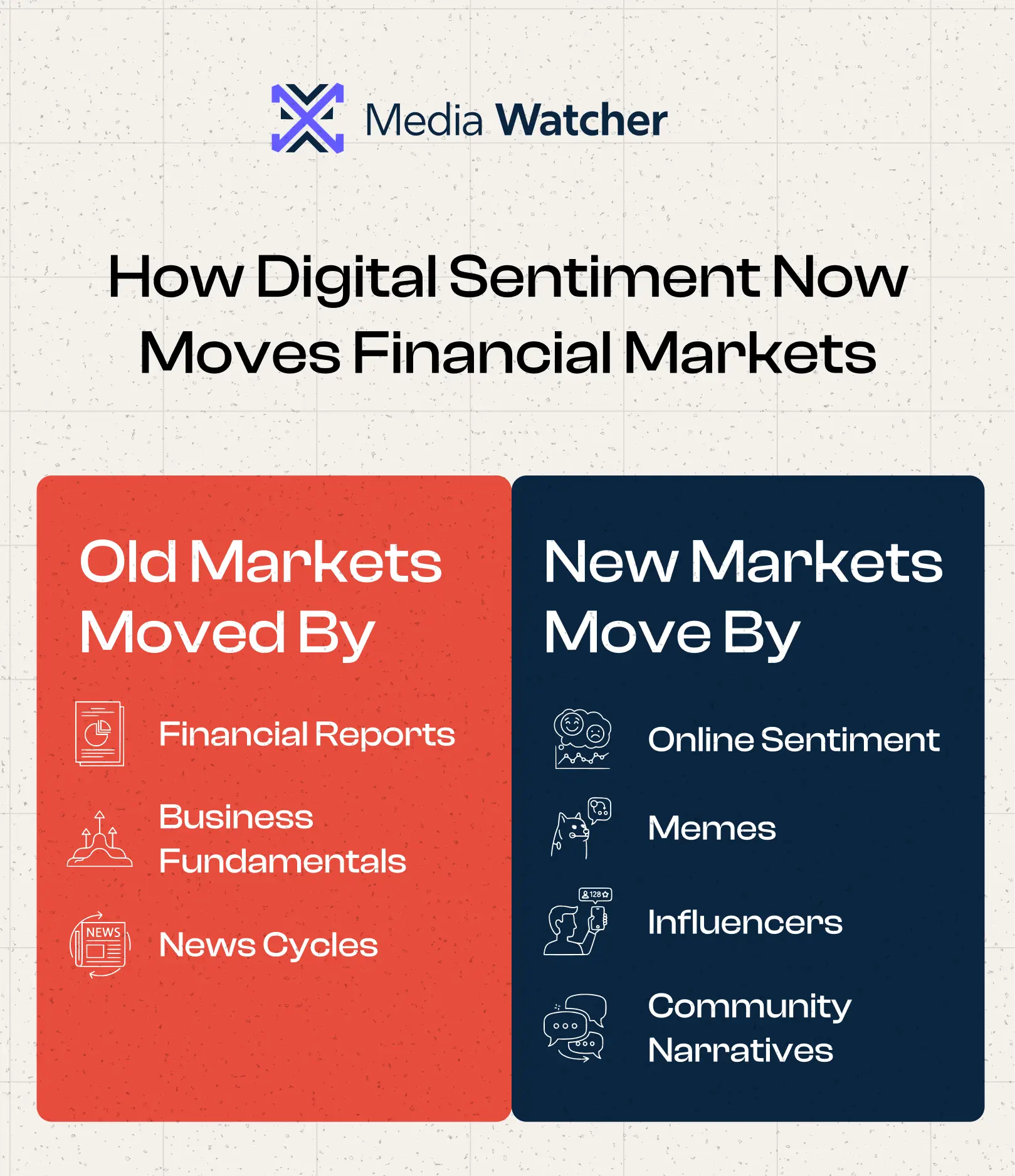
This event made one thing abundantly clear: that market volatility is no longer just driven by economic fundamentals. It is due to the digital sentiment amplified by social media, forums, and influencers that can have just as powerful an impact on financial markets.
For the financial industry, this event underscored the importance of monitoring the online environment just as closely as the markets themselves.
The ability to capture online audience sentiment early thus means the difference between minimizing the risk or facing a significant loss.
How Media Monitoring Tools Can Identify Early Signals of Market Risk
The first step in understanding market shifts is recognizing the early signals. In the case of GameStop, online chatter about a “short squeeze” surged long before any noticeable price movement.
These early warnings signal a behavioral shift that financial institutions may need to address certain things, such as increased buying activity or rising public interest.
In addition, sentiment analysis is one of the prominent aspects of contemporary media monitoring services.
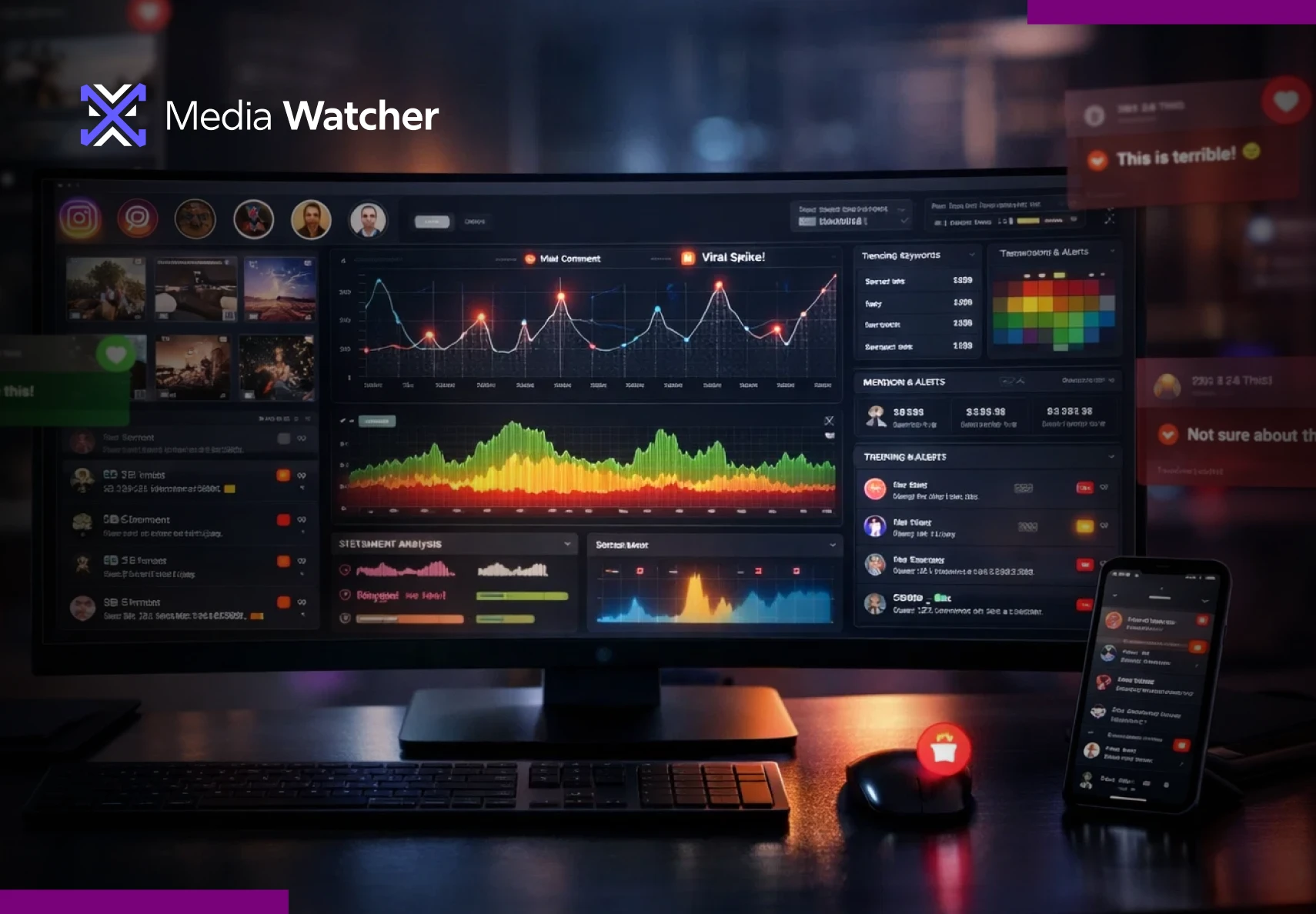
Tracking mentions, analyzing sentiment, and spikes in conversation will enable financial institutions to understand what people are interested in and when it is likely to be market-moving, even before it appears in conventional financial indicators.
For instance, when a financial institution tracks certain keywords on online forums and social media, such as short squeeze, GME to the moon, and others, it may be alerted to an emerging trend that indicates a change in market behavior.
Therefore, with these insights, financial institutions can make informed decisions about their exposure to a particular stock or market.

The Power of Narrative Tracking
It’s no longer enough to just track financial reports and market analysis, because narrative tracking has become a vital component of media monitoring.
The rise of social media means that financial markets are now shaped by stories that gain traction online and spread across social channels within minutes.
In the above example, as more users joined the conversation, the narrative around the stock shifted to one of victory and resistance. Media monitoring could have tracked this narrative’s evolution and predicted an atypical market reaction, something that businesses would have benefited from.
Additionally, institutions could have identified that public sentiment was moving away from fundamentals and toward a collective cause. Tracking these evolving narratives can provide financial institutions with the foresight to act before a narrative becomes a market-moving force.
For example, tracking how emotional language or meme-driven content about a particular stock or asset increases over time can help anticipate future market movements.
Considering all this, financial services need to understand that modern markets are increasingly driven by stories, often shaped in digital spaces such as Reddit, Twitter, and other online forums.
How Real-Time Monitoring Can Improve Risk Mitigation in the Financial Sector
One key takeaway from the GameStop event is that speed is critical. In the rapidly evolving environment of the financial markets, quick response is key to successful risk management.
The real-time insights are critical for detecting market risks before they spiral out of control. Media monitoring solutions that are associated with financial services offer businesses a chance to respond more promptly to the changing sentiment, the emerging stories, and influential voices on social media and news websites.
For example, if companies had been able to track the sentiment about the situation earlier, they could have adjusted their market positions sooner. Firms might have minimized the financial fallout of the squeeze by putting less money into risky assets or hedging against possible losses.
In addition, social media monitoring for financial services could have helped risk teams make better decisions and minimize the possibility of severe losses. Moreover, it could make trade adjustments, hedge funds and engage in proactive communication with stakeholders by monitoring sentiments in real time.
How the Financial Industry Can Stay Ahead with Media Monitoring Solutions
The financial industry is one of the spheres where the failure to recognize the new reality might result in the loss of an opportunity or a blind turn.
By integrating real-time media monitoring tools, financial institutions can gauge public sentiment, track emerging stories, and stay at the forefront of market trends.
At Media Watcher, we provide the tools to track digital sentiment and stay ahead of the conversation.
Having the real-time understanding of what the media is saying, what new stories to tell, and the influencers that matter, we help the financial sector predict when things are going to change in the market before they hit your bottom line.
It allows you to be in control, whether to track regulatory changes, monitor public sentiment on key stocks, or identify PR crises that may be brewing.
Media Watcher is more than a regular media monitoring tool, as it is also an AI-based sentiment analysis tool that allows you to react to the changes in customer perception and market sentiment in real-time.
Our solution assists you in protecting your brand, managing risk, and enhancing compliance by providing you with the right information at the right moment.