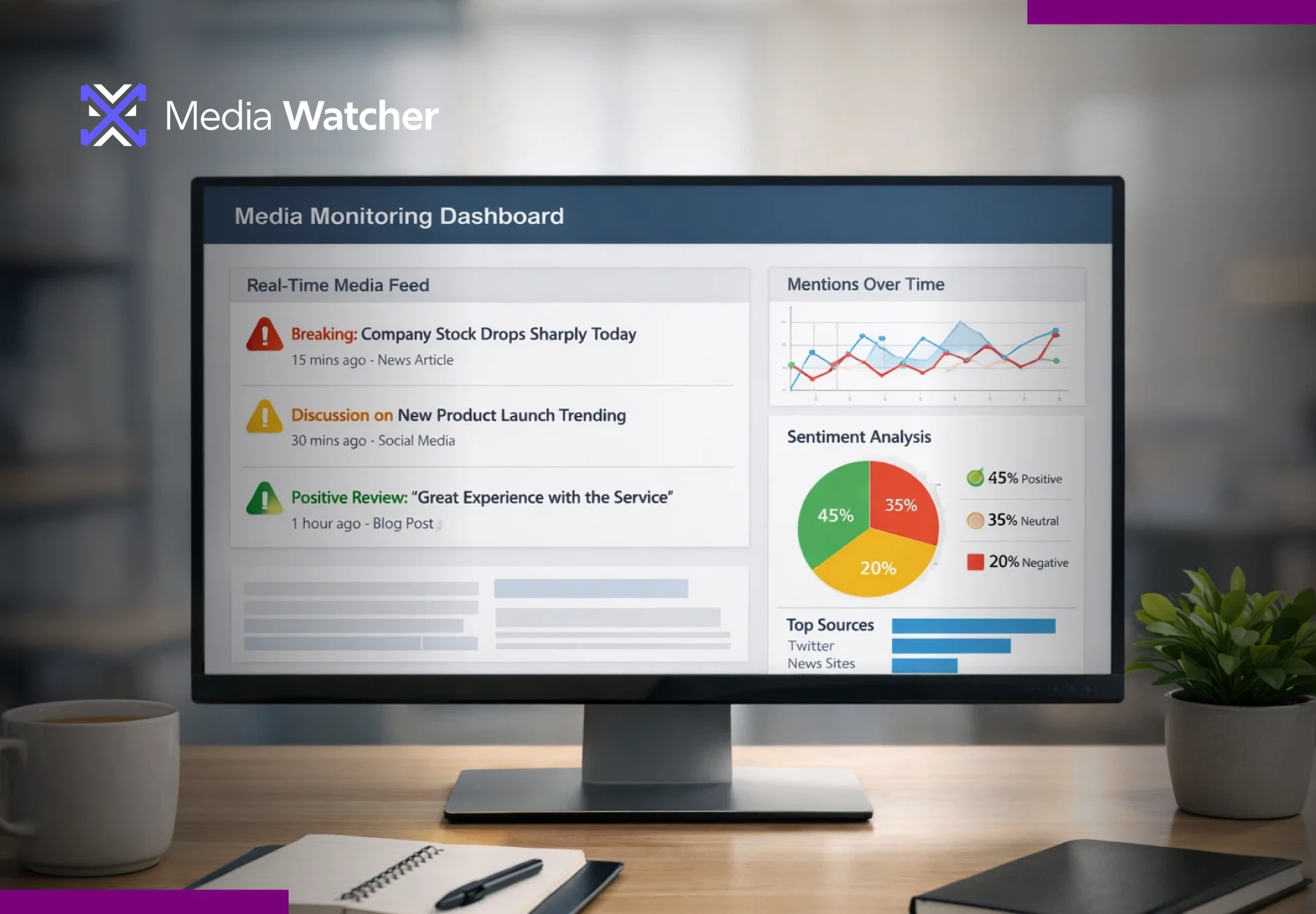


The challenge of the content strategy is hardly the lack of ideas. The real challenge lies in identifying which ideas actually matter. Most teams take time to do keyword studies, competitor research, and editorial planning, but the end product usually fails. Indeed, merely 29% of marketers believe their content strategy is incredibly efficient, often because of lapses in audience comprehension and data-driven insights. The answer is quite straightforward: the content is being generated according to assumptions, whilst the audience’s expectations are being changed in real time across the digital space.
Conversations are happening everywhere, thought processes are being formed, and marketplace stories are being told in real time. Content gap analysis cannot be complete without tapping into these signals. This is where social listening brings in a more sophisticated and smarter approach, where the brands are able to match the content to actual audience sentiment and to the emergent conversation.
The Limitation of Traditional Content Gap Analysis
The conventional content gap analysis is based on structured data. Based on search demand, teams assess keyword opportunity, competitive ranking, and search gaps. Although this method offers a baseline, it is not very deep in most cases.
Search data discloses the things that users are typing, but it does not answer the question of why these queries exist. It fails to convey frustration, confusion, and changing expectations. Likewise, competitor analysis identifies what is being published and does not ensure that the content of the publishing suits the needs of the actual audience.
This creates a disconnect. The content can be optimized to make it visible, but it does not connect with the audience. This discrepancy is more important in high-speed industries like finance, media, and global markets. Real-time conversations are too rapid to be followed using static analysis.
An increasingly accommodating solution is needed, one that focuses not just on the subjects but also on the context in which they are presented.
How Social Listening Transforms Content Gap Discovery
Social listening introduces a new layer in the process of analyzing content gaps because it targets live conversations instead of data points. Rather than merely searching, it allows brands to monitor how the audience is discussing stories on news outlets, forums, and online communities.
Patterns emerge through social listening. Repeating questions indicates where information is inadequate. Conversations can be used to find out how viewers perceive industry trends. Even better, the audience’s feelings will give you a clue as to whether the current content is satisfactory or failing.
This is where a sentiment analysis platform becomes imperative. It transcends superficial references and analyzes the underlying tone of discussion, whether the audiences are confident, confused, concerned, or interested. These emotional clues tend to directly indicate content gaps.
As an example, a topic might be already discussed widely in blogs and reports, but discussions might point to dissatisfaction or a lack of understanding. This implies the problem is not a lack of content, but its simplicity, richness, or applicability.
Thus, social listening makes content gap analysis more of a dynamic process than a checklist exercise. It exposes what cannot be found using keywords and showcases possibilities that resonate with actual audience intent.
How to Apply a Social Listening Strategy for Content Gap Analysis?
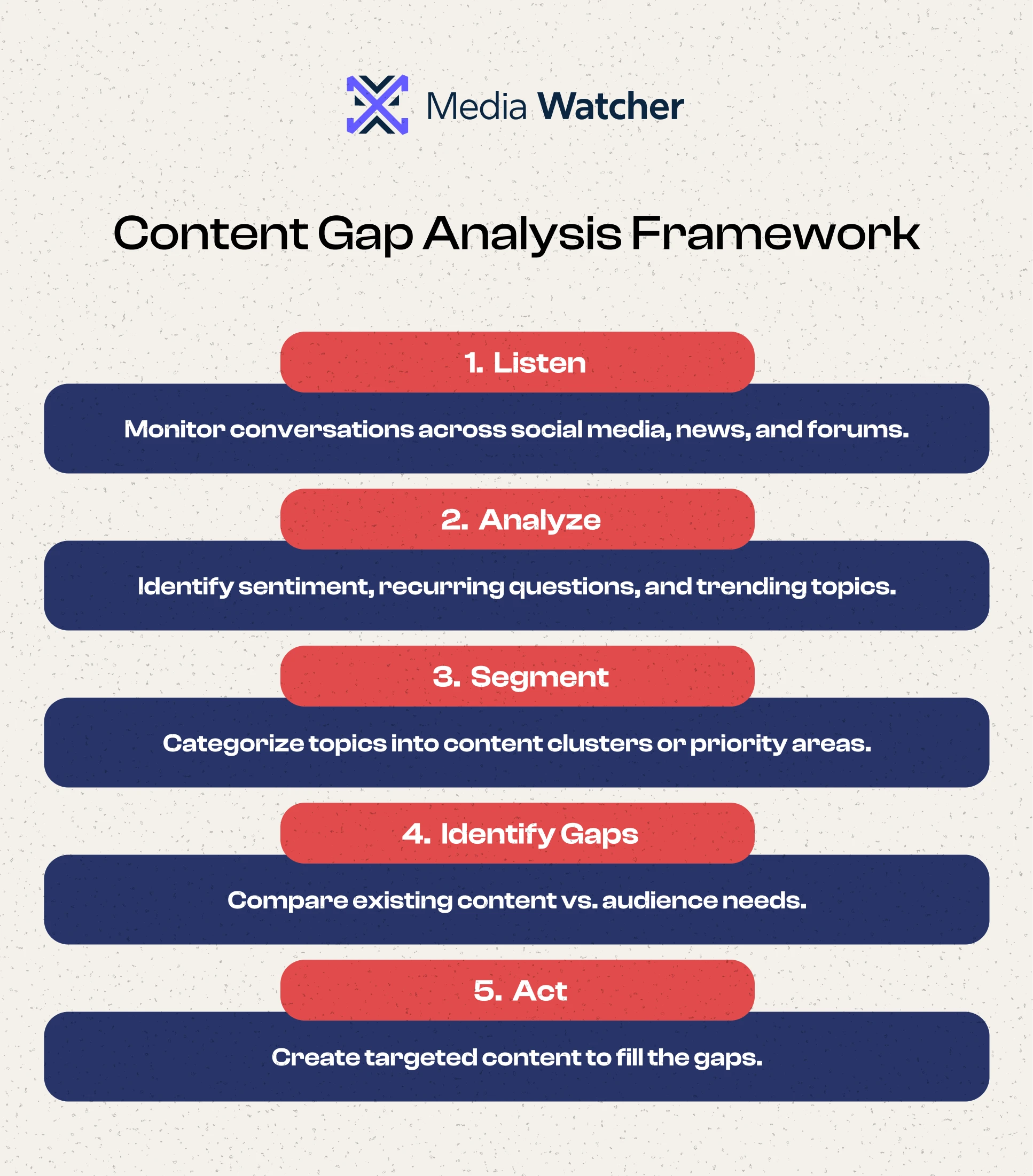
To turn insights into action, a systematic social listening plan is necessary. When there is no clear structure, a large amount of data may be overwhelming and unreadable.
The first step is to define the area of monitoring. This involves determining the subjects of interest, industry dynamics, competition, and market conversations. An effective social listening tool will allow tracking of these factors constantly on various platforms, such as news outlets and financial apps.
The second process after gathering data is segmentation. Discussions need to be divided into several significant groups, including audience inquiries, sentiment trends, emerging narratives, and recurring concerns. This division assists in the isolation of patterns that directly suggest gaps in content.
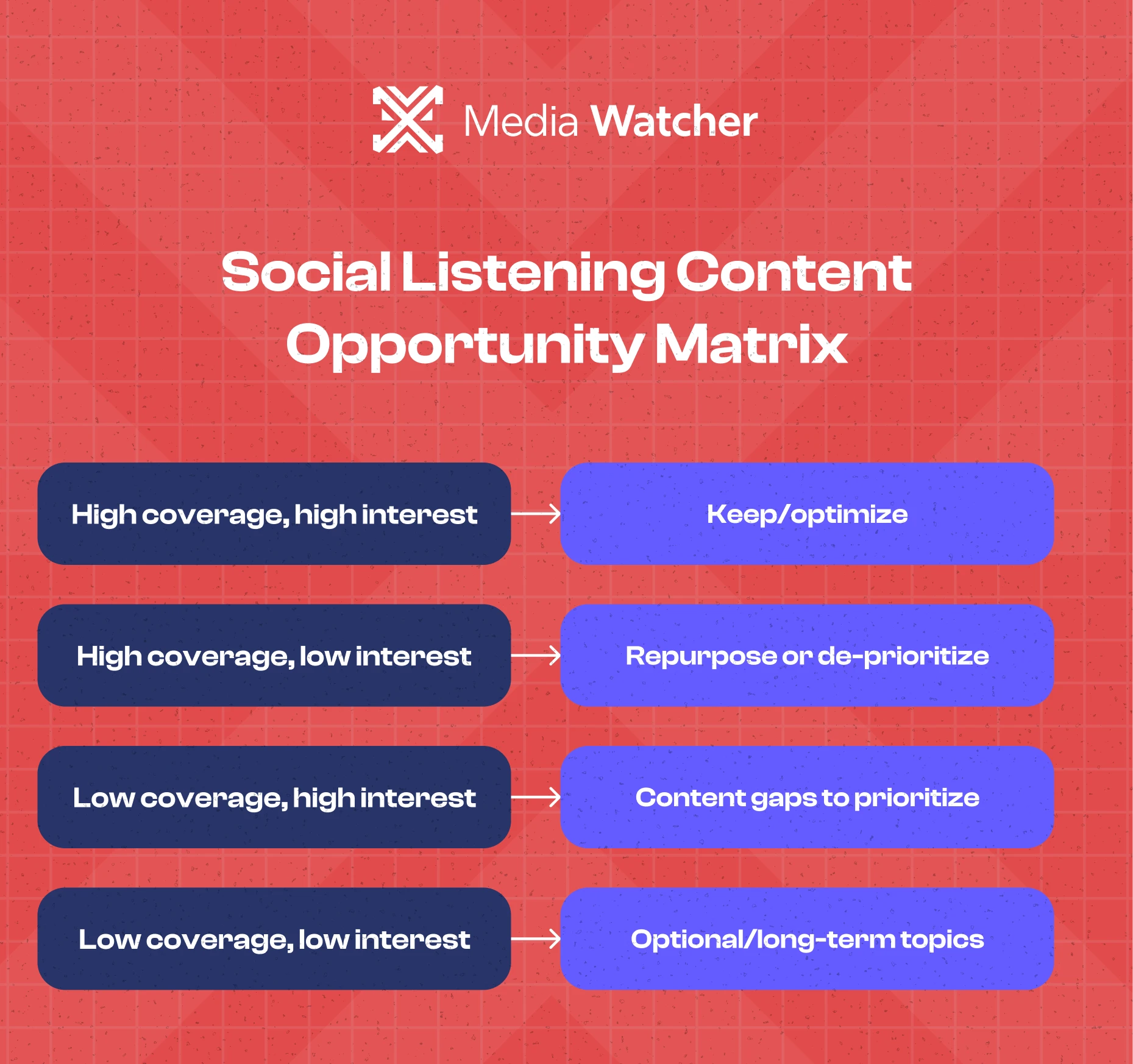
It is also necessary to give priorities. Not all insights have to be acted on. The first gaps to be addressed should be high-impact gaps related to reputation, market perception, or strategic positioning. This also makes sure content efforts are focused and business-aligned.
Effective social listening platforms can enable organizations to go beyond reactive content creation. Rather than reacting once patterns move into the mainstream, brands can spot gaps early and then make decisions in a precise manner.
How Social Insights Can Spark Your Next Content Idea
The true value of social listening becomes evident when insights are translated into meaningful content. Rather than producing generic material, brands can create targeted content that directly addresses audience needs and market dynamics.
In the context of PR and crisis management, social listening helps detect sudden shifts in sentiment. A spike in negative coverage or public concern often reveals a lack of clear communication. This creates a content gap around transparency and clarification. Addressing this gap through timely, insight-driven content helps stabilize brand perception and rebuild trust.
In trend research and market research, early-stage discussions provide a strategic advantage. Conversations around emerging financial patterns or industry developments often appear before they are widely reported. Identifying these signals allows brands to create forward-looking content that positions them as thought leaders rather than followers.
The political and news tracking landscape presents another opportunity. Complex global developments generate high volumes of discussion, but audiences frequently struggle to interpret them. This creates a gap for simplified, contextualized content that translates intricate topics into clear insights.
Similarly, in areas such as investment monitoring and trading signals, sentiment can shift rapidly. Discussions around specific assets or market movements often indicate a demand for timely analysis. When such demand is not met, a content gap emerges, one that requires speed, accuracy, and relevance to be addressed effectively.
These examples highlight a consistent pattern. Content gaps are not always about missing topics. In many cases, they reflect a lack of clarity, timing, or perspective. Social listening ensures that these gaps are identified and addressed with precision.
How Media Watcher’s Social Listening Helps You Spot and Fill Content Gaps Effectively
It is difficult to identify gaps in content when the conversations are distributed between platforms and trends are changed in real time. Media Watcher synthesizes these insights through social listening, which tracks global conversations and audience sentiment to understand what is most important. It follows multilingual and location-specific conversations and captures context that informs perception across markets. Live notifications and intelligent filtering make sure teams work on the most valuable insights, transforming data into action. Using Media Watcher, companies can understand content gaps, prioritize opportunities, and develop relevant content that appeals to audiences. Experience how it works firsthand with a quick Media Watcher demo.