

Every day, customers are talking. They leave reviews, fill out surveys, send messages to support teams, and post on social media. Most businesses know this feedback exists, but very few are doing anything useful with it. The ones that are? They’re pulling ahead.
Sentiment analysis is the technology that turns all that unstructured text, including the complaints, the compliments, the neutral comments, into something you can actually act on.
It classifies how people feel and, in more advanced setups, ties those feelings to specific topics, touchpoints, or moments in the customer journey.
Once done right, it means you stop drowning in feedback and start spotting patterns. You see problems before they hit your quarterly reports. You know which part of your service is driving frustration, which campaign is landing well, and where your agents are losing customers on calls.
Here are some examples of brands and industries that did exactly this and what they got out of it.
Veganz: Measuring Campaign Reception in Real Time
Veganz is a plant-based food brand in Ludwigsfelde, Germany, that went through a rebrand and an IPO simultaneously, arguably one of the riskiest combinations a consumer brand can face.
Perception can shift quickly in that environment, and traditional research methods simply don’t move fast enough to keep up.
They used consumer research tools to monitor sentiment in real time across social media. The solution tracks emotional signals, including hashtag adoption and emoji usage, signals that often precede shifts in broader consumer opinion.
The insights fed directly into marketing decisions, paid media targeting, and conversations with distribution partners. During the campaign, the share of positive brand mentions grew by 22%.
For a brand navigating high public scrutiny, having real-time feedback on how the rebrand was being received was the difference between reacting and guessing.
Financial Services: Detecting a PR Crisis Before It Escalates
Consider a scenario in which a mid-sized European bank quietly updated its overdraft fee policy, expecting minimal pushback.
Over the next 48 hours, a backlash of negative comments began to emerge, first on Reddit finance threads, then on financial news blogs, and finally in mainstream media.
Brands that did not use monitoring tools were already at a disadvantage by the time the story reached the national press.
But the bank’s communications team, using a media monitoring tool, already flagged the increase in negative mentions 36 hours prior, which allowed them to prepare a response, brief spokespeople, and update their FAQ page before reporters started their calls.
“We saw it coming. That’s the only reason we got ahead of it.” — Head of Communications, European Retail Bank
What the Sentiment Layer Captured
- A sudden increase in negative sentiment tied to keywords: ‘fees’, ‘charges’, ‘unfair’, ‘hidden costs.’
- Emerging hashtags flagged 18 hours before mainstream media picked them up
- Geographic clustering, frustration concentrated in two regions, enabling targeted communication.
Retail Brand: Outpacing a Competitor During a Campaign
Imagine two competing sustainable fashion brands launched major campaigns in the same week. One had been planning its launch for months.
The other had a media monitoring setup that let it watch in real time how the competitor’s campaign was landing, and adapt accordingly. In 48 hours, the monitoring team observed a strong engagement on Instagram by the competitor, and a backlash on Twitter/X for supply chain claims that consumers were questioning. Thus, there was a change of tone, which was no longer enthusiastic but sceptical.
What the Brand Did With That Intelligence
- Brought forward a planned press release about their own third-party supply chain audit by four days
- Shifted paid media budget toward Twitter/X with messaging emphasising verified sustainability credentials
- Briefed retail partners with talking points that pre-empted the questions consumers were asking the competitor
By the end of the two-week campaign window, their share of positive brand mentions had grown by 27% while the competitor’s had declined by 14%.
Thus, competitive intelligence through sentiment monitoring is not about copying rivals. It is about knowing where the conversation is going before your competitor does.
What Modern Businesses Should Take Away from This
The pattern is similar in the travel, technology, health, food, and logistics sectors. Sentiment analysis tools are valuable when they are used to drive action.
These are not only running models, but the businesses that are achieving the most are creating systems that provide insight directly into decisions.
That means attaching sentiment to specific topics rather than just flagging overall tone. It means closing the loop with customers, not just generating internal reports.
Moreover, it means feeding sentiment into routing, prioritisation, and campaign measurement in real time, rather than waiting for weekly summaries.
The technology is accessible. The difference between the brands that achieve 20-30% increases in key metrics and those that depend on idle dashboards lies in governance, integration, and the desire to act on the information provided by the insights.
When your business is gathering feedback and fails to take any action on the feedback in an organized way, you are leaving actual value on the table.

Ready to Turn Your Brand’s Feedback into Real Business Decisions?
Media Watcher is your go-to solution. It is designed according to brands that require more than a dashboard.
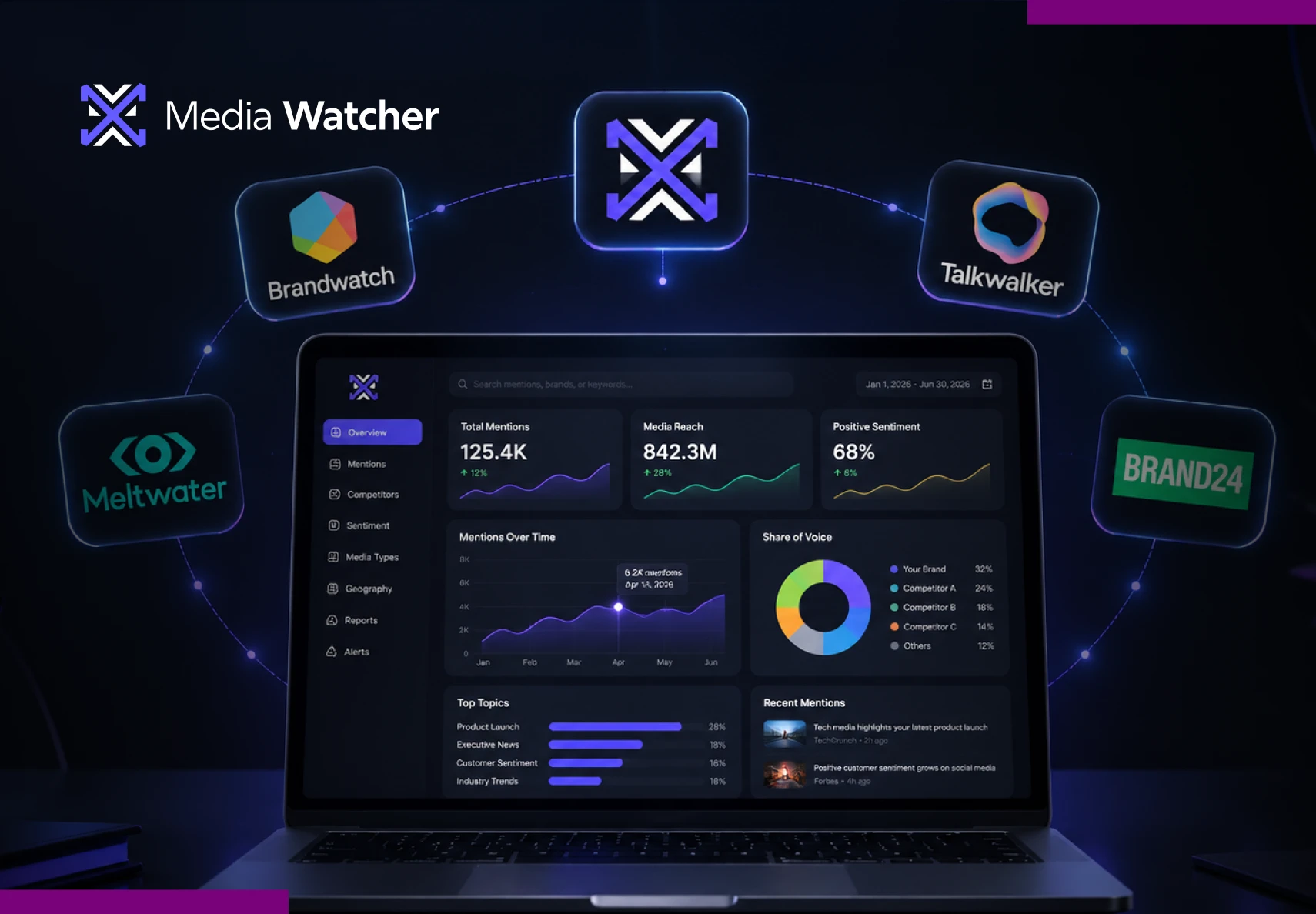
The sentiment analysis solution provided by Media Watcher tracks conversations across news, social media, and other online platforms, analysing audience sentiment, identifying emerging topics, and signalling brand risk before it escalates.
Whether it is rebrand management, campaign performance, or keeping a finger on customer experience, it all comes into one clear picture.
The tool has no complex setup and doesn’t require a data science team. Just the signal you need, when you need it. See it in action at our website and find out how your brand can start making faster, smarter decisions from the conversations that matter. Book a demo today!