



 The move by Hungary to essentially prohibit Pride parades has thrown an already tense cultural debate into the limelight. The move is framed by supporters of the ruling party as child protection. Critics, both domestically and internationally, perceive something of an entirely different nature: an outright assault on LGBTQ+ visibility and fundamental liberties. The response on the internet is polarized between the national-sovereignty arguments and the outrage over human rights, and it is clear that the masses are as divided as ever.
What Media Watcher’s Media Monitoring Insights Reveal About Hungary’s Pride Ban?
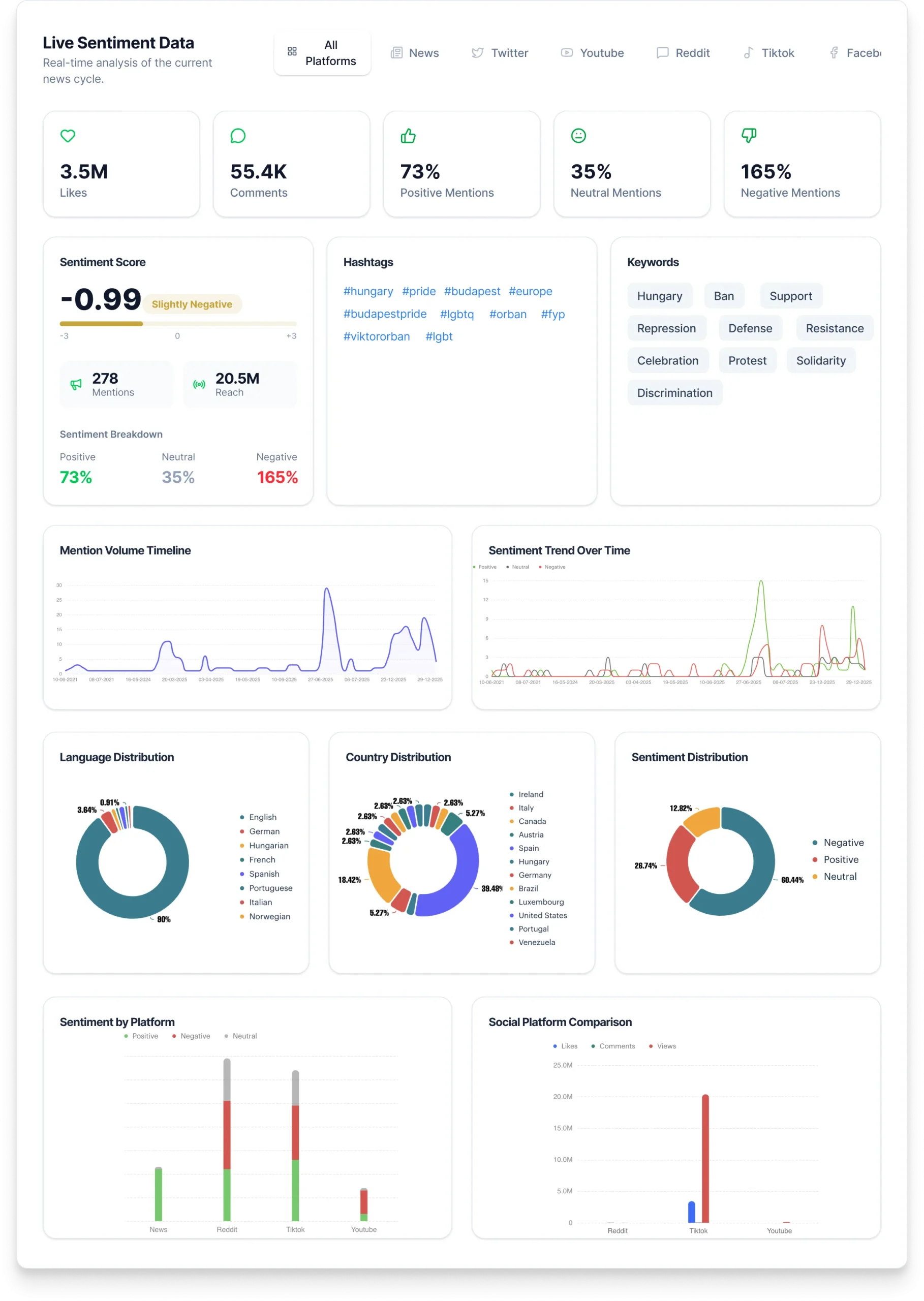
The Media Watcher dashboard captures a debate leaning clearly negative on the pride ban. Overall sentiment score is -0.99, with 60% negative mentions, 26% positive, and 12% neutral; such an imbalance actually matters. The data suggests criticism isn’t just louder, it’s more sustained.
The volume of conversation was 278% mentions, producing an estimated 20.5 million reach, with 3.5 million likes and 55.4K comments. The dashboard reveals a high number of spikes around protest announcements and EU-level reactions, which denote those moments when the issue became wider than Hungary and became a part of a larger European debate.
Dominating hashtags include: #budapestpride, #orban, #lgbtq, and #europe, and indicate an internationalized discourse. Clusters of keywords repression, resistance, solidarity, discrimination, signal emotional framing instead of policy debate. The evidence points to the decreased use of platforms to converse about legal specifics and an increased focus on identity, values, and moral positioning.
Defenders vs. Dissenters on Hungary’s Pride Parade Ban
On one side are supporters of Hungary’s government, particularly within domestic conservative circles. For many, especially in rural regions and pro-government online spaces, the ban is framed as cultural defense. The data provided by Media Watcher indicates a concentration of more positive mentions around terms such as support and defense, which are frequently related to the more extensive Viktor Orbán discussion on traditional values.
On the opposite side, there are urban Hungarians, LGBTQ+ audiences, and foreign audiences, particularly in Western Europe. In cities such as Budapest, negative sentiment peaked in protest and solidarity. In EU countries, responses are less concerned with Hungarian politics and more with democratic backsliding. The difference is not only political, but also generational, geographic, and cultural.
Europe, Identity, and the Politics of “Protection”
The Pride ban in Hungary is not in a vacuum. It comes after years of tension between Budapest and Brussels regarding media freedom, judicial independence, and the rights of minorities. Positioning LGBTQ+ expression as a child-protection concern sounds well domestically, but falls squarely against the standards in the EU. The outcome is the classic game of national sovereignty versus shared European values, which is fought in the popular mind and not in policy documents.
When cultural disputes escalate into global conversations, understanding sentiment becomes as important as tracking headlines. Hungary’s Pride ban shows why surface-level monitoring cannot explain how narratives form, spread, and harden across regions. Media Watcher provides that deeper clarity by capturing real-time sentiment shifts, highlighting regional and platform-specific contrasts, and surfacing cultural nuance, turning polarized public reactions into structured, actionable insight at scale.