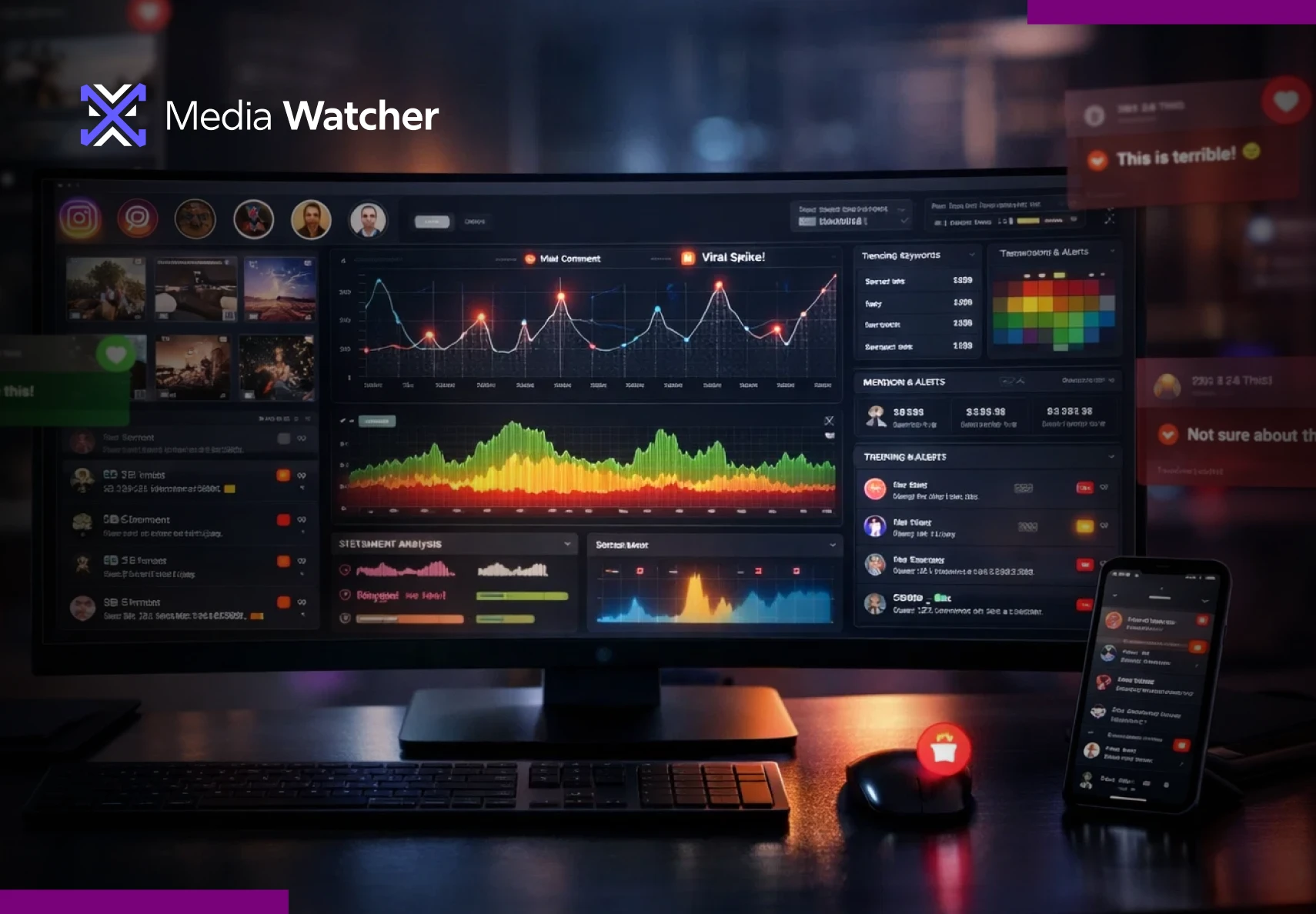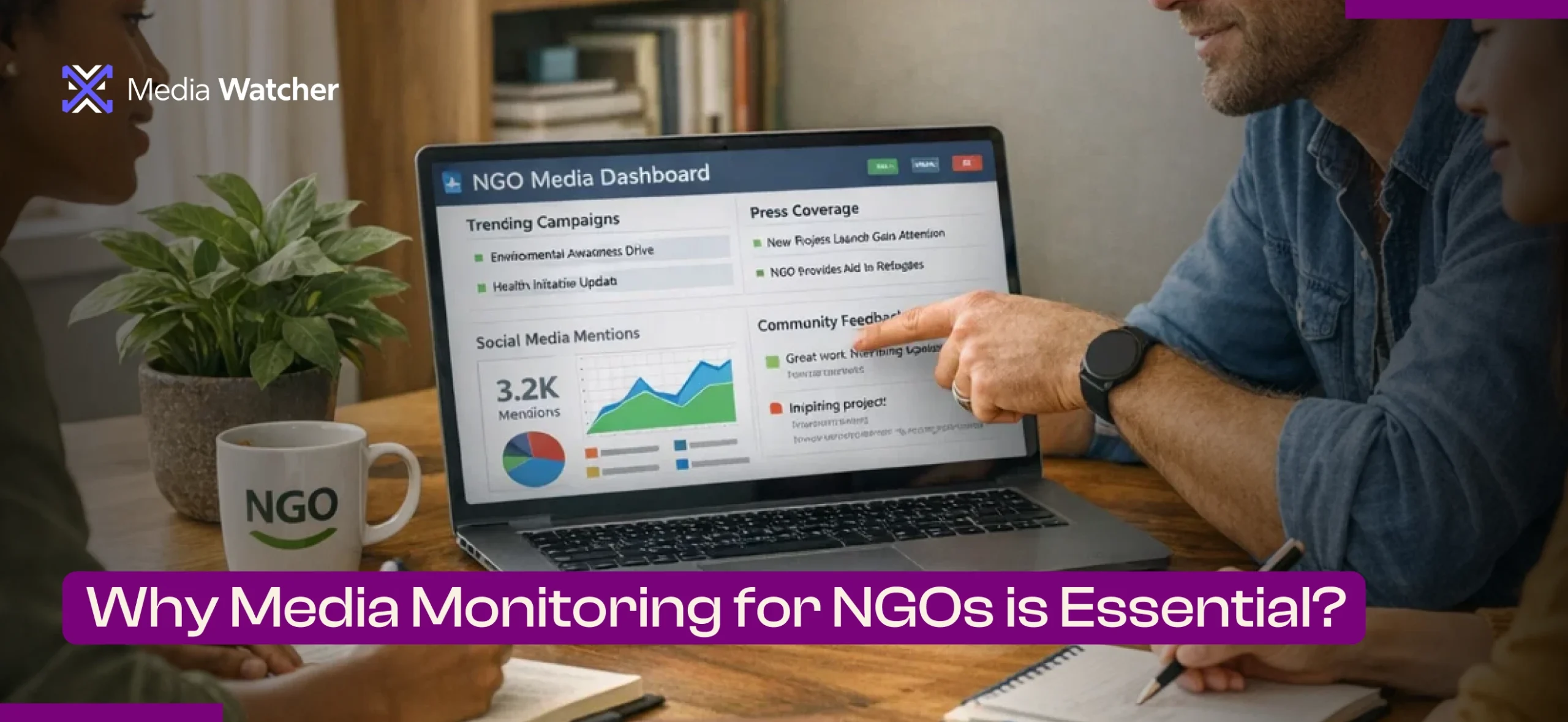


Media monitoring is the technique of tracking and analyzing public sentiment regarding your organisation and its cause in the news and across social media.
It helps in making decisions based on gathered insights and helps NGO teams to navigate the narratives, win the trust, and show progress.
The demand is high due to the increasing presence of audiences on the internet and the contested information. One study estimated the number of internet users at 6 billion in 2025.
In addition, a UNESCO and Ipsos survey of 16 countries in 2023 found that half of all internet users said that social media feeds were their top source of news and information, while 85% said they were worried about the strength of disinformation and fake news.
Thus, for NGO teams, there is no need to follow all headlines. Rather, it is to protect trust, strengthen evidence, and demonstrate progress through convincing reporting that will most likely stand up to scrutiny by donors and other interested parties.
Why Media Monitoring For NGOs Matters?
As per the simple definition of media monitoring, it is a strategic approach that assists brands in deciding what to promote, what to fix, who to inform, and which partnerships to pursue.
The monitoring reports based on insights gathered from the information often bring together signals from news and social platforms so teams can interpret what is being said in context.
Thus, this matters because many people discover news by means of social platforms, while distorted claims can spread widely.
According to the UNESCO Ipsos survey, 68% said social media is where disinformation is most widespread. However, media monitoring is how you keep surprises in donor calls to a minimum.
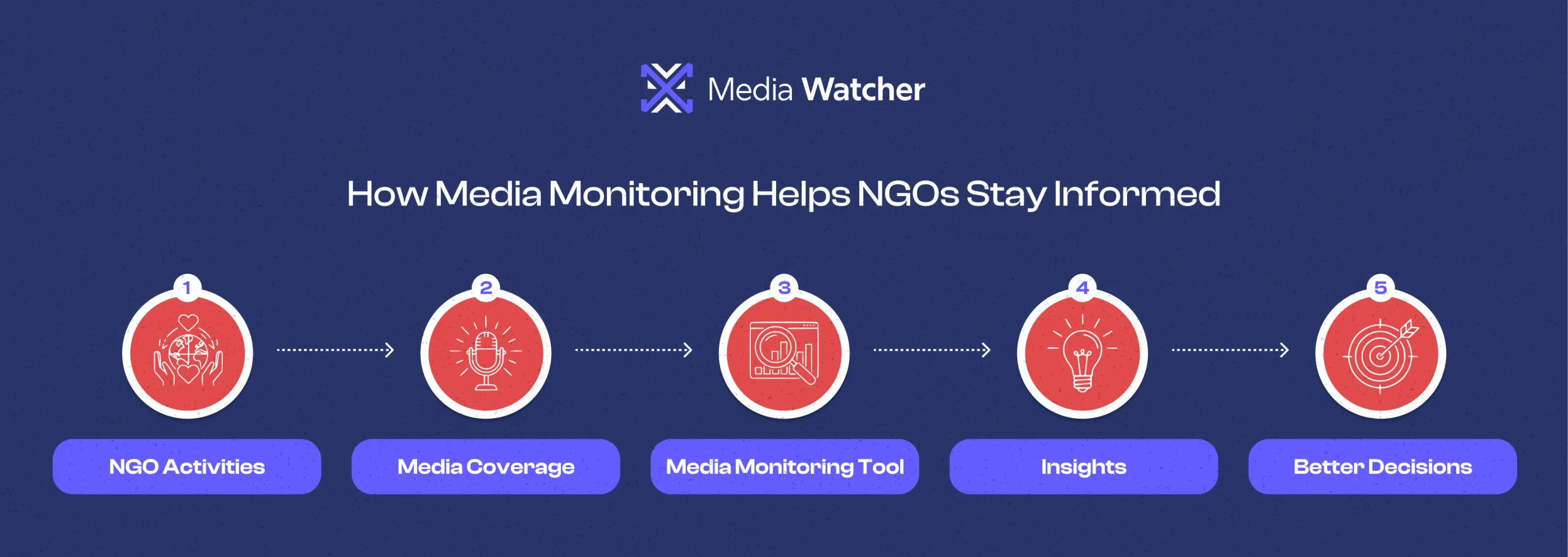
How Media Monitoring for NGOs Can Be Used Strategically?
Media monitoring is a useful and practical approach, allowing NGOs to understand what the audience is thinking and, therefore, control their reputations. The NGOs can target current trends by monitoring media coverage and focusing their advocacy efforts on current trends.
This will assist them in keeping pace with policy changes. Listed below are some of the fundamental areas where media monitoring can help NGOs:
Advocacy Alignment
Monitoring enables you to observe how an issue is being presented, who is creating the frame, and what facts are under dispute. It is specifically significant when social media is one of the main sources of information.
Improved Donor Relations
Donors trust organizations when they see proof that the NGO is reliable and honest. This proof can include positive mentions in trusted media, clear and consistent communication, and openness when dealing with problems or criticism.
Media monitoring helps you spot trust risks early and capture independent validation you can include in donor and board reporting.
It also supports fundraising strategy in competitive contexts. “OECD reports that around 32 private philanthropies provided USD 11.7 billion in support of development in 2023.”
Global Footprint, Local Community Impact
Media tracking must reflect local media realities, and not only global English language outputs. In the previous year, the ITU reported 94% internet use in high income countries versus 23% in low income countries.
The 2023 UNESCO Ipsos survey also shows channel preferences vary by development context, with social media more dominant as a primary news source in medium and low HDI settings.
Boost Accountability
Accountability requires correcting false claims quickly and documenting what you did. In the UNESCO survey, 90% agreed that disinformation is a serious issue that social media platforms should address.
However, media monitoring supports both public integrity and internal governance by grounding decisions in evidence.
Impact Driven Partnerships
Media monitoring helps companies identify the individuals who are trusted and active in their field. By monitoring news and online discussions, NGOs can see which people or organizations are respected on a specific issue.
Moreover, they can identify areas where efforts are not properly coordinated and the groups to which the population already relates to the cause.
This makes it easy to select appropriate partners, prevent duplication of work, and collaborate more efficiently with organizations that have already established public trust.
Monitoring NGO Impact
Impact-aligned monitoring evaluates the alignment of visibility with mission priorities.
According to the International Federation of Red Cross and Red Crescent Societies, it received 1,154 media inquiries and over 6,000 media mentions worldwide, including 6.6 million social followers and 4.7 million website users.
These indicators can assist you in determining what is not covered and what audiences are interested in.
Empowering Grassroots Movements
Grassroots momentum shows up in conversation before it shows up in formal reporting. The media monitoring tools associated with NGOs’ social listening can surface trusted local voices, emerging needs, and the language communities use.
How Media Watcher Helps NGOs Monitor Media Effectively
As you can see, media monitoring helps NGOs align their advocacy with the stories of life. It maintains donor trust, localizes global operational skills to local outlets, aligns partners, demonstrates results, and enhances accountability in high-noise environmental surroundings.
In order to make this operational with a single tool, Media Watcher can claim to be a one-stop solution that allows real-time monitoring, alert generation, and sentiment analysis across massive amounts of sources and languages.
Set up monitoring objectives, reserve a demo, and establish dashboards so your team spends less time searching and more time delivering impact. Contact us today!