

Launching a campaign without understanding what your audience truly wants is no longer an option in today’s data-driven market. Studies indicate that almost 64% of marketing leaders believe that data-driven strategies are key to their competitiveness, and 78% of consumers are more willing to do business with a brand that provides them with personalized experiences. This is the point where marketing insights come in. Through customer behavior, preferences, and engagement trends, the brands can transform raw data into easily understandable, actionable strategies. Insights guide teams to design campaigns that resonate, enhance conversions, and build trust; every marketing decision will be smarter and more confident.
What are Marketing Insights?
Marketing Insights refer to knowledge you acquire through the interpretation of data on customers, their behavior, and market trends. They reveal patterns and relationships that are not immediately visible, assisting teams in making decisions grounded in facts rather than assumptions.
Marketing Insights is useful in terms of its practical benefits. They assist in determining the most effective products, messages, and channels, finding areas to improve, and redirecting resources. Companies relying on such insights will be able to make smarter decisions, react more quickly to change, and enhance outcomes without guessing.
Common Types of Marketing Insights
Once the purpose of marketing insights is clear, the next step is understanding the different forms they can take. Each type focuses on a specific aspect of audience behavior, performance, or market movement.
Customer Behavior Insights
These insights explain how customers interact with a brand across channels. They highlight patterns such as repeat purchases, content engagement, or drop-off points, helping teams understand what influences decisions over time.
Sentiment Insights
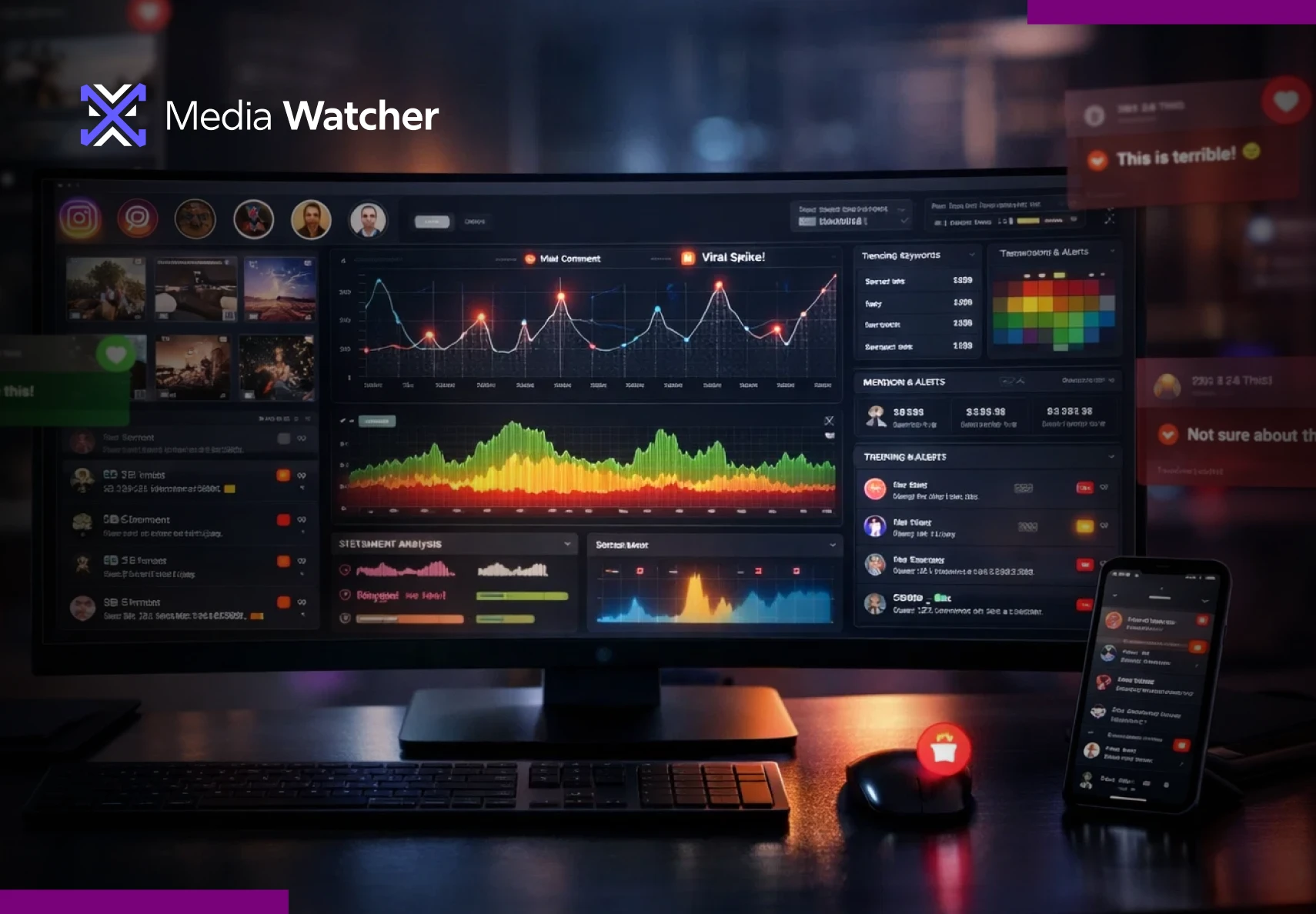
Sentiment insights evaluate the perception of an individual towards a brand, product, or topic. Sentiment analysis allows a team to track changes in the opinion of the masses, identify a drop in satisfaction in its initial stages, and quantify feelings beyond likes or clicks.
Channel Performance Insights
Channel insights demonstrate the performance of various platforms towards particular objectives. They show the strongest areas of engagement, conversions, or visibility, enabling teams to invest in channels based on real performance, rather than guesses.
Media and Conversation Insights
Media monitoring enables teams to monitor brand mentions, trending topics, and online news conversations. Such insights aid in the discovery of emerging narratives and how a brand is discussed in real time.
Competitive Insights
Competitive insights revolve around the comparison of a brand with its competitors. Through media intelligence, teams are able to evaluate share of voice, differences in messaging, and audience reaction to competitor activity.
Trend and Market Insights
These insights indicate shifts in audience interest, industry focus, or volume of discussion over time. They assist organizations in foresight and changing strategies before trends take off.
Working Frameworks of Real-Time Marketing Insights
Real-time marketing insights rely on a structured approach rather than isolated tools or reactions. A clear framework helps teams move from live data to informed decisions without losing context or accuracy.
Data Collection Across Channels
Real-time marketing insights start with gathering data on various platforms, such as social platforms, news outlets, websites, and customer interactions. The combination of these streams provides a way to see what audiences are saying and doing during events.
Data Cleaning and Structuring
Raw data may have noise, redundancies, or irrelevant signals. Preparing and formatting the data assists in eliminating discrepancies, harmonizing formats, and establishing a dependable base to conduct analysis accurately.
Real-Time Analysis and Signal Detection
After it is organized, the data is continuously analyzed to determine whether the volume, sentiment, or pattern of engagement has changed. This action helps to point out early indicators, e.g., abrupt surges in attention or a change in the audience reaction.
Context Assessment
Impact cannot be explained by trends alone. Context analysis relates signals to events, messages, or competitor activity in real-world situations, enabling teams to interpret why a change is occurring, as opposed to merely observing it.
Insight Validation and Prioritization
Not all signals need to be acted upon. Validation assists in relevance confirmation, whereas prioritization guarantees that teams concentrate on the insights that are business-oriented or have high risk or opportunity.
Decision Making
The last action is putting insights into action. With real-time insights, teams can tailor messages, address audience issues, streamline campaigns, keep leadership informed, and make confident decisions.
How Marketing Insights Helps in Building Brand Strategy
Strong brand strategies are built on understanding, not assumptions. Marketing Insights provides that understanding by revealing how audiences perceive a brand, respond to messaging, and engage across different touchpoints. Instead of relying on isolated campaign metrics, insights connect behavior, sentiment, and context, allowing brand decisions to reflect real audience expectations.
When teams use reliable data consistently, brand positioning becomes clearer. Marketing insights tools help identify which values resonate most, which messages feel credible, and where trust is being built or weakened. Over time, this clarity supports more consistent storytelling, sharper differentiation, and better alignment between brand promise and customer experience.
A structured AI-driven marketing insights platform plays a critical role by bringing data from multiple channels into one view. This makes it easier to track perception shifts, compare performance over time, and evaluate how brand actions influence audience response.
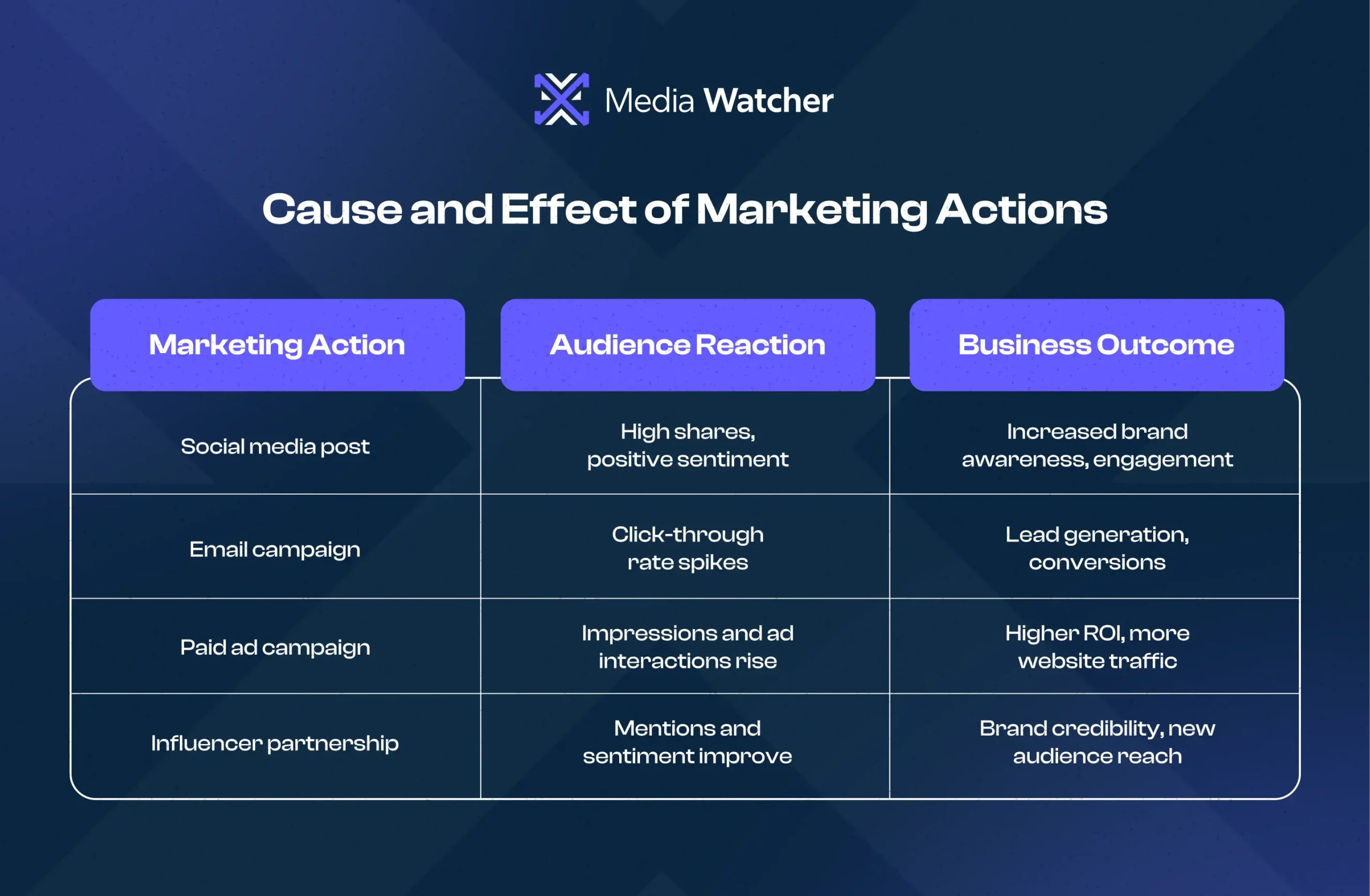
How Media Watcher Delivers Marketing Insights and Guides Decision-Making
The value of marketing insights can only be generated when it is followed by action, which is both informed and clear. Media Watcher assists teams with converting audience content into actionable insights by systemically integrating real-time monitoring, sentiment analysis, and competitive context. By having a clear picture of the direction of conversations within markets and channels, teams can identify early indicators, monitor brand perception, and make decisions based on evidence instead of assumptions.
Contact the Media Watcher team to book a demo today.