

Did you know that most buyers make purchase decisions based on brand reputation?
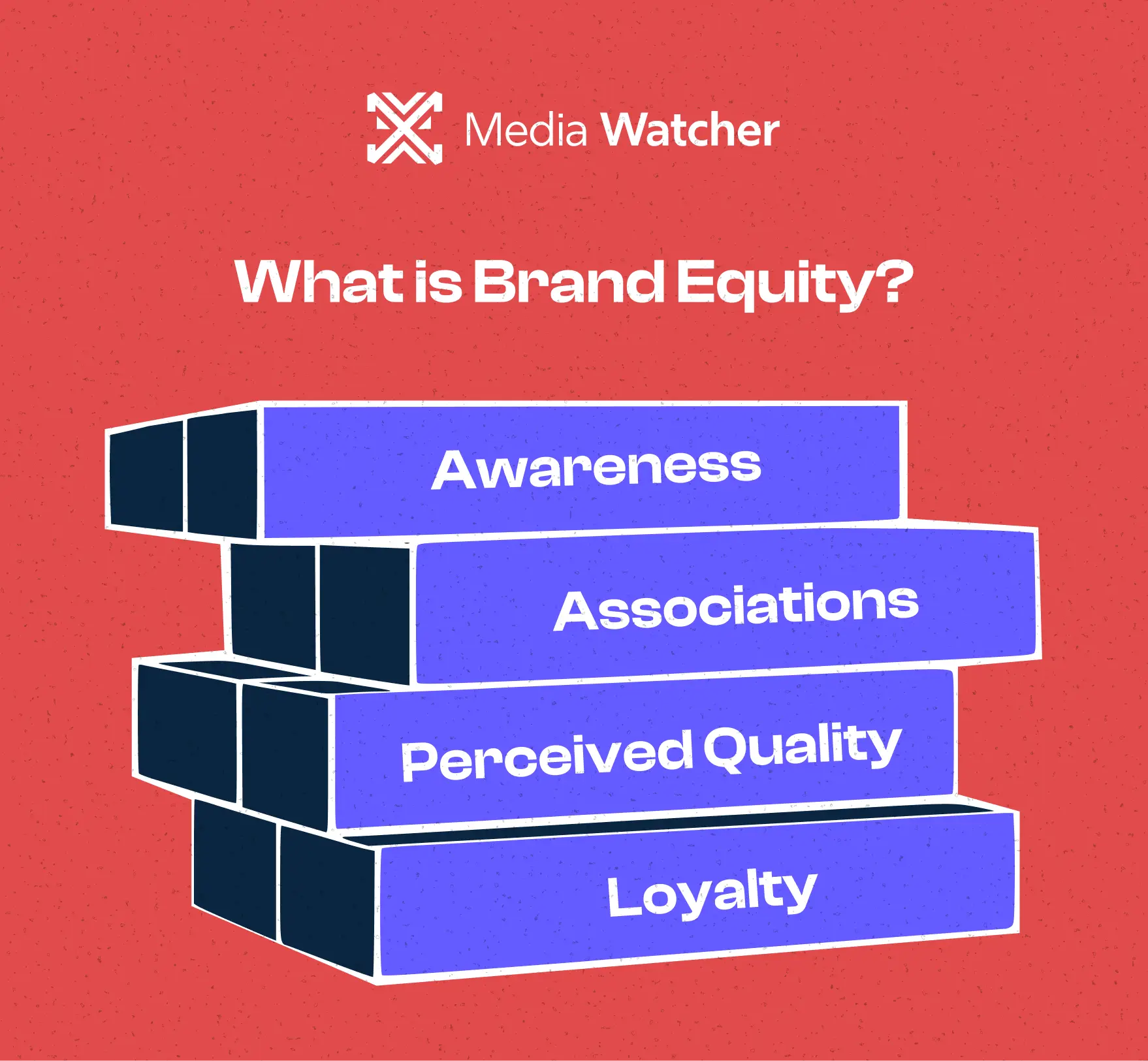
A 2025 academic research on retailing in the modern world revealed that perceived quality, loyalty, awareness, and association are all aspects of brand equity that have a strong effect on consumer purchase decisions. Thus, the real effect of brand equity on consumer buying behavior is striking.
This implies that good brand perception not only enhances consumer confidence and loyalty, but it also has a direct bottom-line effect.
Therefore, today, as consumers are influenced by internet sensations, social media, and reputations built over time, having strong brand equity is of paramount importance to business success.
What is Brand Equity and Why It Matters?
Brand equity is the overall influence of the brand perception on customer behavior and business performance.
It is not about a logo or a catchy tagline a brand makes, but it is about how customers feel about your brand, whether they have trust in it or not. Additionally, there is the likelihood that they will continue to make repeated returns.
When a business has strong brand equity, customers prefer its products or offerings to those of other brands and promote them within their networks. Moreover, it matters because brand equity influences key areas of business. Some of them include:
| Customer loyalty | People are more likely to stick with a brand they trust. |
| Pricing power | Brands with a strong reputation can charge more for their offerings or services. |
| Market share | Positive perceptions lead to stronger word-of-mouth marketing and a wider reach. |
So, brand equity isn’t just a conceptual idea; it’s a business-critical aspect that drives your ability to charge high-end pricing, attract top-tier talent, and weather crises.
How to Measure Brand Equity?
Measuring brand equity includes assessing the value a brand brings to products using both quantitative financial indicators, such as revenue and market share, and qualitative customer insights, such as awareness, loyalty, and perception.
Among the most important techniques are survey-based customer loyalty tracking, brand awareness tracking via media monitoring tools, perceived quality evaluation, and financial data analysis, such as pricing premiums.
What are the Building Blocks of Brand Equity
Building a powerful brand equity doesn’t happen overnight. It needs a strategic, consistent approach that helps to develop your brand’s visibility, quality, and emotional connection with the audience. Some of the fundamental points that work as building blocks of brand equity.
1. Brand Visibility
The initial step towards brand equity is getting people to recognize your brand since awareness is the core on which the rest are anchored. The more consumers know about your brand, the greater the likelihood they will choose it.
Media watcher is one of the tools that offer real-time media tracking and monitoring. It also assists businesses in monitoring their brand frequency in terms of recurrence within social media, blogs, news, and even in forums.
Through brand visibility, the brands can make sure that they remain visible in various touchpoints to have their brand top of mind.
2. Perceived Quality
Perception is often more important than reality. Consumers tend to gravitate toward brands they believe offer higher quality. Whether it’s your product’s durability, performance, or customer service, these perceptions shape how consumers engage with your brand.
With sentiment analysis tools, brands can measure customer feedback and track perceptions of quality across platforms.
It enables businesses to quickly identify positive and negative sentiment, ensuring any quality concerns are addressed promptly before they damage the brand’s reputation.
3. Brand Associations
Brand equity is built on the associations consumers make with your brand. Whether it’s innovation, sustainability, or trustworthiness, the characteristics associated with your brand are fundamental to shaping its equity.
Sentiment tracking tools give brands the ability to measure how consumers associate specific characteristics with their brand.
You can track whether your messaging on sustainability, innovation, or customer service resonates with your audience.
4. Business Loyalty
One of the ultimate goals of building brand equity is creating loyal customers. When customers are loyal, they not only buy your products but also become advocates for your brand, increasing your visibility and credibility through word of mouth.
By monitoring brand mentions over time, businesses can track brand loyalty trends. This helps companies identify loyal customers who advocate for their brand and create targeted campaigns to keep them engaged.
Suggested Read: A Complete Guide to Brand Monitoring for Generating Long-Term ROI
The Power of Emotional Connections in Brand Equity
Although such tangible factors as the quality of the products are not irrelevant, but it is usually the emotional relationship that a brand establishes with the consumers that makes the best brands stand out. Emotions make consumers feel connected to a brand, not necessarily to the product it offers.
Why Emotions Matter
Emotional relations with a brand will result in a better level of loyalty, advocacy, and brand trust. Companies such as Nike, Coca-Cola, and Apple have mastered the process of ensuring that a consumer experiences something whenever he touches their products or advertisements.
This relationship frequently prevails even after the features or functionality of a product.
With tools such as Media Watcher can help to monitor the emotion being expressed towards your brand in real-time using sentiment analysis.
Using the tone analysis of mentions in social media and news sources, companies can gauge the emotional sentiment and use the data to decide and enhance the emotional appeal to their audience.
The Power of Storytelling and Media Monitoring Tools
One of the most effective approaches for establishing emotional relationships is storytelling. The brands that narrate real and relatable stories end up being more than businesses as they become part of the customers.
Consider the fact that Nike’s ‘Just Do It’ campaign did not sell shoes only but the concept of perseverance and personal growth.
A media monitoring tool tracks the perception of your brand stories on the digital channels.
These tools can be analyzed to give practical feedback on how to improve your storytelling campaigns by analyzing the response to them, which enables you to create better emotional resonance.
What are the Modern Strategies to Enhance Brand Equity?
In the digital age, building brand equity requires modern strategies that engage consumers on multiple levels.
1. Social Media and Influencers
Social media is an effective tool for brand awareness. Consumers engage with brands on platforms such as TikTok, Facebook, and Instagram, and influencers can help amplify your message to the appropriate audience.
Through the right social listening tools, you will be able to monitor mentions of your social media and get a glimpse of what discussions are being raised about your brand.
This enables businesses to track the effects of influencer partnerships and assess whether the intended message is being conveyed to the target audience.
2. Customer Reviews and Testimonials
Nowadays, customer reviews are among the most trusted sources of information for consumers. Positive reviews not only help build trust but also serve as powerful social proof for prospective buyers.
Thus, businesses can track and analyze customer feedback and sentiment from reviews across different platforms using tools like Media Watcher. The insights help businesses manage their online reputation and maximize positive feedback.
3. User-Generated Content (UGC)
User-generated content (UGC) is one of the most powerful forms of marketing. It’s authentic, comes from your loyal customers, and conveys social proof. UGC increases brand trust and encourages others to share their own stories.
Monitor UGC and track how it’s influencing brand perceptions with media monitoring tools.
By following conversations around your brand, the tool helps businesses identify highly engaged users and track how their content is shaping your brand’s equity
How to Protect and Strengthen Brand Equity?
Brand equity is a long-term asset, and it requires constant attention. Here’s how you can protect and strengthen your brand’s value:
Consistency is Key
Maintaining consistency across your brand’s messaging and customer experience is essential for long-term success.
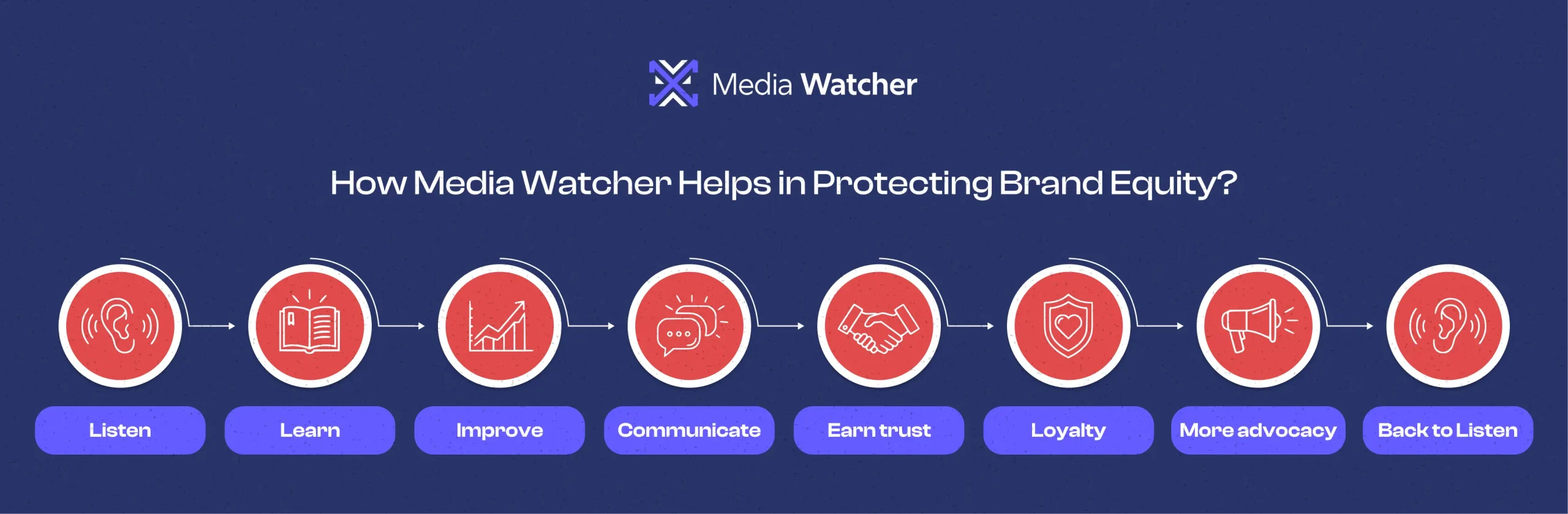
Media Watcher can ensure consistent messaging by tracking brand mentions across platforms, keeping your message aligned across all touchpoints.
Reacting to Negative Sentiment
When negative sentiment arises, swift action is required to protect your brand’s reputation.
With instant alerts for negative mentions, businesses can respond quickly to mitigate damage and protect their brand’s equity.
Build a Legacy, Not Just a Brand with Media Watcher
Brand equity is one of your most valuable business assets, and building it needs a consistent, strategic approach. From brand awareness to emotional connection and audience loyalty, brand equity is at the heart of customer engagement and business achievement.
With the help of the strong monitoring and sentiment analysis tool of Media Watcher, you will be able to monitor the health of your brand in real-time, measure brand equity, and build stronger consumer relationships.
The brand equity insights offered by Media Watcher enable you to move swiftly and keep your brand’s image in the current fast-paced world.
Therefore, start securing and strengthening your brand equity through the all-encompassing media intelligence services of Media Watcher.
Request a demo to see how we can help you stay ahead in today’s competitive market.