

Customers today are both buyers and vocal participants online. They not only buy the products but also talk about them everywhere, from social media to review websites.
They tweet about them, post on forums, leave reviews on ecommerce sites, and talk back on social platforms. Every post and review by a user is a declaration of how they feel about the particular product.
Star ratings may tell you the score, but sentiment tells you the story.
Sentiment analysis technology translates those stories into strategic business intelligence, way beyond a positive/negative label. This enables brands to make decisions that are well-informed and emotionally conscious.
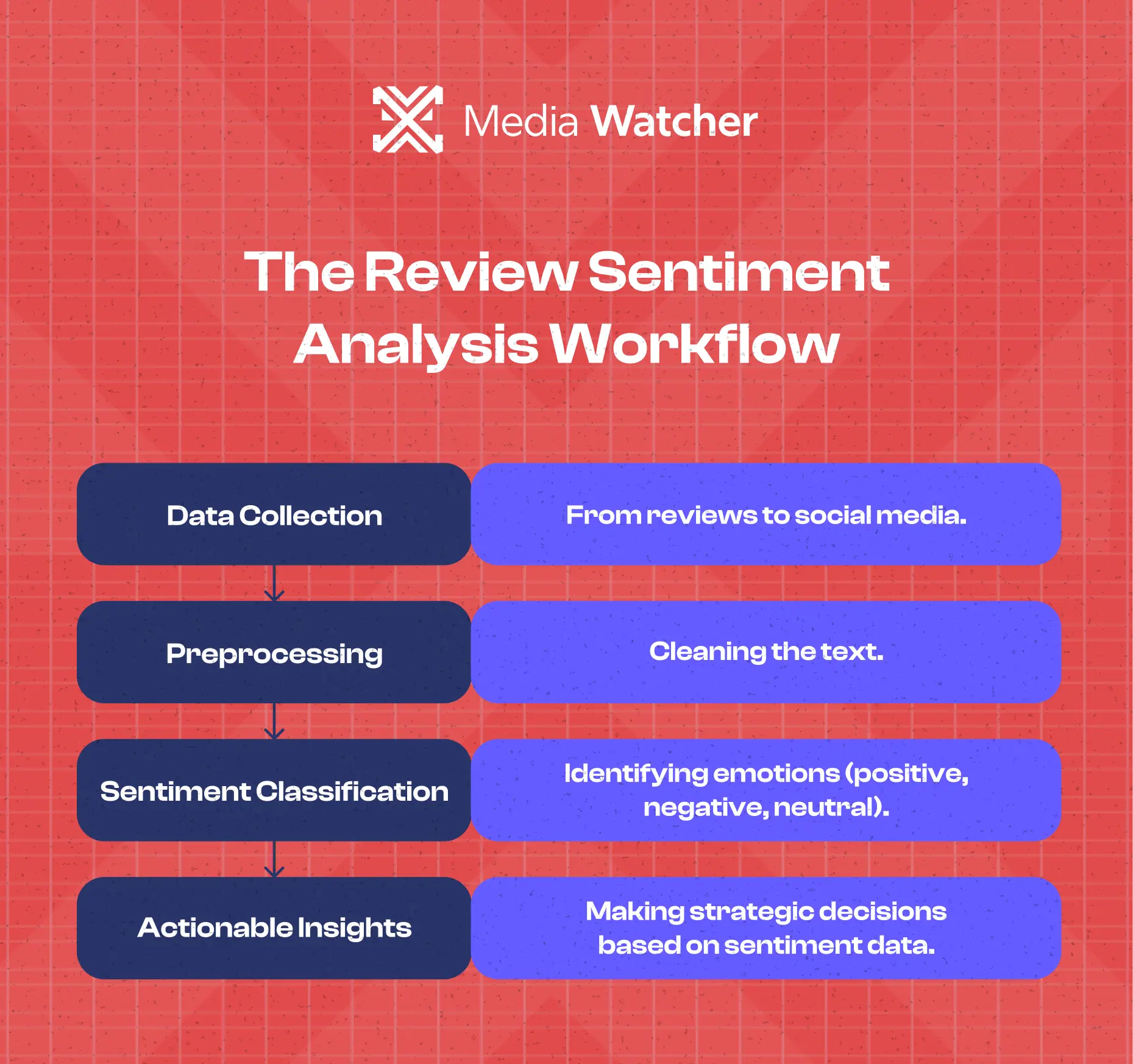
Sentiment analysis scrutinises valuable information, fundamentally, through Natural Language Processing (NLP) and machine learning to identify the emotional tone of the textual information.
It can be in the form of online reviews, social media posts, surveys, or chats in public channels, and categorize them as positive, neutral, or negative.
However, it does not stop there; it can identify specific attached emotions hidden in the online slang, which helps companies gain an understanding of what really makes customers satisfied and what makes them dissatisfied.
Thus, what was once thought to be a battlefield of data scientists and linguists is now a business strategy.
These insights can be used by companies to modify prices, product development, marketing communications, crisis management, and even brand names based on their familiarity with their customer base. Let’s explore how.
1. Going Beyond Thumbs Up and Down
Traditional review analysis focuses mainly on one side of the coin, such as the number of stars a page or product got, or the positive mentions a service gets.
But modern sentiment analysis goes deeper than this. With effective analysis of the emotional tone and intensity of language, companies can easily differentiate between “positive” praise and “tentative positivity,” as well as the difference between simple complaints and deep frustration.
This nuance helps businesses to prioritise their campaigns or strategies based on the sentiment score enriched with emotional context.
For instance, a phone brand might get a lot of five‑star reviews, but many among those might include subtle frustration with battery life.
If these subtle frustrations remain blurred under the positive reviews, it may end up as a reputational disaster for that brand. Such specific insight allows brands to take the right action at the right time.
2. Emotional Drivers for Loyalty
It is important to understand emotion in online reviews as it’s a predictor of future behavior. Customers who find a brand valuable will be more inclined to refer to it, spend more, and return to it. Those who show dissatisfaction, even if it’s written in a polite manner, can stir silently if left unnoticed.
Sentiment analysis enables brands to quantify these indicators and intercept them before satisfaction degrades into defection. This shift is important to note because star ratings alone miss a huge part of the narrative.
A neutral score might hide an extremely angry review and a mildly positive one, and conflating these two together may dilute your understanding of customer perception.
3. Competitive Intelligence from Public Conversations
Your competitors’ reviews are free market insights. Use the.
One shouldn’t rely solely on their own reviews for a thorough understanding of their consumer base. Competitor review and community members’ comments are valuable to compare their strengths and weaknesses in the market.
Moreover, identifying trends in various sentiments across brands can be an effective opportunity to bring innovation and distinction to your products.
For example, when customers regularly compliment a competitor’s experience at the checkout area , this information is a roadmap for improvement in shaping your uniqueness to gain the same outcome.
Suggested Read: A Guide to Competitive Intelligence for Business Market Clarity
What 38,000 Hotel Reviews Reveal About Sentiment and Strategy
One real-world demonstration of review sentiment analysis in action comes from the travel industry.
A published study analyzed nearly 38,000 hotel reviews on Booking.com and TripAdvisor.
Researchers chose an unorthodox way of analyzing the emotional tone of the written reviews instead of a general statistical method for such research. This provided them a better understanding of what was actually making or breaking the cycle of travelers’ satisfaction.
The findings were revealing. Positive sentiment was strongly associated with friendly interactions with the hotel staff and pleasant human encounters. Warm service created stronger positive language patterns than features such as room size and décor.
On the other hand, negative sentiment was mostly associated with pricing concerns and overcharging by the app.
The sentiment of the complaints didn’t reveal the money as a problem, but a feeling of unfairness tied to it. Service issues and expectation gaps also surfaced prominently.
This distinction is important.
Thus, a hotel had a respectable average rating, while sentiment analysis revealed another side of the story, which enables management to:
- Invest more in staff training
- Address billing transparency
- Refine communication around pricing
- Prioritize service recovery strategies
Rather than guessing what influences the loyalty of customers, sentiment analysis of those reviews provided data-backed emotional drivers of satisfaction.
4. Real‑Time Crisis Detection
In the era of social media, sentiment spikes can foreshadow crises. Real‑time monitoring enables companies to detect sudden negative sentiment surges, whether from product problems or controversial marketing. It helps respond quickly before the narrative spirals out of control.
This proactive posture is vastly different from traditional reputation management, where issues are often identified only after they’ve already damaged public perception.
5. Measuring Financial and Strategic Impact
The modern sentiment analysis technology not only informs intuition, but also influences financial performance. Firms are correlating sentiment trends with sales data, user retention rates, and revenue growth to see how customer perceptions move the business.
Positive sentiment gains can predict increased sales, and the negative trends may signal churn risks well before they show up in quarterly numbers.
The approach of having the contextual highlights of sentiment analysis can also refine investment in product features and marketing campaigns.
6. Integrating Sentiment Into the Organization
To be strategic, sentiment insights need to be embedded into decision‑making processes across teams:
Product & Design Teams
Use sentiment trends to identify opportunities and reflect them in the product.
Customer Experience Teams
Monitor sentiment to refine support responses and address recurring pain points that surface across channels.
Marketing & Brand
Track emotional reactions to campaigns to refine the brand messaging and audience targeting for greater resonance.
Together, this leads to actionable and effective insights from the data sentiment analysis can provide.
How Media Watcher Listen Leads and Ignore Costs
Review sentiment analysis is like empathy on a large scale. A thorough understanding of empathy is valuable to direct a strategic choice, outsmarting the competitors, and providing what your customers really want.
Once the reviews begin to accumulate on the sites, there is no risk of missing information. The danger is not to catch the signal.
Media watcher assists in converting the sentiment behind those reviews into a decision-ready format of what customers want, what annoys, and what is gradually damaging trust using publicly available information.
So product teams fix the right things, support teams stay proactive, and decision makers see sentiment shifts early enough to act.
Want to see how your reviews actually read at scale? Get a free Media Watcher sentiment demo and turn customer reviews into your next move toward success.