

The image of a brand can shift in an instant, and this is due to the constant flow of conversations that are going on online. From news sources to social media and online communities, there are constant opinions going around, and they affect the way people interpret and react to what the company is doing. The marketing campaigns no longer have the power over brand reputation, as the audience reaction and media discussion also play a significant role. In fact, a survey by Edelman Trust Barometer (2024) shows that 81% of customers use brand trust as a factor in purchase behavior, and the emotional tone of the conversation has a direct impact on commercial outcomes.
Brand sentiment in the context of organizations is essential in evaluating how customers and the media respond to communication initiatives. Sentiment analysis may come in handy in this case, as it examines the emotional tone of online discussions. Companies are well placed to identify the emerging issues, areas of strength, and anticipate the risks before they explode. Businesses can track the developments of a conversation in real-time through modern sentiment tracking tools. Brand-building sentiment analysis enables organizations to do more than observe and translate what people say into actionable reputation strategies.
The Basics of Sentiment Analysis as a Brand-Building Strategy
The brand sentiment analysis helps organizations to determine the trends in the response of the audience, what is popular, and what risks to their reputation are likely to happen. Brands can actively update their messaging, respond to social problems, and engage their audience more effectively by tracing cues in social media, news outlets, blogs, and forums, turning disjointed online discussions into actionable information to guide brand development.
Positive, neutral, or negative responses can directly affect consumer trust and credibility. Observing these indicators will assist brands in altering their message and satisfy the concerns of the people ahead of time, and resonate more with their customers. The approach will transform the loose online chats into actionable information to spur brand building and reputation management.
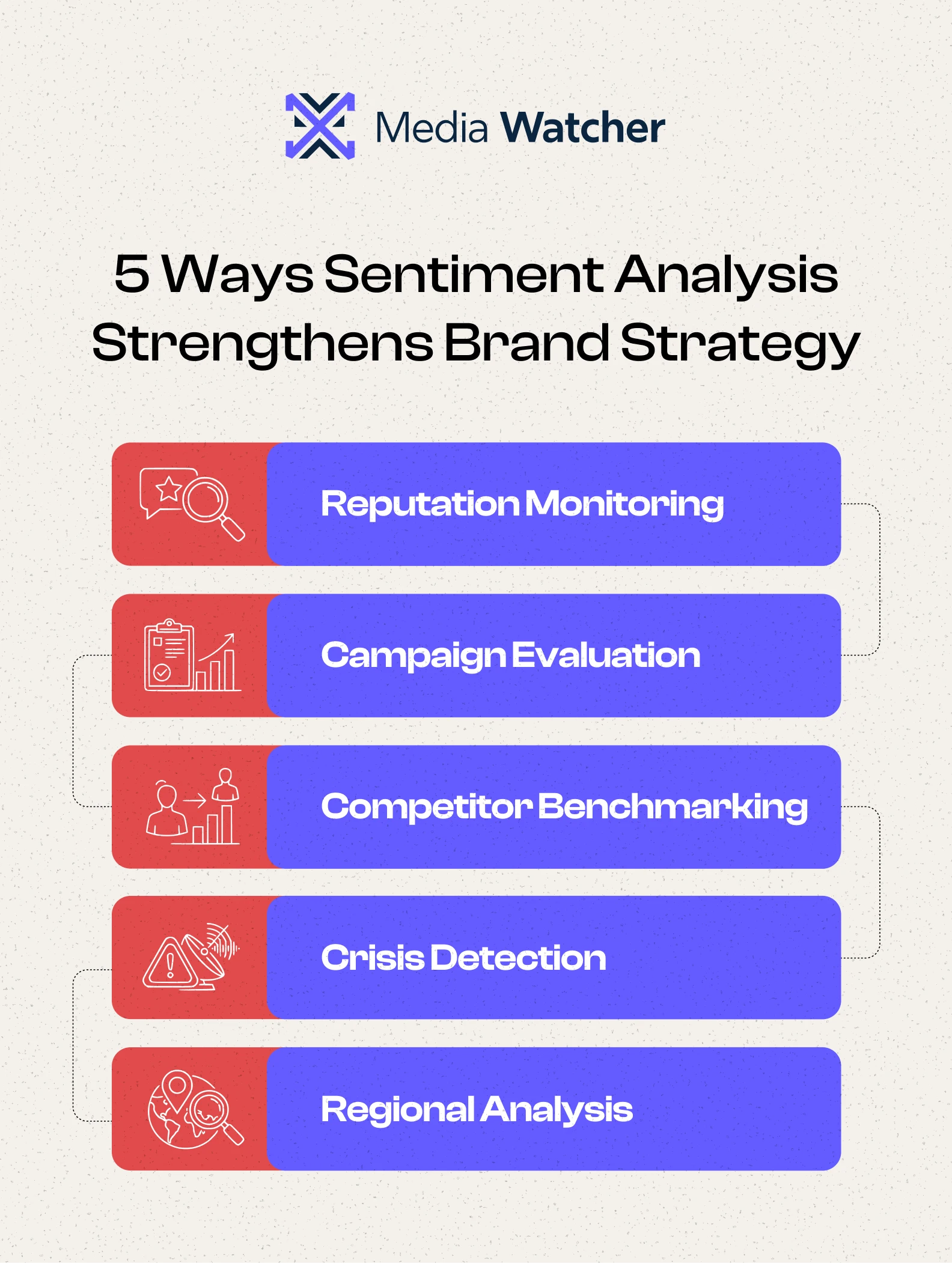
Sentiment intelligence is a powerful business decision-making approach. The monitoring capabilities of companies can include analyzing trends over time, evaluating campaign or announcement response, and identifying reputational risk. When sentiment is compared in relation to competition, it provides additional context in positioning. The organizations can easily observe the evolution of the stories as they are tracked in real time through media channels, and therefore, they can act in a timely and planned manner. In such a way, sentiment analysis converts raw public opinion into actionable intelligence and allows the brands to establish trust, build credibility, and take long-term development-oriented decisions.
How to Choose the Right Sentiment Analysis Tool for Brand Building
The choice of the appropriate platform is essential. Find solutions that offer:
- Multilingual analysis and global media coverage.
- Real-time notifications and trend analysis.
- Dynamic dashboards to follow narratives by region and platform.
Using brand-building sentiment analysis tools, teams will be able to identify emerging stories, react fast, and make decisions based on the information, which makes brands more robust, increases audience engagement, and shapes long-term strategy.
How Sentiment Insights Help Brands Shift Conversations into Strategy
It is one thing to know how people feel and another thing to turn that into actions to be taken, which makes a brand receive a real benefit. Sentiment analysis-based brand-building tools allow organizations to convert raw data into an informed approach that lets communications teams track discussions, uncover trends, and proactively react to changing perceptions. The power to monitor thousands of mentions in the news, blogs, or social media gives brands insight into how audiences are reacting to campaigns, product launches, or message initiatives.
In brand building, advanced sentiment analysis tools automate mass media monitoring provides a clean, real-time perspective of what people think. Key capabilities include:
Live tracking of conversations worldwide: Harness instant feedback on a local or global scale.
Sentiment classification of mentions: Recognize the positive, neutral, and negative reactions to campaigns.
Sentiment trends visualization: Quickly identify trends and spikes in the popular response.
Narrative change across geography: Notice regional audience differences to understand how people react differently to the narrative.
It enables communication teams to assess the effect of big announcements in real time and act proactively, be it supporting positive buzz or addressing criticism before it develops.
Example: Tracking Global Campaign Sentiment
Take the case of a world-renowned sports apparel company conducting a significant product release. A communications team may construct a query such as:
Brand OR “Brand launch” OR “Brand campaign” OR “Brand sneakers” OR #BrandLaunch
This method allows teams to monitor the amount and quality of conversational volumes in real time. A sentiment dashboard would indicate:
- Positive sentiment: Hype on design, innovation, or social message.
- Neutral sentiment: Informational mentions or general awareness.
- Negative sentiment: Criticism of pricing, accessibility, or the tone of the campaigns.
A regional sentiment map can show a greater positive response in one market and a mixed sentiment in others, indicating precisely where messaging should be changed. This is the way sentiment analysis in brand building transforms real-time signals into communication choices.
How Media Watcher Helps in Sentiment Analysis for Brand Building
Powerful brands expand with the clear self-awareness of how audiences react to their messages. Media Watcher assists organizations in summarizing disparate online chats into actionable sentiment data. The platform tracks discussions in news channels, social sites, blogs, and online media, enabling communication departments to view how brand perception varies in different regions and industries.
Its AI-based sentiment engine categorizes mentions into positive, negative, or neutral, allowing teams to quickly detect a change in audience responses and emerging stories. Media Watcher offers 100,000+ media sources, 80+ languages, and 235+ regions coverage to offer global visibility of public discussions, allowing brands to refine messaging tactics, act on reputation risks early, and make decisions informed to reinforce brand perception in the long term.
Experience it firsthand by booking a demo to see how Media Watcher can turn real-time insights into smarter brand strategies.