

Have you ever noticed how a single regulatory change can quietly modify the course of a whole industry?
There can be one headline, one leaked memo, or some unforeseen compliance happening that will increase scrutiny overnight. To proactively detect the risk of potential scrutiny, businesses need automated monitoring. This approach is also effective, as the research shows that organizations that operate with real-time monitoring mechanisms detect regulatory risks 27 times quicker than those that only use manual checks.
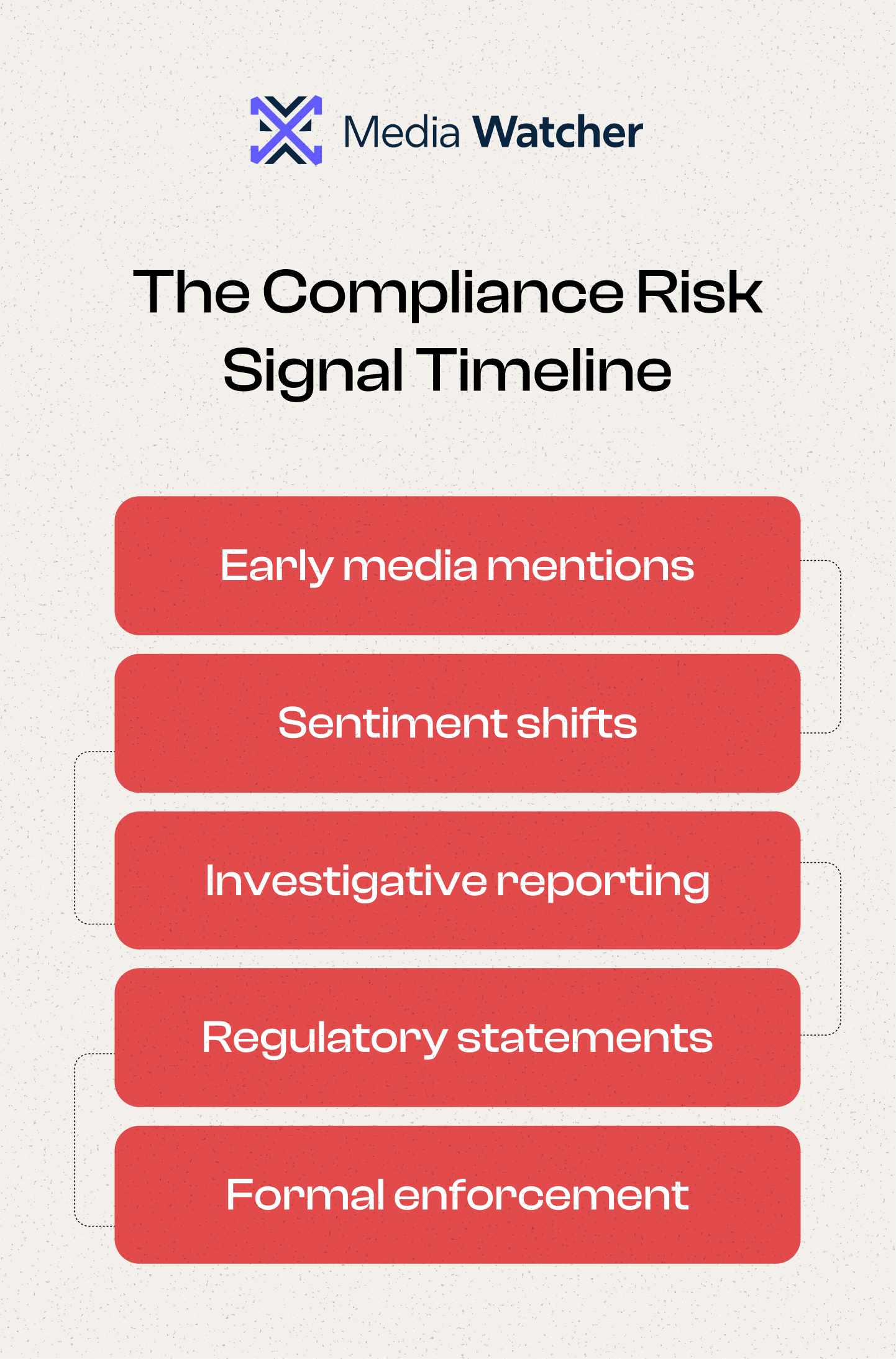
The pace of information has transformed the way compliance professionals operate, and the indicators within media reports tend to be precursors of audits, enforcement trend changes, and adjustments of stakeholder expectations.
These signals become clear in media monitoring by compliance and regulatory teams. It assists organizations to remain ahead of risk narratives, grasp what people expect, and capture the tone of regulatory discussions before problems start to grow.
What is Media Monitoring for Compliance and Regulatory Teams?
Compliance and regulatory teams use media monitoring to track regulatory changes, enforcement trends, risks, and community opinion on news websites, policy sites, industry reports, and social media. This is aimed at giving clarity on the developments that might impact compliance obligations of an organization.
Unlike manually scanning hundreds of sources, automated monitoring aggregates coverage in a single location, helps detect tone, and identifies concerns that must be addressed. This eliminates any blind spots, accelerates response, and assists compliance leaders in aligning internal activities with reality on the outside.
This kind of media intelligence for compliance usually involves monitoring the following types of sources and content policy debates and amendments:
- regulatory enforcement actions
- industry-wide investigations
- public sentiment around compliance failures
- emerging risks such as ESG, data privacy, and cybersecurity
Regulatory teams have been shown to have up to 32% improved risk prediction accuracy with structured monitoring, demonstrating the importance of media intelligence in contemporary compliance activities.
Examples of How Organizations Use Media Monitoring for Regulatory Teams and Compliance
Media monitoring is the process used by various regulatory teams, depending on their priorities, but the essence remains the same, which is to stay alert and informed.
Here are simple examples describing how organizations usually apply regulatory media monitoring in their frameworks:
Financial institutions monitor changes involving regulations around KYC, AML, sanctions, or enforcement measures that may affect risk frameworks or customer onboarding. In a trending enforcement case, teams rely on monitoring in order to measure exposure and reinforce controls.
Suggested Read: How Media Monitoring for Financial Services Improves Risk Mitigation
Healthcare organizations also monitor discussions regarding data protection, billing fraud, and government regulation to predict inspection cycles or changes to the regulations.
Technology firms track data privacy legislation, AI regulations, cross-border information transfer guidelines, and cybersecurity commentary to keep up with moving international and local laws that may impact their operations.
Consumer brands monitor narrative changes following product recalls, safety issues, or ESG-based criticism to modify compliance communication and reaffirm public confidence.
These examples show why organizations rely on media monitoring for compliance, even when they already have internal compliance systems, because public narratives often signal what regulators are watching next.
Major Types of Media Monitoring Used in Compliance Work
Just like in broader communications, media monitoring for compliance and regulatory teams includes multiple types, each supporting a different need, and some of them are given below for better understanding:
Real-time Updates
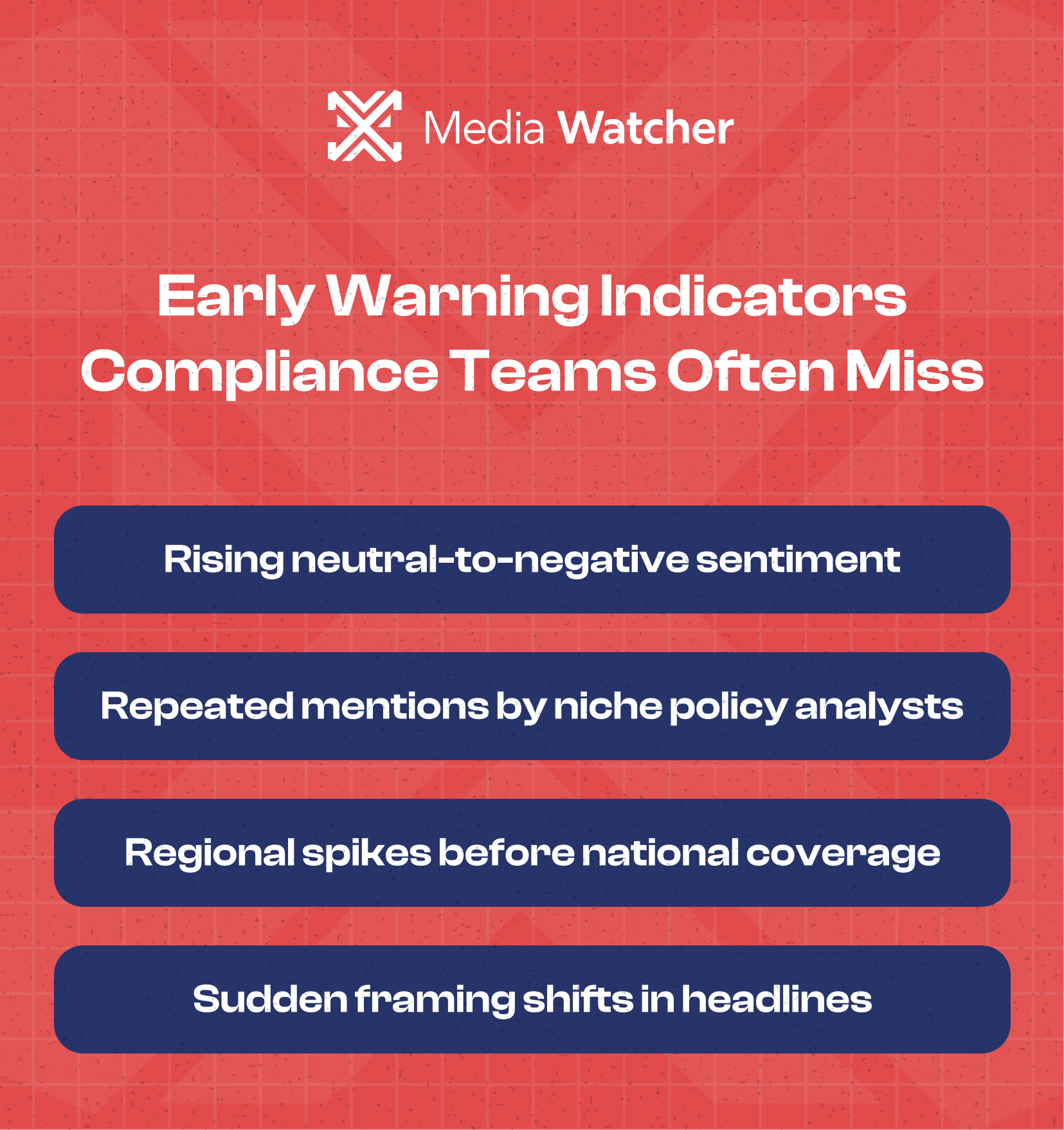
Through strategic use of media monitoring tools, compliance teams trace regulatory announcements, investigative stories, and compliance-related conversations as they develop. They assist teams in identifying problems early, particularly when sentiment has a negative turn or response to policy debate on a public forum heats up.
Daily or Weekly Summaries
Round-ups are reviewed by compliance officers in order to follow trends without becoming overwhelmed. Therefore, summaries bring together the enforcement activity, policy discussions, and industry perceptions in a systematic presentation for making procedures more streamlined.
Risk Monitoring
Different categories concentrate on examinations, whistleblower reports, litigation, breaches, or regulatory flaws within the ecosystem. It is particularly useful when it comes to audits, crisis management, or high scrutiny.
Social and Stakeholder Sentiment
The regulatory decisions are usually guided by public sentiment. Observing the opinion leaders, advocacy groups, analysts, and journalists debate industry risks provides early indicators of potential ways of enforcement.
Competitor and Industry Benchmarking
Benchmarking assists organizations in assessing peer responses to regulatory matters, the direction of risks across the industry, and where vulnerabilities are forming. These lessons inform more intensive internal controls and anticipatory planning.
What a Strong Compliance Media Monitoring Framework Should Include?
A strong framework turns raw media coverage into organized, actionable, and compliant intelligence. Below are some of the steps of a strong media monitoring framework.
Clear Coverage Selection
An effective compliance monitoring program begins by ensuring the selection of sources of interest. The advantages of compliance teams can include regulatory agencies, policy analysts, trade journals, investigative articles, and highly credible news sources. It is beneficial to reduce the span of coverage to authoritative voices to ensure that the insights remain accurate, relevant, and free of unwarranted noise so that teams can make decisions based on tested and quality information.
Segmentation of Sources
The compliance dialogue is not universal; that is why the effective frameworks divide the information according to geography, regulatory authority, enforcement style, and market maturity. Such a degree of classification assists teams in determining the areas in which risks are escalating, the variation of standards in various jurisdictions, and the areas or sectors that need more attention. Segmentation provides context to crude data and determines how regulatory themes develop in various settings.
Key Metrics
Credible compliance monitoring depends on metrics that demonstrate what is changing and why. Powerful structures follow sentiment patterns, risk-related keywords, how often a regulatory mention is listed, influential sources, and new compliance alerts. The indicators enable teams to detect pressure areas early, grasp the tone of regulatory discourse, and place emphasis on the insights that actually impact decision-making.
Visualization and Clarity
The clarity of visual representation simplifies regulatory trends between departments. Charts, sentiment breakdowns, and summary insights assist in converting complex data into intuitive, shareable intelligence. These visual dashboards are often used by compliance leaders to share trends with legal, governance, and risk teams, ensuring that everyone understands where to focus attention.
Integrated Recommendations
A strong compliance monitoring framework does more than report findings; it guides action. Integrated recommendations offer direction on when to adjust internal policies, refresh employee training, update documentation, or alert senior leadership. By linking insight with action, the framework supports faster decisions and keeps the organization aligned with regulatory expectations.
How Media Monitoring Strengthens Regulatory Readiness?
Media monitoring for compliance and regulatory teams provides organizations with a more accurate view of the safety framework. It reveals what regulators highlight, journalists investigate, and stakeholders question long before these signals reach legal or audit departments.
Studies show that companies using media intelligence for compliance achieve:
- 28% fewer late responses to regulatory inquiries
- 22% higher preparedness during regulatory audits
- 30% better alignment between compliance, legal, and risk teams
This happens because media monitoring alertly helps in the following protocols in real-time:
- captures early warning signs
- highlights red flags before escalation
- provides context behind regulatory shifts
- deepens understanding of public sentiment
- supports strategic communication during scrutiny
It becomes the bridge between headlines and real compliance action. This is also where compliance monitoring tools come in. They help automate collection, analyze tone, and notify teams when emerging issues require attention.
How Media Watcher Helps You Make Better Regulatory Decisions?
Media Watcher brings together real-time tracking, risk detection, sentiment shifts, and industry coverage to help compliance teams strengthen oversight with confidence. Media Watcher supports:
Real-time Monitoring
Real-time alerts for regulatory updates, investigative stories, or compliance narratives help teams move quickly during critical moments.
Advanced Sentiment Analysis
AI-powered sentiment captures the emotional tone of discussions, helping organizations understand whether coverage signals risk, concern, or approval even across multilingual coverage.
Competitor and Industry Benchmarking
Media Watcher highlights how peers handle compliance challenges, giving teams a strategic edge when adapting to new expectations.
Data-rich Visual Reporting
Clean charts, risk dashboards, and clarity-focused summaries make communication simple across compliance, governance, and legal teams.
Smart Filtering and Compliance-focused Insights
Teams get alerts tailored to keywords, regulators, industries, and risk categories, ensuring that media monitoring tools for compliance directly support decision-making.
Contact the Media Watcher team to book a demo today.