

Media monitoring cost is more than the invoice. When people ask “how much does media monitoring cost,” they usually mean the subscription price.
But the real cost is bigger than the invoice because media monitoring is not just a tool you buy, it is a process your team runs every day.
Before you even get value from the tool, someone has to set it up properly by choosing the right keywords, removing irrelevant mentions, and deciding what should trigger alerts.
If the setup is weak, the tool becomes noisy, and your team wastes time sorting junk. After that, there is the ongoing time cost.
Even with a third-party platform, your team still spends hours checking what matters, finding context, summarizing updates for leadership, and deciding what action to take. That time is part of your monitoring cost because it pulls people away from higher-value work.
So let’s break down what brands need to know related to media monitoring cost and its plan.
Media Monitoring Costs Brands Are Actually Paying
There are three main types of media monitoring cost that brands usually pay for:
1. Subscription Cost
This is the platform fee as it is influenced by coverage, users, channels, reporting depth, and add-ons.
2. Time Cost
Time cost is the hidden one, which is the hours spent on searching, screenshotting, building reports, chasing context, and explaining what happened to leadership.
3. Missed Moment Cost
This is the “we should have seen this earlier” bill type of cost that most businesses pay, because they are not aware of it.
It’s the cost of delayed awareness, when critical issues like brand damage, customer complaints, misinformation, or market changes happen, but you only catch them later, typically after they’ve already escalated.
What Typically Drives Media Monitoring Subscription Cost
Most monitoring platforms’ prices are based on how much coverage brands need and how many users will have access to it. These are the elements that, when adjusted, can increase or decrease the platform’s prices. The common levers in media monitoring pricing typically include:
Channels and Coverage
News coverage serves as a table stake, and social coverage is often where the volume sits. The forums and niche sites are where the early signals show up, while the podcasts and video mentions matter more than teams expect, because modern narratives spread through clips. Therefore, more channels and broader coverage usually mean higher pricing.
Number of Users
The subscription cost based on the number of users means that if only one person can log in, you get a bottleneck, but if multiple teams need access, then the pricing scales.
Reporting Depth
Basic alerts are cheap, while real analysis costs more. However, factors like sentiment analysis, topic clustering, share of voice, and dashboards can affect the price.
Customization and Integrations
In case a business needs API access, workflows, or custom reporting formats, this also changes the quote. The media tracking cost depends on the services you buy.
Therefore, the key point is that subscription costs are the visible part, but they are not the whole story. In order to get the best cost, buyers need to explore the proper pricing plan.
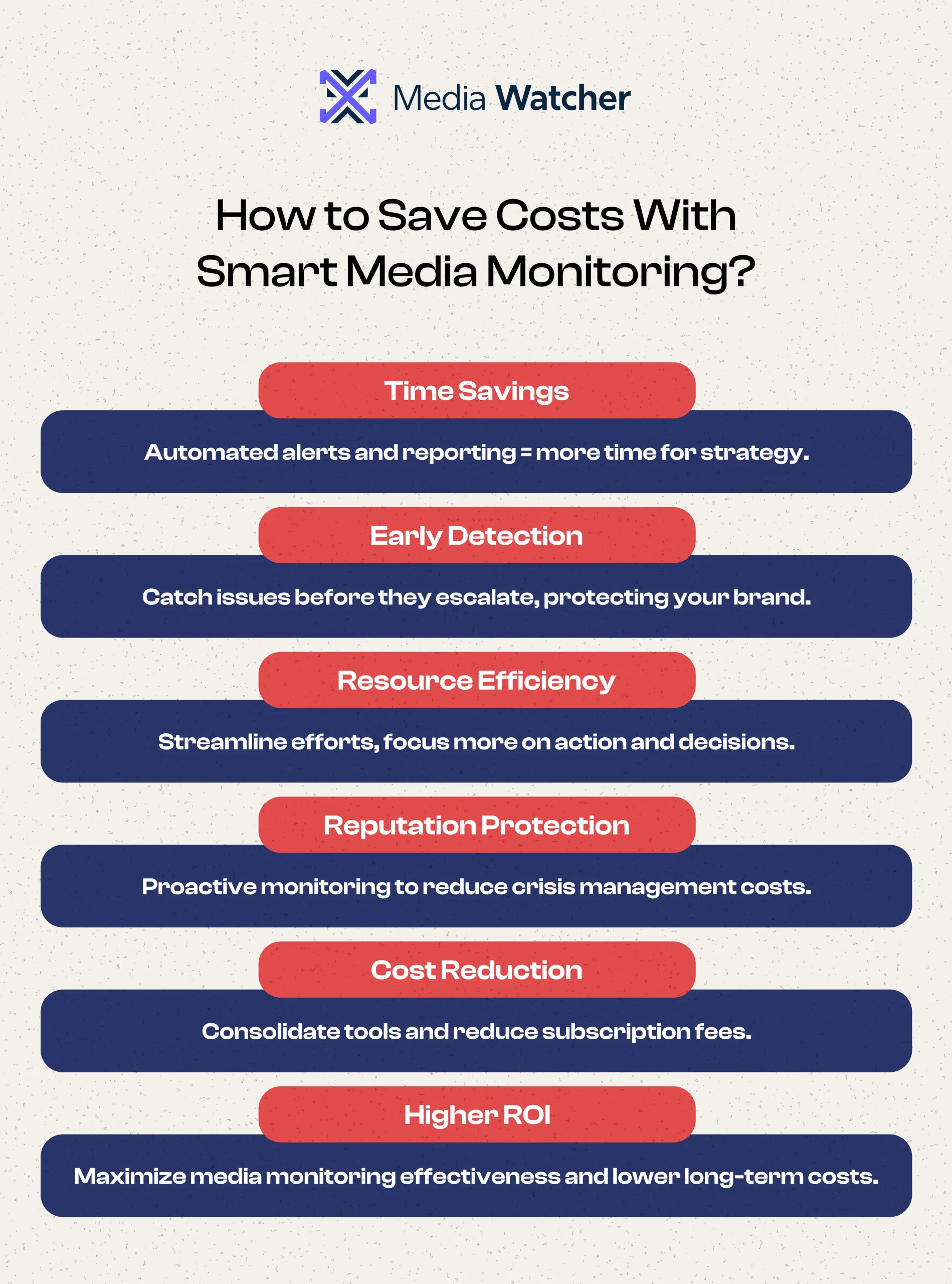
Hidden Media Monitoring Costs Every Brand Should Know
Oftentimes, there are costs that show up after you sign the agreement. However, it is important to know and inquire about everything before getting the deal done. Here are some hidden media monitoring costs that brands should know
Onboarding And Setup Time
Your tool is not aware of your brand on day one, and someone has to build the query set, exclude junk mentions, and map keywords to topics. In case you skip this step, all the alerts will become a daily chaos newsletter, making it challenging and time-consuming for teams to extract the main information.
Stakeholder Reporting
Every organization has a set schedule for reporting. This includes weekly updates for leadership, monthly presentations for the board, and emergency briefs as needed. Therefore, the time spent organizing and translating monitoring data into decisions adds real costs.
Archiving And Evidence
Some teams need to keep records for audits, compliance, or internal reviews. However, exporting, tagging, and archiving are rarely part of the initial budget discussion.
The Handoff Problem
When no one clearly owns monitoring, it becomes a passive task. People see alerts, but no one takes action. As a result, leadership starts to view monitoring as something “important to have.” This perspective also affects the budget.
Does Coverage Gap Affect Media Monitoring Cost?
A monitoring tool is only useful if it captures important information. If there are gaps in coverage, you may feel falsely secure. You might think you’re safe because nothing appears amiss, but the real activity could be happening out of your view.
Therefore, the coverage gap is one of the crucial factors that costs more than subscriptions. In order to understand the coverage gap, here are some of the key highlights:
- Regional sources that your customers trust more than global outlets
- Local languages that carry different sentiments and contexts
- Industry-specific forums where early complaints appear
- Podcasts and video clips that travel faster than articles
In essence, coverage gaps are dangerous because they lead to missed critical insights, which can leave organizations blindsided by problems that could have been avoided with more comprehensive monitoring.
The cost of these missed opportunities and potential issues can be far greater than the price of the tool itself.
What to Look for Before Brands Get the Media Monitoring Tool
Brands should look for these factors before getting media monitoring tools for their niche:
- What channels are included, and which are add-ons?
- Does the tool capture keywords, searches, mentions, or exports
- How many users are included
- Can the media monitoring platform create tiered alerts and thresholds
- Does the tool support topics and not just raw keywords?
- Can the platform export clean reports for leadership
- Do media monitoring services offer integrations or API access
- Does the tool have strong coverage for specific regions and languages?
If a platform does not provide clear answers, the “cheap” option can quickly become costly.
Areas of Spending on Media Monitoring for Different Industries
Different businesses buy monitoring tools for different reasons. Some of the common areas for media monitoring, according to certain industries, include:
PR and Communications
The goal of the PR and communication industry is to reduce escalation risk and protect trust. Therefore, there spend focus should be on fast alerts, clean briefings, and crisis timeline visibility.
Marketing and Branding
In marketing and branding, it is important to understand audience narratives and campaign reactions. Therefore, topic intelligence, sentiment patterns, and share of voice are the main parameters they should invest in a media intelligence tool.
Customer Support and CX
The customer and support team are responsible for addressing complaints where customers actually post them. Thus, they need media monitoring that focuses on the forum and social coverage, routing issues to the right team.
Risk and Compliance
The risk and compliance industry is crucial as it tracks reputational risk and scam narratives; therefore, the areas of spending on media monitoring should be early warning signals, documented evidence, and reporting trails.
What if there is a tool that caters to all platforms, forums, and provides an in-depth analysis of customer sentiments, along with budget-friendly plans?
Media Watcher’s media monitoring is the tool that tracks news, blogs, and social media in real time.
Media Watcher’s Media Monitoring Cost and Plans
Media Watcher is built for teams that want clarity without drowning in noise.
The tool tracks conversations across key media sources, so you are not stuck reading everything manually. You see what is moving, what is repeating, and what is becoming a narrative.
Instead of treating every mention as equal, Media Watcher helps teams spot patterns. That means fewer pointless alerts and more useful insight. The goal is a calmer inbox and faster decisions.
Monitoring should translate into direction. Our media monitoring tool supports structured reporting so you can brief teams quickly, show what changed, and explain what it means.
Therefore, if you want fewer surprises and faster clarity, book a demo and ask for the plan that matches your use case. Get the Premium plan if you are an individual, team, or analyst. Enterprise, if you need multi-team scale, custom workflows, and integration support.
And if you are trying to start quickly, use the “Contact Sales” or “Request Price” flow on the pricing page so the team can map your channels, users, and reporting needs to the right subscription.