

Most brands discover how they are perceived through the media, but not through their own messaging. A single article, quoted line, or headline framing often becomes the version people remember. This influence is not always dramatic or immediate because it builds quietly and consistently through repeated coverage.
Research helps explain why this influence matters. Surveys of global trust have discovered that individuals are significantly more likely to rely on earned media, including news stories and editorial reporting, than paid brand advertisements. The credibility is defined by the independent reporting in a manner that could not be achieved through promotional messaging. Understanding coverage, therefore, becomes less about tracking publicity and more about understanding how reputation takes shape in public view.
PR clipping exists for exactly that reason. The practice includes monitoring a brand’s presence in news and media outlets, how often it is referenced, how its tone changes, and how its presence compares to others in the same space. Instead of gathering articles as a record-keeping tool, PR clipping assists communication teams to notice trends, find an early warning, and base decisions on what is actually being communicated.
What is PR Clipping?
In layman’s terms, PR clipping means the process of actively tracking and recording mentions of a brand in newspapers, internet news sites, blogs, and online publications. The concept of PR clipping started off with some literal newspaper cuttings, although the goal has always been the same, which is to capture earned media and analyze its implications.
Historically, teams used to save the articles as evidence of coverage. Digital monitoring has overtaken manual activities today, and insights are quicker to access across regions and languages. Contemporary methods place less emphasis on collection and more on context, tone, and influence.
Different Types of Clipping Practices
Newspapers are no longer the only source of clipping. Press Clippings revolves around print and online news sources, which include editorial references that shape popular opinion. Broadcast coverage tracking involves tracking of television and radio deliberations, particularly during policy announcements or emergencies.
Digital-first brands are dependent on media clipping, which includes blogs, online magazines, and independent publications, creating niche audiences. These practices are often complemented by social media listening, although traditional earned media is the anchor of credibility.
All types have their own purposes, but they combine to form a full picture of reputation. As per a Reuters report, more than 70% of journalists continue to believe that editorial coverage is more effective than brand-owned channels, and therefore, organized tracking is essential.
Real World Examples of Media Coverage Tracking
Media coverage often becomes the first place where public understanding takes shape. Policy announcements, regulatory changes, or major organizational decisions rarely travel as a single, consistent story. National markets may focus on strategic intent, while regional publications highlight local impact and lived consequences. PR Clipping brings these parallel narratives together, making it possible to see how the same development is being interpreted across different audiences.
Regulatory change offers a clear example. Financial or welfare-related reforms frequently receive balanced analysis in business media, but regional coverage may surface concerns around disruption or fairness. When those perspectives are tracked separately, early signals of public unease can be missed. Research from McKinsey shows that organizations actively monitoring public sentiment are able to respond to reputational and policy-related risks up to 40% faster than those relying on fragmented monitoring.
Leadership communication follows a similar pattern. Interviews given by ministers, regulators, or senior executives are often reframed by headlines. One outlet may emphasize reassurance, another may underline uncertainty. Viewing that coverage collectively helps teams assess whether core messages remain intact or begin to diverge across regions and audiences.
During periods of strict scrutiny, the value of coverage tracking becomes even clearer. Enforcement actions, service disruptions, or policy reversals often unfold unevenly in the press. PR Clipping enables teams to identify where concern is intensifying, and narratives are stabilizing, and where timely clarification may prevent misinterpretation from taking control.
Key Elements Every Clipping Report Should Include
Effective PR Clipping is not simply about collecting mentions. Coverage only becomes meaningful when it is understood in context. A well-prepared clipping record usually captures where the story appeared, the audience it reached, the tone it carried, and the geography it spoke to. It also reflects whether the coverage reinforced or diluted key messages. Visual records matter as well, particularly when articles are later edited, shortened, or taken down.
PR clipping reports are often the way this information travels internally. Instead of long lists of links, teams summarise patterns such as how sentiment breaks down, where headlines carry influence, and how visibility compares with competitors. When presented clearly, these insights help leadership assess coverage quality at a glance, rather than relying on raw volume. Without this structure, media coverage remains scattered and difficult to translate into action.

How Clipping is Prepared in Modern PR Teams?
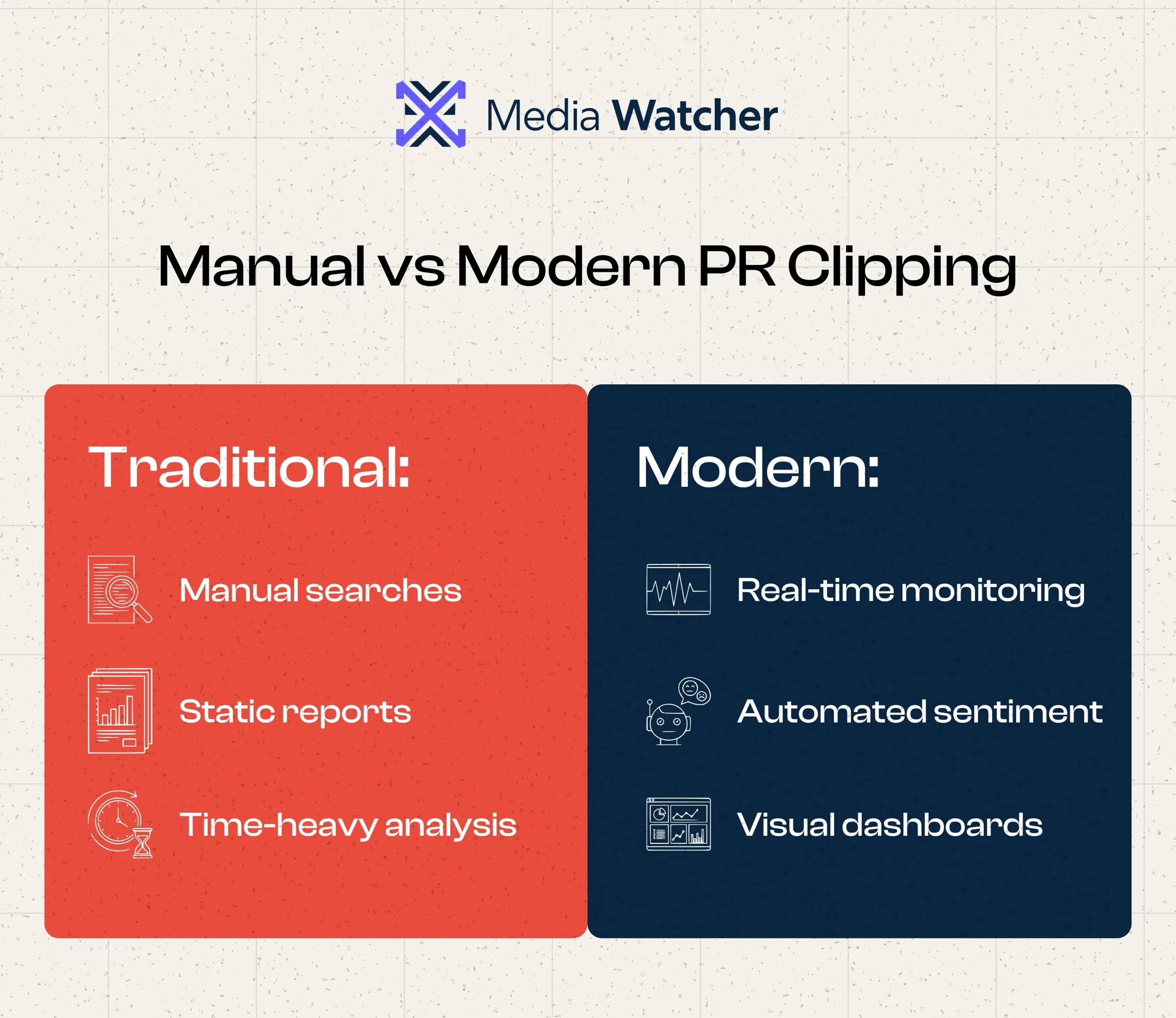
The process of clipping in this modern era has evolved significantly. Earlier, teams depended on manual searches and physical archives of PR clippings. That approach required time and offered limited insight beyond volume.
Automation is now employed by organizations to simplify processes. Specialized PR clipping services compile coverage in real time across thousands of sources. More advanced dashboards are used instead of spreadsheets, and trends become easier to identify and report on.
Here, technology is an important factor. Numerous teams have also turned to the use of press clipping software that can filter noise, monitor sentiment, and point out the emerging story lines before they get out of control. According to a study by Gartner, automated monitoring saves approximately 50% of analysis time and increases accuracy.
How Media Watcher Elevates Modern PR Clipping?
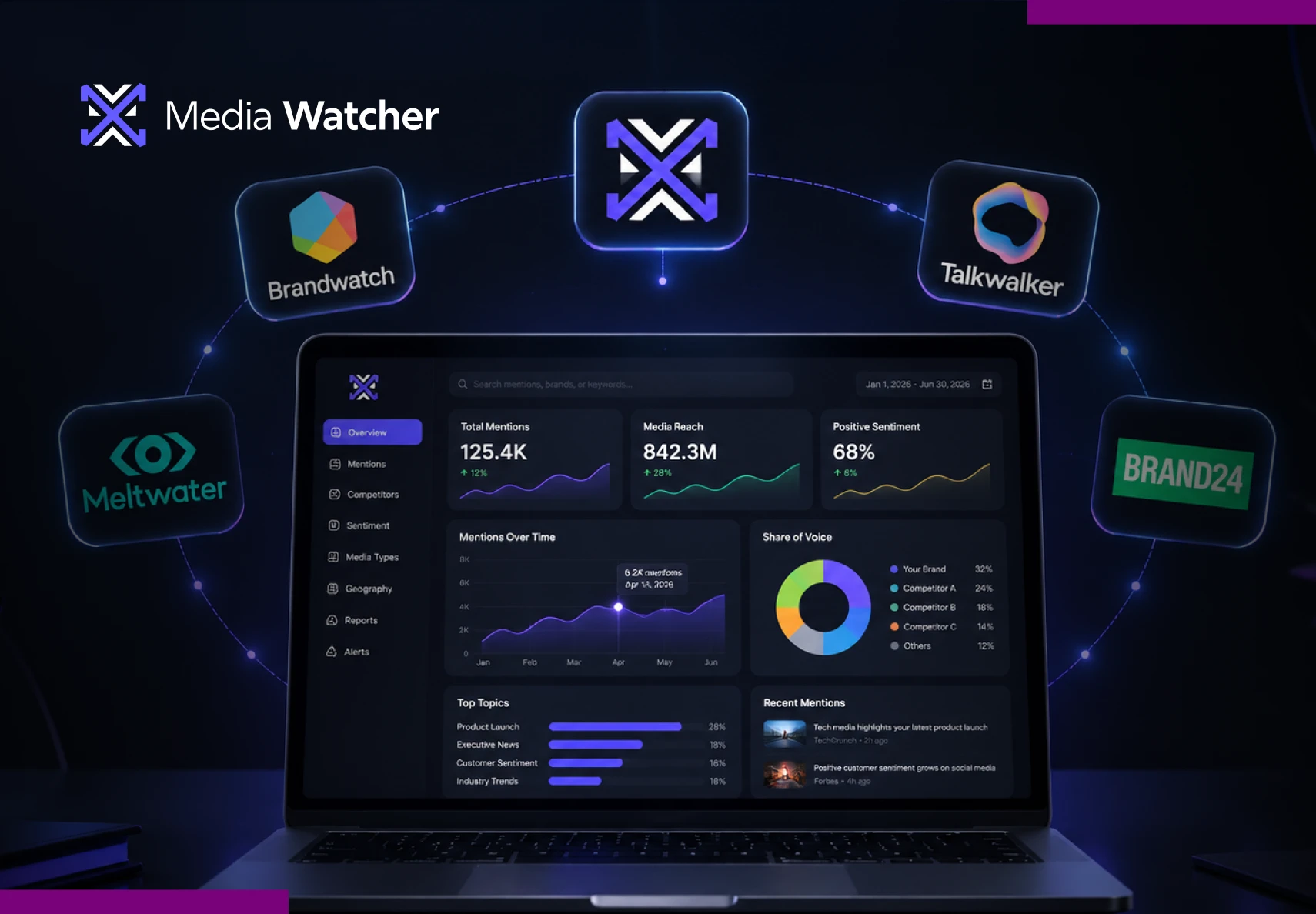
PR clipping becomes far more valuable when coverage is connected, analyzed, and interpreted in real time. Media Watcher moves beyond basic collection by turning scattered media mentions into a structured intelligence view. Instead of working through long lists of articles, teams gain clarity on how narratives evolve, where sentiment shifts, and how visibility compares across markets.
Media Watcher supports modern PR clipping by enabling teams to:
- Monitor global media coverage in real time across news, digital publications, and regional outlets
- Analyze sentiment automatically to understand tone, risk, and narrative direction
- Track share of voice and compare coverage against competitors to identify gaps and overexposure
- Visualise coverage trends through clear dashboards designed for fast leadership review
- Access multilingual and region-specific insights to ensure no critical conversation is missed
- Connect coverage volume with sentiment changes to spot early signals before issues escalate
Contact the Media Watcher team to book a demo today.