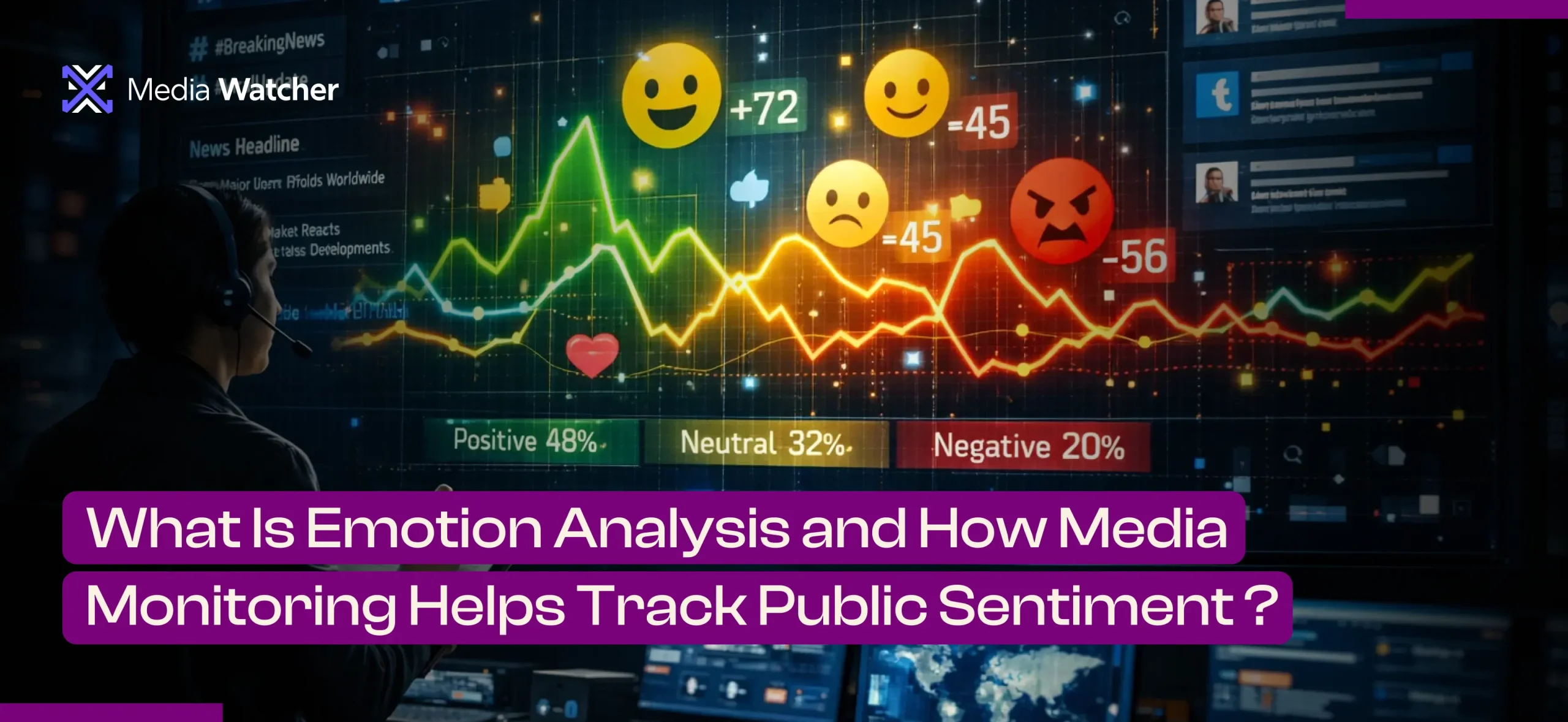


Understanding how your audience feels is the new frontier of business intelligence. Professionals in multiple industries, including food, fashion, luxury, and e-commerce, have long tracked sentiment, whether buzz is positive, negative, or neutral, to gauge brand health.
But emotion analysis goes a step further, diving deep into which feelings, be it joy, anger, or fear, etc., are driving those sentiments.
But first, let’s explore the basic definition of emotion analysis.
What is Emotion Analysis?
Emotion analysis is the process of understanding the feelings behind what people say online. Instead of only identifying whether a mention is positive or negative, emotion analysis looks deeper to determine which emotion is driving the message, such as joy, anger, fear, frustration, disappointment, or excitement.
In media and brand monitoring, emotion analysis helps explain why conversations shift, escalate, or go viral. It reveals the emotional signals behind public reactions, allowing brands to better understand audience behavior, narrative changes, and response urgency.
Are Sentiment Analysis and Emotion Analysis the Same?
Well, no, they may sound like they belong to the same family, but they serve different jobs. Let’s keep it simple. Sentiment analysis is the overall vibe, which is positive, negative, or neutral.
However, on the other side, emotion analysis is the specific feeling under the broader term, which includes joy, disappointment, fear, and sadness.
On the internet, two posts can be negative for entirely different reasons. Every statement can reflect an emotion within the tone. For example:
- “This delivery was late again” can be a frustration.
- “I expected better from a premium brand” can be disappointment.
- “Is this product safe?” can be a fear.
If you treat all negative activities the same way, you respond to them in the same way as well. That is where brands accidentally add petrol to a small fire. Emotion analysis is basically a reality check that not every negative mention needs the same reply or the same fix.
Why Emotional Shifts Matter More Than Audience Opinions
One should know that their brand does not get damaged by a single angry comment. It gets damaged when emotion becomes contagious. That is when you see a shift from isolated complaints to a shared narrative. Emotional shifts matter because:
Predict Narrative Direction
When emotion changes, the story changes too. People move from “this was annoying” to “this brand is careless,” and that jump is where reputation gets rewritten.
Shape Customer Behavior Faster Than Facts
In multiple industries, perception often moves faster than product reality. For instance, in food and e-commerce, one viral experience can outweigh a thousand quiet, satisfied customers.
Tell You What Kind of Response Will Work
A brand apologizing to its customers for a mishap can calm their audience’s anger; however, it will not solve disappointment unless you fix the underlying promise gap.
Brands should know that fear needs reassurance and clarity, while excitement needs amplification and readiness.
Explore How You Can Track Emotional Signals Without Labeling Every Emotion
Emotion analysis sounds fancy, but brands do not need to label every post as “anger” or “joy” to make smart decisions. In practice, media monitoring is about spotting signals that emotion is shifting and then investigating quickly. Here are the most useful signals.
Sentiment Trend Swings
If your sentiment score drops suddenly or climbs unusually fast, treat it like a mood change in a room. Someone just said something that landed hard.
Volume Spikes
Emotion travels with volume. When people feel strongly, they talk more, share more, and pull others in. A sudden jump in mentions is rarely random. It usually means excitement or outrage has just found oxygen.
Speed of Spread
A story that accelerates quickly is usually emotion-driven. It is rarely calm, slow, and logical. Most of the time, it is “everyone, look at this.”
Context Changes
Watch what words and themes start appearing around your brand. ‘Scam,’ ‘unsafe,’ ‘disappointed,’ ‘never again,’ ‘obsessed,’ ‘need this,’ ‘iconic,’ and more like these. All of these are emotional clues hiding in plain sight.
However, this is where Media Watcher fits naturally. You can explain that while emotion labeling is one approach, Media Watcher’s media monitoring helps brands with emotion sentiment analysis by tracking sentiment shifts, spikes, volume, and context so teams can act early, with clarity.
What are Emotional Analysis Examples
Let’s explore this concept with some of the examples that industries might encounter:
Viral Hype That Turns Into Frustration
A fast food brand introduces a limited-time item that quickly captures the internet’s attention. Positive sentiment soars, and mentions of the item multiply. Influencers begin sharing their reviews, leading to rapid sales and swift sell-outs. This surge in popularity leaves many frustrated customers showing up at stores, eager to get their hands on the item.
The emotional shift in this situation takes place like : excitement → anticipation → frustration → anger.
The first spike is good news. The second spike, paired with falling sentiment and keywords like “sold out” and “wasted my time,” signals a brewing backlash.
Therefore, the brands that identify issues early on can offer timely updates, manage expectations, adjust inventory messages, and avoid the perception of silence while customers become frustrated.
When Identity Gets Involved, Emotions Get Louder
A fashion label drops a campaign that tries to be bold, but the audience reads it as tone-deaf. The comments are not just criticism. Some people feel disrespected by the brand, while others think the brand is just putting on a show rather than truly understanding that they are “performing” culture.
This emotional shift in this situation is: surprise → offense → anger → boycott energy.
You see the sentiment drop, but the real clue is context in words like “out of touch,” “disrespect,” “mocking,” “appropriating,” and “embarrassing.” The faster the spread, there is high chance of the emotion driving it. This is when brands need to respond with humility, and not marketing polish.
Disappointment is the Silent Killer
Consider that luxury customers buy a promise of quality, exclusivity, craft, and service. However, when something breaks, they do not just complain, but also feel betrayed.
In this case, the emotional shift takes place like: Pride → disappointment → disgust → public warning
The backlash in the luxury industry often starts quietly with one detailed post, a thread, or a review with receipts. Then it spreads because the story has moral weight, like “For this price, how dare they?”
In this case, emotion detection software assists in identifying early signs before they become a reputational narrative about trust.
Fear Spreads Fastest
If customers suspect a data breach, fake products, unsafe packaging, or a misleading return policy, emotion shifts into fear and anger quickly.
This emotional shift in this scenario is: confusion → fear → anger → mass distrust
Some of the keywords that brands should seek include high-velocity spikes, as well as words like “fraud,” “scam,” “unsafe,” “fake,” “stolen,” and “never ordering again.” Speed and clarity are important when fear appears.
It is not merely the answer that we are investigating or looking into. This must be a definite course of action, regular monitoring, and observable responsibility, while maintaining transparency with the customer.
What Brands Should Do When Emotions Shift
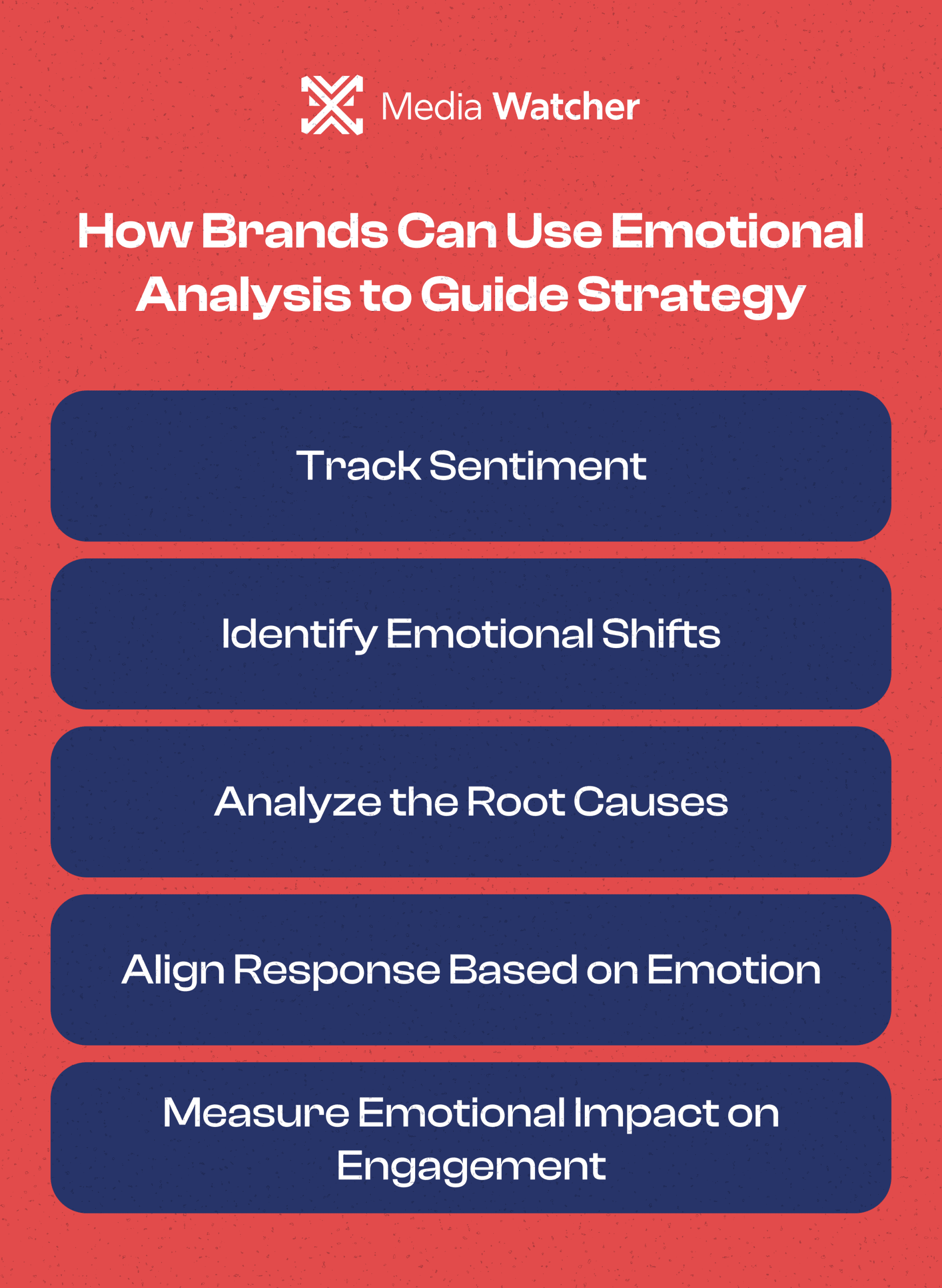
When the brands identify the signals, they should identify the trigger, such as what started the shift. It might be a post, product issue, news mention, influencer clip, or policy change.
Next, they can recognize their core emotion without requiring software to tag it. Moreover, it will help the teams to determine whether it is anger, fear, disappointment, or excitement.
To address the situation, they need to match the response tone to the emotion. For example:
- Anger needs acknowledgement and action.
- Fear needs reassurance and transparency.
- Disappointment needs ownership and a fix.
- Excitement needs amplification and readiness.
After matching your response to the emotion, note the aftershock and track whether the sentiment stabilizes or the volume slows.
If it does not, you may have treated a symptom rather than the cause. However, with the right emotion analysis tool, you will learn how to judge better on how your audience will receive your new initiatives, and this will, in the end, make your brand more dynamic and confident.
How Media Watcher’s Media Monitoring Helps With Emotion Analysis
Emotion analysis is not about guessing feelings. It is about noticing when the public mood shifts and understanding what that shift means for your brand story.
Labeling emotions on a dashboard is not always the most practical way of monitoring things in the real world. It is the identification of emotional patterns based on the change of sentiment, the peaks in attention, and the evolving context.
Media Watcher’s media monitoring alerts you when public sentiment begins to shift, without attempting to identify the emotions.
The tool helps to make smarter prioritization, integrating sentiment movement, volume growth, and source influence.
That is how teams can stay ahead of backlash, amplify positive momentum, and preserve trust once the narrative begins to run.
Because the internet does not wait for quarterly reports. It reacts in real time. Your monitoring should too.
Contact Media Watcher’s team and book a demo!