



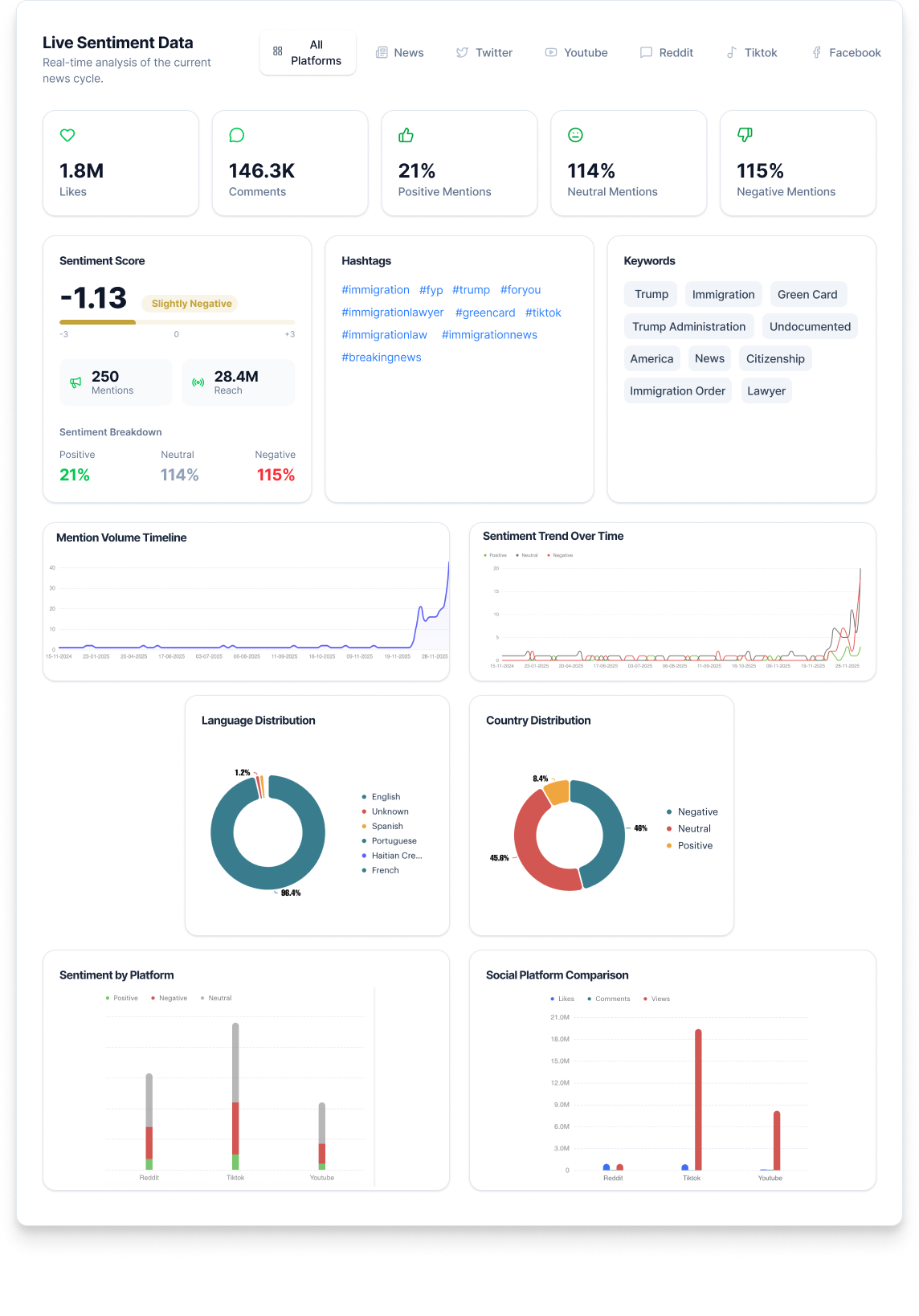
 The public reaction to the immigration reforms proposed by Trump is strongly divided in terms of regions and culture. The strongest support is found in inland and southern states, like Texas, Florida, Ohio, and Indiana, where tighter regulations are perceived to ensure safety and order. The resistance is concentrated in urban metropolitan areas such as New York, Los Angeles, and Seattle, which have large immigrant populations and find the proposals dangerous and destabilizing. This rift finds its way into language patterns in the conversation: the English-dominant areas are characterized by supportive language, whereas Spanish and Haitian Creole voices are predominant in criticism.
Comparative Analysis of Trump’s 2025 Immigration Changes
The greatest advocates of the reforms are based in the conservative-oriented regions where border regulations, enforcement, and national security dictate day-to-day political identity. The suggested increase of asylum fees and stricter green card options to difficult-to-reach pathways are viewed by many in the South and the Midwest as a means of restoring fairness. The system has attempted to extend itself to these communities, and the tighter regulations are indicative of propriety and reinstatement of order.
What Could be the Reason for the Difference in Opinion of L.A and New York Residents to those in Peripheral Cities?
The resistance, though, lies in the multicultural and immigrant-filled cities along the coast. The same proposals are viewed as punitive and shortsighted in New York and Los Angeles, where mixed-status families, asylum seekers, and first-generation communities represent the normal way of life. These regions fear that extended enforcement would lead to unfair deportations, stress on fragile families, and undermining of humanitarian safeguards. Instead of being influenced by abstraction, their position is determined by their closeness to neighbors, colleagues, and friends who would experience the impact at first hand.
This contrast is not simply based on political differences but on cultural differences. Inland states focus on structure and security; coastal metros focus on rights, protections, and inclusion. They both perceive themselves as the protectors of the true values of the country, and that is why the rift is quite emotional.
Media Watcher Interpretation: What the Data Tells us about the Public Responses?
The dashboard indicates an intense and imbalanced conversation, where the sentiment score is slightly negative (-1.13), reach is 28.4 million, and sentiment distribution is 46% negative, 45% neutral, and only 8% positive. Inland and southern markets contribute the majority to the positive reactions, but coastal metros contribute to the negative surge, especially on platforms such as TikTok, where the discussion of policy failures is mixed with personal narratives of immigrants, lawyers, and content creators.
The distribution of languages provides further explanation. As English constitutes more than 95% of mentions, the supportive narratives are naturally found in English-dominant regions such as the South and Midwest. In the meantime, the fact that Spanish and Haitian Creole mentions are small but significant aligns with the criticism voiced by the community in New Jersey, California, and some of Florida, and the worry about the risk of deportation is shared by the immigrant families.
Hashtags like #immigration, #greencard, #immigrationlaw, and breakingnews tend to cluster differently across regions: they are regarded as signs of fear and legal unpredictability in cities and as signs of approval or intolerance with the loopholes in the inland states. The information implies that it is not one national discourse but a series of overlapping regional discussions influenced by cultural identity and experienced reality.
How Politics and Community Realities Influence the Immigration Debate?
These policy initiatives lie at the nexus of politics, economics, and community life. Increased asylum costs, increased green card requirements, and expanded enforcement for those who fear abuse of the system and would like more stringent control. Instead, opponents are concerned about the humanitarian consequences, family disruption, and the impact on the economy, particularly the sectors that rely on immigrant workers. Social media widens these gaps and transforms the legislative specifics into a daily discussion with the help of short explainers, legal commentaries, and viral testimonies. In the modern environment, immigration is not merely a policy but a culture war that is related to belonging, identity, and the future of the nation.
And this is where the conclusion naturally leads, when sentiment fractures along regional, cultural, and linguistic lines, understanding the conversation requires media monitoring platforms that explain these contrasts in real time.
Media Watcher offers precise community sentiment visualization, platform-specific variations, cultural subtleties, and trend-spike notifications that demonstrate the way a story changes between communities. In the case of organizations dealing with delicate arguments such as immigration, Media Watcher provides the insight to understand the sentiments of the people, expect backlash, and deliver context-sensitive communication rather than a blindfolded response.